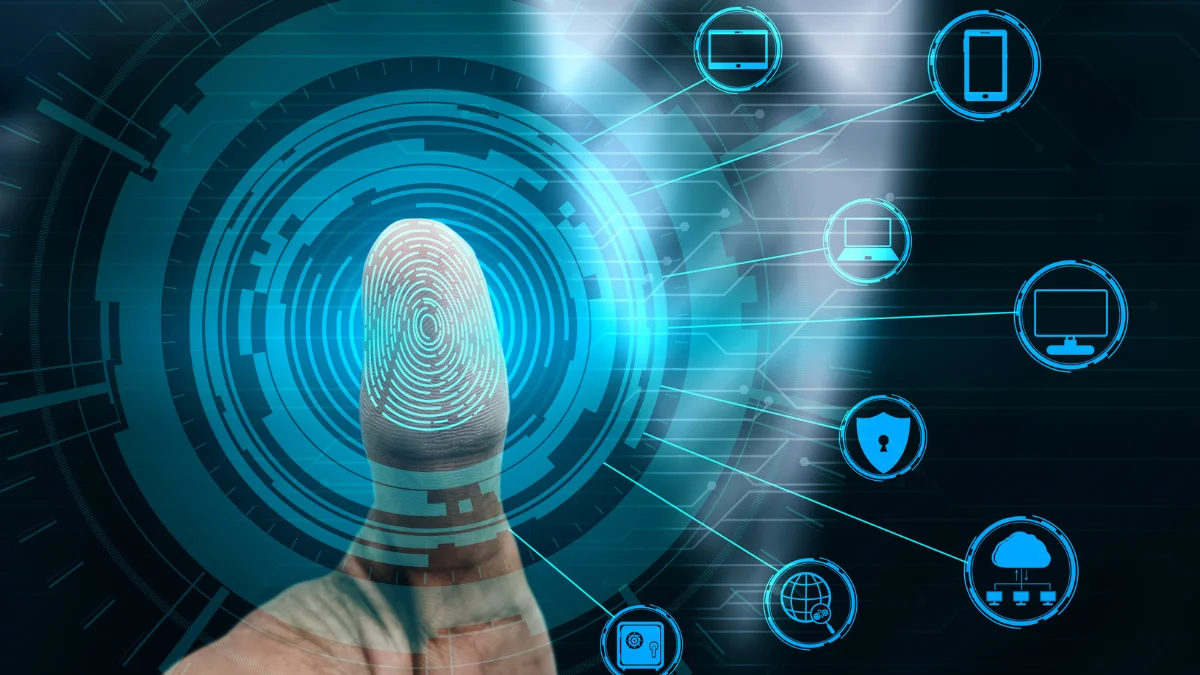
Passwords can be forgotten, access cards can be misplaced, and identity documents can be misused. For businesses handling sensitive information or managing access to restricted facilities, these limitations create security and operational challenges.
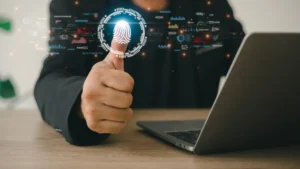
Biometric technology offers another way to verify identity by using measurable physical or behavioral characteristics. From unlocking smartphones to verifying customers during financial transactions, biometric authentication is becoming an increasingly practical option across different industries.
However, not every biometric method works equally well in every environment. Understanding the available technologies and where they can be applied helps organizations make better decisions about security, accessibility, and user experience.
Understanding the Different Types of Biometrics
Biometric systems identify or verify individuals by analyzing distinctive characteristics. The most commonly used methods include:
Fingerprint recognition: Analyzes unique patterns and features of fingerprints. It is commonly used for device authentication, employee access control, and identity verification.
Facial recognition: Uses facial characteristics to compare a captured image against an enrolled identity. It can support contactless authentication through compatible cameras and devices.
Iris recognition: Examines the distinctive patterns within the colored portion of the eye. It is particularly useful in applications requiring reliable identity matching.
Voice recognition: Analyzes characteristics of a person’s voice to support speaker verification. It can be useful for remote interactions, although background noise and voice imitation present challenges.
Palmprint recognition: Uses distinctive patterns and features of the palm for identification. It can be applied in specialized access control and identity management systems.
Organizations evaluating these methods can find further technical information on biometric products, including solutions that support multiple biometric modalities.
The appropriate technology depends on factors such as the operating environment, required accuracy, accessibility, privacy considerations, and integration costs.
1. Banking and Financial Services
Financial institutions must protect customer accounts while making everyday transactions convenient. Biometric authentication can help address both requirements.
Many mobile banking applications allow customers to sign in using fingerprint or facial authentication supported by their devices. This reduces the need to repeatedly enter passwords while maintaining a convenient authentication process.
Biometrics can also support customer identity verification during digital onboarding, account recovery, and selected high-risk transactions.
For example, when a customer opens a financial account remotely, facial verification may help compare a live image with an identity document. Additional liveness checks can help detect attempts to deceive the system using photographs or other representations.
Banks should still combine biometric verification with appropriate device security, fraud monitoring, and additional authentication measures when necessary.
2. Healthcare and Medical Facilities
Healthcare organizations handle sensitive patient information, making accurate identity verification especially important.
Biometric technology can support patient registration, staff authentication, and access to restricted medical facilities. Fingerprint or facial verification may help authorized healthcare professionals access clinical systems without relying entirely on shared credentials or physical access cards.
Consider a hospital where several departments need access to electronic medical records. Biometric authentication can provide an additional identity check before staff members access protected information.
Biometric patient matching may also help reduce duplicate records and registration errors when implemented within a properly designed identity management process.
However, healthcare environments require careful planning. Hygiene requirements, accessibility, emergency access, and patient privacy must all be considered. Alternative authentication methods should remain available when biometric recognition is unsuccessful or inappropriate.
3. Government and Public Administration
Government agencies manage large volumes of identity records, public services, and official documentation.
Biometric systems can assist with passport applications, national identity programs, border control, and identity verification for eligible public services.
Fingerprint, facial, and iris recognition are particularly relevant when agencies need to check whether an individual matches an existing record or has previously enrolled in a system.
At border checkpoints, for example, facial verification can help compare a traveler with an authenticated identity record. In large identity databases, biometric matching may also assist with detecting duplicate registrations.
These applications require strong safeguards because errors can have serious consequences for individuals. Agencies must consider data protection, system accuracy, accessibility, and the availability of human review.
Government use of biometrics should therefore be limited to clearly defined purposes supported by appropriate legal authority and oversight.
4. Education and Research Institutions
Universities, schools, and research institutions often manage facilities with different security requirements.
While ordinary classrooms may not require biometric access, laboratories, examination facilities, and areas containing valuable research equipment may benefit from stronger identity verification.
For example, a university research laboratory could use fingerprint authentication to restrict access to authorized personnel. Biometric identification may also support secure access to institutional devices and systems containing confidential research data.
Facial verification is another potential option where contactless authentication is useful. Institutions exploring this approach can discover face recognition biometrics and learn how facial matching and liveness detection operate.
Educational institutions should assess whether biometrics are genuinely necessary before adopting them, particularly when students are involved. Privacy, proportionality, consent requirements, and accessible alternatives are essential considerations.
5. Manufacturing and Industrial Facilities
Manufacturing plants, warehouses, and industrial facilities often contain restricted areas, expensive machinery, and potentially hazardous equipment.
Biometric access control can help organizations verify that only authorized workers enter designated locations.
For example, a manufacturing facility may use fingerprint authentication to control access to a server room, production control center, or restricted storage area.
Biometric systems may also support employee attendance management, although organizations must establish whether this use is necessary and lawful.
Industrial environments introduce additional technical challenges. Workers may wear protective gloves, have worn fingerprints, or operate in dusty conditions. Fingerprint readers may therefore be unsuitable at certain workstations.
Contactless facial or iris recognition may provide alternatives in some settings, depending on protective equipment, lighting conditions, and system compatibility.
The most effective deployment is one that accounts for real working conditions rather than selecting a technology based solely on its advertised capabilities.
What Should Organizations Consider Before Implementing Biometrics?
Biometric technology can improve certain identity verification processes, but successful implementation requires more than installing scanners or connecting authentication software.
Organizations should first identify the problem they want to solve. Protecting a restricted research laboratory, verifying a banking customer, and managing patient identities all involve different operational requirements.
Accuracy is another important consideration. Biometric systems can produce false matches or reject legitimate users. Performance should therefore be evaluated under the conditions in which the system will actually operate.
Security measures such as protected biometric templates, restricted data access, liveness detection, and suitable fallback authentication methods can help reduce risks.
Privacy also deserves careful attention. Unlike passwords, biometric characteristics cannot simply be changed after exposure. Organizations must establish an appropriate legal basis, limit data collection, define retention periods, and comply with applicable data protection requirements.
Finally, biometric authentication should integrate with existing systems without creating unnecessary obstacles for users.
Conclusion
Banking, healthcare, government, education, and manufacturing are five industries where biometric technology can address practical identity verification and access control challenges.
Fingerprint recognition remains useful for many device and facility authentication scenarios, while facial and iris recognition can support contactless applications. Voice and palmprint recognition offer additional options for specialized requirements.
No single biometric method is ideal for every organization. The best results come from matching the technology to a specific operational need, testing its performance, and implementing appropriate security and privacy safeguards.
When those factors are addressed, biometric systems can become a valuable component of a broader identity and access management strategy.