
Managing identity records becomes more difficult as a population grows. Names may be repeated, dates of birth can be recorded incorrectly, and people sometimes register more than once. For national identity authorities, these inconsistencies can affect the reliability of public records and the delivery of essential services.
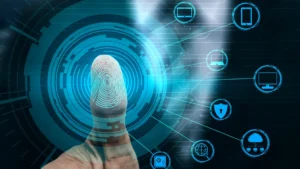
An Automated Biometric Identification System (ABIS) helps address these challenges by comparing physical characteristics, such as fingerprints, facial images, and iris patterns, with records already held in a database. Rather than relying only on names or document numbers, an ABIS adds another means of checking whether a person may have been enrolled previously.
Its role is especially significant in national ID registries, although related technology also supports voter registration, border management, and certain law enforcement activities.
What Is an Automated Biometric Identification System?
An ABIS is a software-based system designed to search, compare, and manage biometric identity records at scale. It is commonly associated with one-to-many identification, where a new biometric sample is checked against numerous existing records to find possible matches.
This differs from one-to-one verification. Verification asks whether a person matches a particular claimed identity, while identification asks whether their biometric characteristics correspond to any enrolled record.
Depending on the system, an ABIS may process fingerprints, faces, iris images, and other biometric modalities. Using more than one modality can help when a particular biometric sample cannot be captured reliably, although performance depends on data quality and system design.
How Does an ABIS Work?
In a typical national identity enrollment process, the system works through several stages.
Biometric capture: An operator records a person’s fingerprint, facial image, or iris scan using suitable equipment.
Quality assessment: Software checks whether the captured sample is usable and may request another capture if the quality is insufficient.
Template creation: Recognition algorithms extract distinguishing features and represent them in a format used for matching.
Database search: The new template is compared with existing records to identify potential duplicates.
Match review: Possible matches are assessed under established procedures. A similarity score alone should not automatically determine a person’s identity.
Registry update: Once checks are completed, the identity authority can create or update the appropriate record.
Systems must also protect biometric data during storage and transmission, maintain audit records, and support authorized access. Organizations assessing national-scale architectures can learn more about how multimodal biometric matching, integration, and database management can be combined in an ABIS platform.
National ID Registries: A Major Application of ABIS
National identity registries are among the clearest use cases for automated biometric identification. These registries often need to establish a reliable link between each person and a unique identity record, even when conventional documentation is missing, inconsistent, or difficult to verify.
Reducing Duplicate Registrations
During enrollment, an ABIS can search for records associated with similar biometric characteristics. This helps identify cases where one person may have attempted to register multiple times or where duplicate entries arose from administrative errors.
Potential duplicates still require careful investigation. False matches can occur, and officials should have a documented process for resolving them rather than denying registration automatically.
Supporting More Consistent Identity Records
Biometric deduplication can complement checks on biographical information, supporting the creation of more consistent national ID databases. When integrated with an identity management system, it can make future updates, renewals, and credential issuance easier to manage.
National ID projects may use fingerprint, face, and iris recognition according to local requirements. A useful overview of how these technologies are applied to civil identification can be found in materials on national ID biometrics.
Helping Public Services Verify Identity
Once a trusted registry has been established, identity verification can support applications for government documents and eligible public services. However, access should not depend exclusively on a successful biometric match. Alternative procedures are important for people whose biometrics cannot be captured or reliably recognized.
ABIS in Voter Registration and Election Administration
Electoral authorities may use biometric identification during voter enrollment to detect potential duplicate registrations across a voter database. This can assist with maintaining accurate electoral rolls, especially when records are collected through multiple local offices.
Biometrics cannot independently determine whether someone is eligible to vote. Citizenship, residency, age, and other eligibility conditions must be evaluated under applicable election laws. Any suspected duplicate should be reviewed through an accountable process with opportunities to correct errors.
ABIS for Border Control and Immigration
Border management authorities use biometric identification and verification to help check travel identities, evaluate enrollment records, and detect possible duplicate identities where permitted by law.
For example, a border authority may compare newly captured fingerprints or facial images with authorized records to determine whether further review is needed. Such checks can complement passport inspection and other security procedures.
Accuracy, data-sharing permissions, retention limits, and human oversight are particularly important because incorrect matches can disrupt legitimate travel.
ABIS in Law Enforcement and Investigations
Law enforcement agencies may use biometric searches to compare fingerprints recovered during investigations with legally held reference records. This can produce potential candidates for further examination and help connect records that would be difficult to search using names alone.
A biometric candidate match is not proof of guilt. Investigators need appropriate forensic review, corroborating evidence, legal authorization, and clear procedures for handling uncertain results.
Systems used for civil identification and criminal investigations should also be governed by distinct access controls and purpose limitations where required.
Benefits of a Well-Designed ABIS
More Reliable Duplicate Detection
Automated searching can detect possible duplicate enrollments that might be missed by text-based checks, improving the consistency of large identity registries.
Scalable Identification
National databases may contain millions of records. A properly engineered ABIS can distribute matching workloads across computing resources, helping authorities process new registrations and identity searches efficiently.
Support for Multiple Biometric Modalities
Combining fingerprints, facial images, and iris data can improve operational flexibility when a particular modality produces a poor-quality sample. The combination should be validated for the population and conditions in which it will be used.
Better Auditability
Logging searches, enrollment changes, and manual decisions can help authorities investigate errors, monitor system use, and demonstrate accountability.
Implementation Challenges That Cannot Be Ignored
Biometric matching is not infallible. Poor capture conditions, worn fingerprints, changes in appearance, and other factors may cause genuine individuals to be rejected or unrelated records to appear similar. Testing should include realistic enrollment conditions and the populations the system will serve.
Privacy is another major consideration. Biometric data is sensitive and cannot be reset in the same way as a password. Strong encryption, strict access permissions, clear retention policies, and independent oversight are important safeguards.
Inclusive enrollment procedures are equally necessary. People who cannot provide a usable fingerprint, face image, or iris scan need an accessible alternative. Complaint and correction processes should be available when automated results are wrong.
Finally, successful deployment depends on more than the matching engine. Training, network infrastructure, equipment maintenance, security reviews, and transparent administrative procedures all influence outcomes.
Conclusion
An Automated Biometric Identification System can strengthen identity management by helping organizations search large biometric databases, identify potential duplicate records, and support consistent enrollment procedures.
Its greatest value is often found in national ID registries, where maintaining one reliable record per person is a central administrative challenge. Related applications in voter enrollment, border control, and law enforcement can also benefit from accurate biometric matching when used within appropriate legal and operational limits.
For an ABIS to deliver lasting benefits, technical performance must be matched by privacy protection, accessible alternatives, and meaningful human review. Those measures help make identity systems both dependable and fair.