Introduction
It is no secret that strategic planning has traditionally remained a key task for any business leader. Each major decision made by business people, including expansion, development of talent, interaction with customers, or business process improvement, may affect the future of that company. Unfortunately, the process of making right decisions is getting more and more complicated due to fast changes in the market environment.
This is where the power of artificial intelligence comes into play. Modern times have seen that AI for leaders is not something futuristic anymore. Rather, it has become something very tangible and practical, assisting organizations in analyzing information, recognizing patterns, and taking decisions based on the findings. In this way, AI augments the process of decision making rather than substituting it.
For today’s executives and managers, knowledge of using ai for business leaders can help to gain an edge and ensure long-term business success. Below are seven highly effective uses that business leaders can utilize artificial intelligence for.
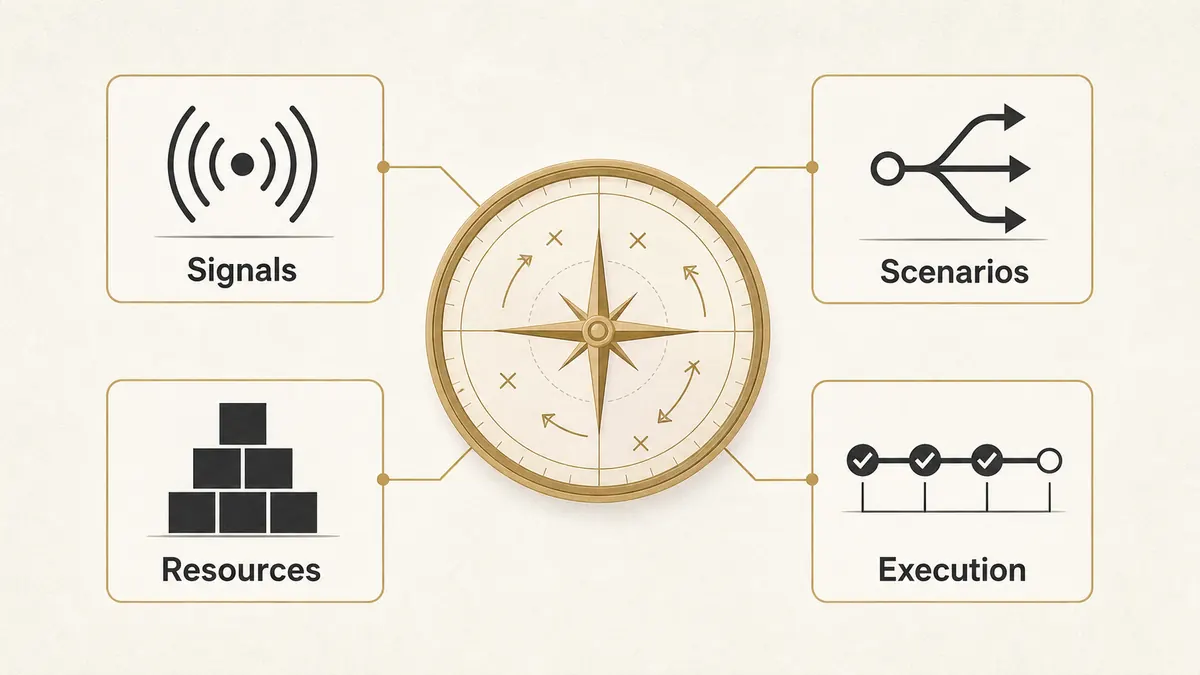
1. Use AI to Understand Market Trends
One of the greatest difficulties faced in strategic planning involves anticipating what could occur in the future. The market evolves fast and sometimes customer tastes will be difficult to anticipate.
Artificial Intelligence provides assistance to executives to make sense of large amounts of data and determine potential trends.
For instance, consider a retail firm looking at developing their future product line. Using AI technologies, they do not have to base all their analysis on previous sales data but can use them to detect shifts in consumer interest, trends in the industry discussion, and emerging purchasing trends.
With such knowledge, decision makers are able to make better strategic choices.
2. Use AI to Improve Customer Understanding
Business strategy is always based on the needs of the consumer. The more the management knows about their customers, the more effective their decisions will be.
With the help of artificial intelligence, companies can get insights into what happens during communication with consumers, complaints, support conversations, and buying behavior.
Imagine an organization facing the problem of decreasing customer engagement. Rather than jumping into conclusions, the management may make use of AI insights for figuring out the cause behind the situation. It could be possible that customers want better speed of services, personalization, or communication.
The insight gained through AI gives leaders the opportunity to devise strategies that match customer expectations.
3. Use AI to Support Better Risk Management
Every strategic choice contains an element of uncertainty. There are always risks involved in entering a new market, bringing out a new product or adopting new technology.
Perhaps one of the most important uses of AI for business executives is the identification of risks. This can be done through analysis of patterns and signals from the market.
Take for example a company planning to go international. With the aid of AI for business leaders will be able to analyze issues such as customer demand and other challenges.
This way, leaders do not have to depend solely on their gut instincts.
4. Use AI to Strengthen Scenario Planning
A strategic plan will need its leadership team to be prepared for multiple outcomes.
AI could be used in helping organizations evaluate multiple business cases and the potential impact that various decisions would have on their outcomes.
For instance, a manufacturer could be considering increasing production capacity. The use of AI in such cases helps management to make an assessment of what will happen in case there is any change in customer demand or cost of operations.
It allows firms to have a plan that will suit different scenarios in the future.
5. Use AI to Improve Resource Allocation
The critical part of being an effective leader includes the efficient use of manpower, finances, and other resources.
AI makes it possible for leaders to determine where their resources provide maximum value and how changes can be made.
For example, consider an organization that is pouring money into various business activities. The management might not always know about the activities that are performing well. With the help of AI, performance data can be analyzed and areas that require more attention can be pinpointed.
In this way, leaders can take decisions regarding what needs more focus.
6. Use AI to Enhance Team Decision Making
Effective strategic planning is seldom an individual effort. Strategic planning needs cooperation and coordination among leadership, management, and team members throughout the organization.
AI can facilitate such efforts through objective analysis, which would enable the team to assess their opportunities and risks better.
For example, if there is a management meeting with various departments having differing views about the company’s priorities, AI generated insights will help to establish some sort of ground where people can base their conversation on evidence.
It is also possible that a consensus will be reached and people will work together as a result of such a discussion.
With the rise of digital transformation, the role of ai for business leaders becomes more and more important.
7. Use AI to Monitor Strategy Execution
Developing a strategy is only a piece of the puzzle. Effective leaders must also make sure that the plans are being carried out in an efficient manner.
AI can assist companies in keeping up with their progress, discovering any potential problems, and determining what needs to be addressed.
For instance, consider a firm introducing a customer experience program. The leadership could set some goals and requirements, but without proper monitoring, these problems might not have been found until it was too late.
Artificial Intelligence may aid leaders in recognizing patterns, discovering performance gaps, and giving early alerts about any need for adjustments. It will ensure that businesses stay flexible during the process of implementing any plan.
Therefore, strategic planning becomes much more adaptive than static.
Conclusion
Artificial intelligence is changing the way companies do strategic planning. Contrary to what may be perceived as a threat to the experience of the leadership, artificial intelligence can actually offer great insights that will enable them to make sound and informed decisions. In areas such as risk management and execution of the strategy among others, AI is helpful.
The increased significance of ai for leadership is a result of the increasing need for smart decision making based on data in the business world which has become more and more complicated. Leadership that makes use of these abilities stands to benefit in many ways.
With the changing nature of the business world, ai for business leaders will become more and more necessary for keeping their companies ahead of the game, ready for anything that may come, and successful in the long run. The leaders who will succeed will be the ones who manage to combine the skills of being human with the skills of AI.