5W released The Accounting & Finance Software AI Visibility Index 2026 on June 1, ranking finance software vendors by AI search citation share across ChatGPT, Claude, Perplexity, Gemini, and Microsoft Copilot. The index covers more than 50 buyer queries across SMB accounting, mid-market and enterprise ERP, payroll, spend management, and AP/AR automation.
The headline finding is the one B2B SaaS teams should not wave away as a finance-only story: AI visibility does not track market share. 5W says QuickBooks, Xero, and FreshBooks dominate SMB accounting answers; NetSuite and Sage Intacct control the mid-market ERP answer set; and legacy enterprise names such as Oracle ERP Cloud, SAP S/4HANA, Microsoft Dynamics 365 Finance, Workday Financial Management, Infor CloudSuite, and Epicor are under-cited relative to their installed base.
Our read: this is the most useful follow-up yet to the AI citation overlap collapse. The broad 5W index said AI answers and Google rankings now draw from different source pools. This finance-software cut shows what that means inside a real B2B buying category: the shortlist gets built from comparison pages, review platforms, and visible proof, not from market share alone.
Key Takeaways
- 5W’s Accounting & Finance Software AI Visibility Index 2026 ranks 25 vendors by AI citation share across five AI engines.
- The index analyzes 50+ buyer queries across SMB accounting, ERP, payroll, spend management, and AP/AR automation.
- 5W says AI visibility does not track market share, with several large finance software brands under-cited in AI answers.
- The strongest predictor of AI citation share, according to 5W, is whether a vendor publishes honest head-to-head competitor comparisons.
- For B2B software marketers, competitor-comparison content is now AI citation infrastructure.
What 5W Actually Measured
The full index page says 5W tracked five sub-categories: SMB accounting, mid-market and enterprise ERP or financial management, payroll software, spend management and corporate cards, and AP/AR automation. The company then identified which vendors AI models consistently surface in buyer-style answers and which sources appear to feed those answers.
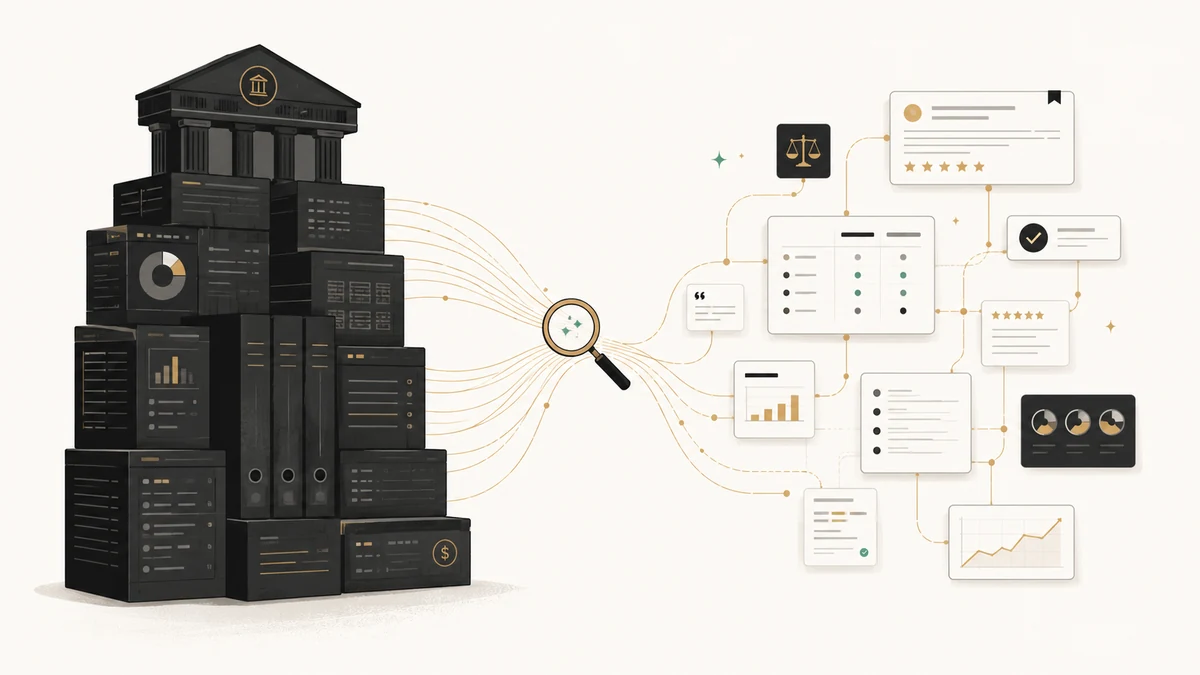
That source layer matters. 5W names review aggregators such as Capterra, G2, Gartner Peer Insights, and TrustRadius, plus editorial comparison pages, vendor-owned comparison pages, CPA trade press, and industry endorsements. In other words, AI answer engines are not only looking at the vendor’s homepage. They are assembling a category view from public proof across the web.
The index also says the strongest predictor of citation share is whether a vendor publishes honest, named head-to-head competitor comparisons on its own domain. That is a blunt content finding. Vendors that name alternatives give AI systems a clearer map of the category than vendors that speak only in first-party product language.
Why Market Share No Longer Maps to AI Share
The finance category is useful because it contains both giant incumbents and visible challengers. In normal procurement, market share, analyst presence, and installed base carry heavy weight. In AI answers, those factors still matter, but they are not the whole ranking system. The model needs citable text, repeated category associations, comparison context, review signals, and recent proof.
That is why 5W’s warning about under-cited legacy vendors should get attention outside finance. If a large ERP or finance platform can be underweighted in AI answers despite a real customer base, the same can happen to CRM, attribution, project management, ecommerce, or sales automation vendors. AI answers are not neutral reflections of market structure. They are reflections of what the model can confidently assemble. The new pharma AI visibility index makes the same point in a regulated consumer category, where DTC ad budgets still do not decide which brands AI systems name. Netcore Unbxd’s search-and-discovery proof point is the other side of that market: vendors now need both product capability and public category clarity.
Gartner’s May buyer survey found 45% of B2B buyers use GenAI primarily to gather vendor and product information. 5W’s index adds the next question: when they do, which vendors are even present in the answer?
The Content Signal: Comparisons Beat Silence
The comparison-page finding is the piece most B2B marketers can act on. A vendor that refuses to name competitors may preserve a cleaner brand page, but it gives AI systems less category structure to cite. A vendor that publishes a fair “X vs Y” page gives the model a named relationship, a use-case boundary, and a source it can lift when a buyer asks which tool fits a situation.
That does not mean every comparison page should become a hit piece. The better pattern is specific and checkable: which company size, which finance workflow, which implementation model, which reporting need, which migration risk. This is the same discipline behind proof-led positioning. The claim has to survive buyer validation and AI extraction.
It also connects to the ghost citation problem. Informational pages often get cited without naming the brand. Evaluation pages are more likely to produce a visible vendor mention because the answer itself needs named options. For finance software brands, and for B2B software more broadly, comparison content is not only bottom-funnel SEO. It is brand-mention insurance inside AI answers.
What Finance Software Marketers Should Do Now
- Run the buyer prompts before writing. Test “best accounting software for small business,” “NetSuite vs Sage Intacct,” “best spend management software,” and category-specific prompts across ChatGPT, Claude, Gemini, Perplexity, Copilot, AI Mode, and AI Overviews.
- Audit who gets named, not only who gets cited. Track citations and mentions separately. A review site source link is not the same as the vendor being named in the answer.
- Publish comparison pages with real boundaries. Name the competitor, state the buyer scenario, and explain where each tool fits. Vague “alternative” pages will not carry the same signal.
- Strengthen review-platform presence. The same third-party platforms that influence buyers also feed AI confidence. Clutch’s AI visibility dashboard showed the same mechanic in B2B services with an 8.6X verified-profile citation lift.
- Re-run the audit quarterly. 5W says it plans to rerun the index quarterly. Treat AI citation share as a moving KPI, not a one-time screenshot.
The broader takeaway is uncomfortable but useful. Market leaders cannot assume AI engines will preserve their leadership. If the public category map is thin, out of date, or written only in vendor-safe language, the model will build the shortlist from someone else’s map.
Frequently Asked Questions
It is a 5W research index released June 1, 2026, ranking accounting and finance software vendors by AI search citation share across ChatGPT, Claude, Perplexity, Gemini, and Microsoft Copilot. It covers 50+ buyer queries across five finance software sub-categories.
The index covers SMB accounting software, mid-market and enterprise ERP or financial management, payroll software, spend management and corporate cards, and AP/AR automation. 5W ranks 25 vendors by how often AI models surface them in buyer-style research answers.
5W says several large finance software brands are under-cited in AI answers, while some challengers over-index because they publish comparison content, earn review-platform visibility, and create citable category context. AI answers reward what the model can confidently assemble, not only installed base.
Audit buyer prompts, track which vendors get named, publish fair head-to-head comparison pages, strengthen review-platform profiles, and rerun the measurement quarterly. The key lesson is that competitor-comparison content now feeds AI citation and mention behavior.