
A 1% improvement in pricing generates an 11% increase in profit for the average SaaS company. That’s more impact than a 1% improvement in customer acquisition, retention, or cost reduction. Yet most B2B SaaS teams set their pricing once during launch and barely touch it again.
SaaS pricing isn’t a finance exercise. It’s a strategic decision that shapes how customers perceive your value, how your revenue scales, and whether your sales team closes deals or loses them in procurement. After working with SaaS companies across multiple stages, from pre-revenue startups to Series B teams optimizing for NRR, we’ve found that the companies that treat pricing as a living system consistently outperform those that set it and forget it.
This guide covers the six core SaaS pricing models, three pricing strategies to position them, and a framework for choosing the right model based on your product, market, and growth stage.
Key Takeaways
- The six core SaaS pricing models are flat-rate, tiered, per-user, usage-based, freemium, and hybrid. Most successful B2B SaaS companies use tiered or hybrid models.
- Value-based pricing outperforms cost-plus and competitor-based strategies because it aligns price with the outcomes your customers care about, not your internal costs.
- Per-user pricing is losing ground to usage-based and outcome-based models in 2026, especially for AI-powered products where value delivery is variable.
- Review your pricing quarterly and make adjustments at least annually. Companies that raise prices annually don’t experience higher churn than those that don’t.
What Is SaaS Pricing?
SaaS pricing is the structure a software-as-a-service company uses to charge customers for access to its product. Unlike traditional software sold as a one-time license, SaaS pricing involves recurring subscription fees, typically billed monthly or annually, that give customers ongoing access to the software and its updates.
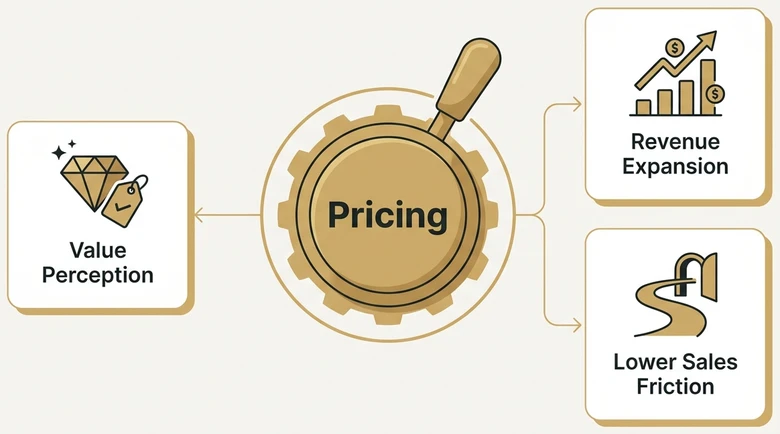
The SaaS pricing model you choose determines three things: how customers perceive your product’s value, how your revenue grows as customers expand their usage, and how easy or difficult it is for prospects to say yes. Get the model wrong, and you create friction at every stage of the customer lifecycle. Get it right, and pricing becomes a growth lever that compounds alongside your product.
6 SaaS Pricing Models Explained
These are the building blocks. Most SaaS companies use one model as their primary structure and blend in elements from others. Understanding the trade-offs of each model helps you design a pricing page that converts prospects while maximizing customer lifetime value.
1. Flat-Rate Pricing
One product, one price, one tier. Every customer pays the same monthly or annual fee for access to the full product. Basecamp is the classic example, charging a single flat fee regardless of team size.
Works when: Your product delivers similar value regardless of company size or usage volume. Your target market is relatively uniform. You want the simplest possible sales conversation.
Limitations: Leaves money on the table with enterprise customers who’d pay more. No natural upsell path. Difficult to segment your market or capture customers at different willingness-to-pay levels.
2. Tiered Pricing
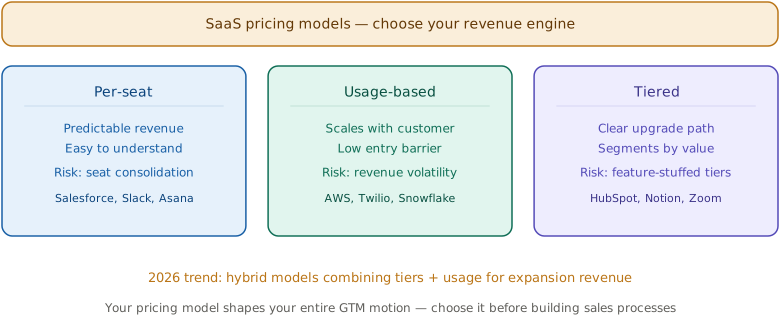
Multiple plans at different price points, each offering a different set of features or usage limits. The standard “Good, Better, Best” approach. This is the most common SaaS pricing model because it lets you serve multiple customer segments from a single product.
Works when: You serve customers of different sizes with different needs. Your product has natural feature groupings that correspond to customer sophistication. You want a clear upgrade path that encourages expansion revenue.
Limitations: Tier design is harder than it looks. Too few tiers miss segments. Too many create decision paralysis. The features in each tier must feel genuinely different, not just artificially gated. Your B2B pricing strategy should align each tier with a distinct buyer persona and their specific use case.
3. Per-User (Seat-Based) Pricing
Customers pay a fixed fee per user per month. Revenue scales predictably as the customer’s team grows. Slack, Salesforce, and most collaboration tools use this model because every additional user represents additional value delivered.
Works when: Each user gets distinct, individual value from having their own account. Usage correlates with headcount. Your buyers understand and accept per-seat pricing (enterprise procurement teams are very familiar with it).
Limitations: Creates friction when customers share logins to save money. Penalizes companies for adding users, which can slow adoption. Increasingly challenged by AI products where value isn’t tied to human headcount. Maxio’s SaaS pricing research confirms that per-user models are declining in popularity as usage-based alternatives gain traction.
4. Usage-Based (Pay-As-You-Go) Pricing
Customers pay based on actual consumption: API calls, data processed, emails sent, storage used, or transactions completed. Stripe, AWS, and Twilio popularized this model. It aligns cost directly with value: the more you use, the more you pay.
Works when: Usage varies significantly between customers. Your product delivers clear, measurable units of value. You want to remove adoption barriers by making entry cheap (pay only for what you use).
Limitations: Unpredictable costs make budgeting difficult for enterprise buyers. Revenue can be volatile if usage drops during slow periods. Requires reliable metering infrastructure to track and bill accurately. Industry data from 2022 showed that 61% of SaaS companies used some form of usage-based pricing, with the trend accelerating into 2026.
5. Freemium
A free tier with limited features or usage, plus paid tiers that open additional capabilities. HubSpot, Slack, and Zoom all use freemium to drive massive adoption at the top of the funnel, then convert a percentage of free users into paid customers.
Works when: Your product has strong viral potential (users invite other users). The free tier delivers enough value to create habit formation. You have a clear, compelling reason for users to upgrade (not just a feature wall).
Limitations: Most free users never convert. You need massive volume at the free tier to generate meaningful paid revenue. Supporting free users costs money (infrastructure, support), and that cost needs to be justified by conversion rates or brand value. The conversion rate from free to paid typically ranges from 2-5% for B2B SaaS.
6. Hybrid Pricing
A combination of two or more models. The most common hybrid is a base subscription fee plus usage-based charges on top. This is increasingly the default for sophisticated SaaS companies because it provides revenue predictability (base fee) while capturing upside from high-usage customers (usage component).
Works when: Your product has both a core platform value (worth a base fee) and variable usage value (worth metering). You want predictable base revenue with expansion potential. Your customers need cost predictability but also consume your product at variable rates.
Limitations: More complex to communicate on a pricing page. Requires clear documentation so customers understand what’s included in the base fee versus what’s metered. Can confuse prospects if not presented well.
3 SaaS Pricing Strategies
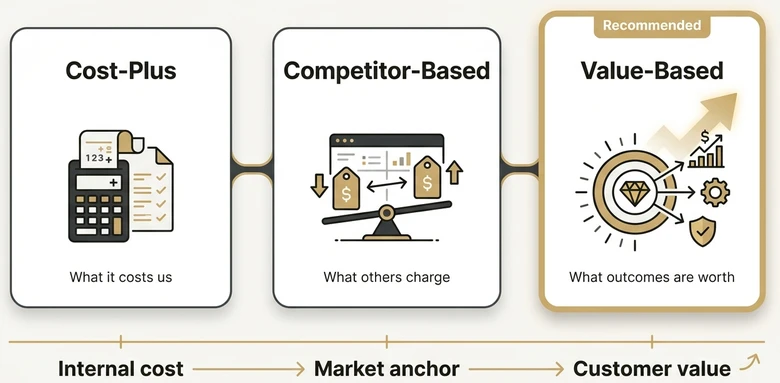
Models are the structure. Strategies are how you determine the actual numbers. Three approaches dominate B2B SaaS.
Value-Based Pricing (Recommended)
Set prices based on the perceived value your product delivers to customers, not on your costs or competitors’ prices. This is the most profitable approach because it captures the full willingness-to-pay of each customer segment.
To execute value-based pricing, you need customer research: interviews, surveys (Van Westendorp price sensitivity analysis works well), and usage data that reveals which features drive the most impact. The result is pricing that feels fair to customers (they’re paying proportional to the value they receive) while maximizing your revenue.
Competitor-Based Pricing
Position your price relative to competitors: slightly above (premium positioning), at parity, or below (market penetration). This is common for companies entering established categories where buyers already have price anchors.
The weakness: it ignores your unique value. If your product solves a problem competitors don’t, competitor pricing undervalues it. Use competitor pricing as a reference point, not the primary driver.
Cost-Plus Pricing
Calculate your costs (infrastructure, support, development) and add a margin. This is the least effective strategy for SaaS because software marginal costs are near zero. A product that costs you $2/month to serve might deliver $200/month in value. Cost-plus pricing leaves that entire gap on the table.
How to Choose the Right Pricing Model
Don’t copy your competitor’s pricing page. Instead, answer these four questions.
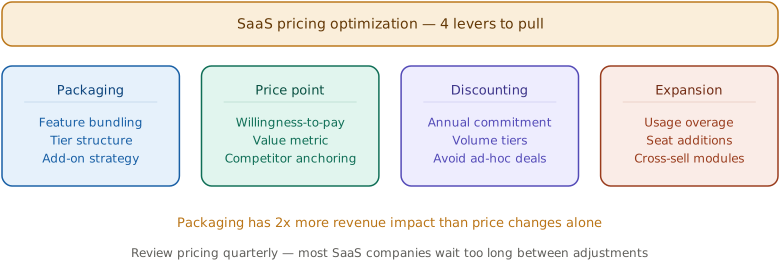
How does your product deliver value? If value scales with users, per-user works. If value scales with usage, usage-based works. If value is the same regardless of team size, flat-rate or tiered works. Match the model to the value driver.
Who is your buyer? Enterprise procurement teams prefer predictable annual contracts. SMBs prefer low monthly commitments with the ability to cancel. Developers prefer usage-based models where they only pay for what they consume. Your pricing model needs to match your buyer’s purchasing behavior.
What’s your growth goal? If you need rapid user acquisition, freemium removes the price barrier. If you need to maximize revenue from existing customers, tiered pricing with clear upgrade paths drives expansion. If you need predictable ARR for fundraising, per-user or flat-rate subscriptions are easiest to forecast.
What stage are you at? Early-stage: keep it simple (flat-rate or 2-3 tiers). Growth-stage: add complexity that captures more value (usage-based components, enterprise tiers). Scale-stage: optimize with hybrid models and annual contracts. Pricing should evolve with your product and market understanding.
PRO TIP
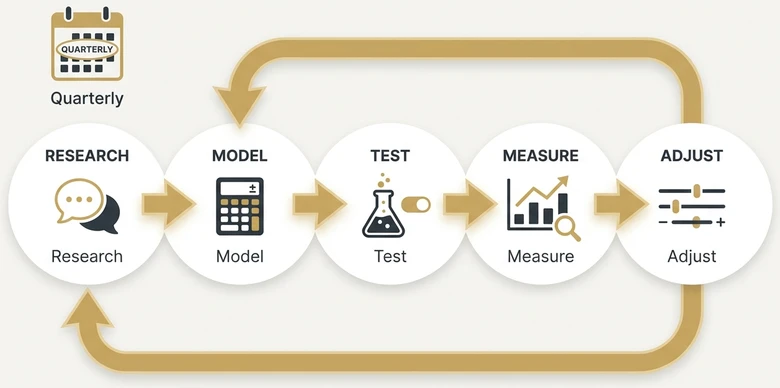
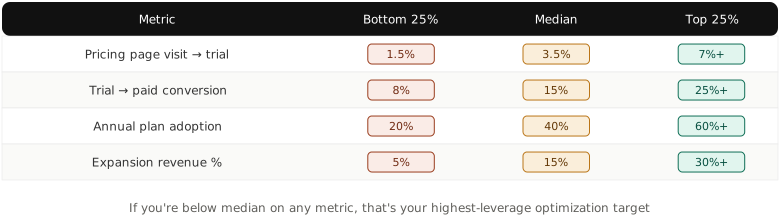
Review your pricing quarterly and make changes at least annually. According to research from Simon-Kucher’s Global B2B Software Study, most SaaS businesses sacrifice 11-17% in total revenue every year by not optimizing their pricing. The same study found that companies raising prices annually don’t experience higher churn than those that hold prices flat.
SaaS Pricing Examples by Model
Seeing how successful companies apply each model makes the concepts concrete.
Flat-rate: Basecamp charges $349/month for unlimited users. Simple, predictable, and positions them as the anti-complexity alternative to per-seat tools.
Tiered: HubSpot offers Starter, Professional, and Enterprise tiers across each Hub, with pricing ranging from $20/month to $3,600+/month. Each tier targets a different company size and sophistication level.
Per-user: Salesforce charges per user per month across its tiers, from $25 (Essentials) to $300+ (Unlimited). Enterprise buyers accept this because each user gets a distinct workspace and data view.
Usage-based: Stripe charges 2.9% + $0.30 per transaction. Customers only pay when they process payments, which perfectly aligns cost with the value Stripe delivers.
Freemium: Slack offers a free tier with limited message history and integrations. The free tier is good enough to create habit formation, and the jump to paid ($8.75/user/month) opens the full archive and admin controls that teams need as they scale.
Hybrid: Snowflake charges a base storage fee plus usage-based compute credits. Customers pay for what they store (predictable) plus what they query (variable), aligning both components with distinct value drivers (all pricing as of 2026).
The 3-3-2-2-2 Rule for SaaS Pricing
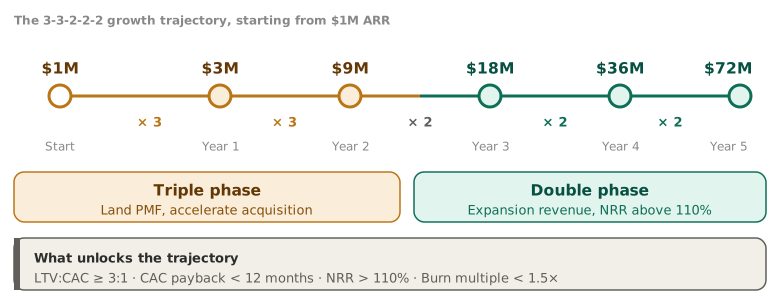
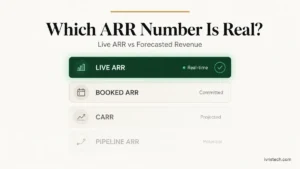
The 3-3-2-2-2 rule is a revenue growth benchmark for venture-backed SaaS companies. It describes the growth trajectory needed to go from roughly $1M ARR to $72M-$100M ARR in five to seven years: triple revenue for two consecutive years, then double it for three consecutive years. The unspoken assumption is that “ARR” means the same thing each year — whether the ARR you’re growing is live or just booked changes that math, and the rule was written about live (recognized) ARR specifically.
Here’s what the math looks like starting from a $1M ARR baseline: Year 1 reaches $3M, Year 2 hits $9M, Year 3 gets to $18M, Year 4 climbs to $36M, and Year 5 reaches $72M. The framework evolved from an earlier model called T2D3 (Triple, Triple, Double, Double, Double), coined by Battery Ventures’ Neeraj Agrawal. The 3-3-2-2-2 version is considered more realistic for the 2026 capital environment, where investors reward efficiency over brute-force growth.
What This Means for Your Pricing
The 3-3-2-2-2 rule isn’t a pricing model. It’s a growth target. But pricing is one of the primary levers that determines whether you hit it. Here’s why:
Tripling revenue in years 1-2 requires low-friction pricing. You need rapid customer acquisition, which means your pricing can’t be a barrier to entry. Freemium or low starting tiers work well here because they reduce the cost of saying yes. The goal is volume and product-market fit, not revenue per customer.
Doubling revenue in years 3-5 requires expansion revenue. You can’t double by acquiring new customers alone. Net revenue retention (NRR) above 110% means your existing customer base grows on its own through upgrades, seat additions, and usage expansion. This is where tiered and usage-based models pay off because they create natural upsell paths. Companies with NRR above 120% trade at valuation multiples 25% higher than those below 100%.
The pricing model you choose at $1M ARR shapes your trajectory at $10M. Flat-rate pricing makes the tripling phase easy (simple sales pitch, fast conversion) but makes the doubling phase hard (no expansion mechanism). Per-user pricing creates steady expansion but limits adoption. The most successful companies at each growth stage adjust their model. They start simple, then add complexity as their customer base and product mature.
3-3-2-2-2 vs. Rule of 40
The two frameworks answer different questions. The 3-3-2-2-2 rule sets a multi-year revenue velocity target. The Rule of 40 (growth rate + profit margin ≥ 40%) measures the balance between growth and profitability at a single point in time. You can hit the 3-3-2-2-2 trajectory while failing the Rule of 40 if your burn rate is too high. The best-run SaaS companies use both: 3-3-2-2-2 as the growth map and Rule of 40 as the efficiency guardrail. For more on the metrics that tie pricing to revenue performance, see our guide to SaaS marketing metrics.
How to Model Your SaaS Pricing
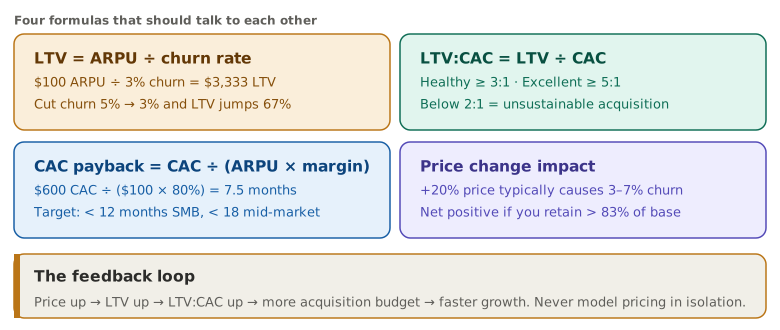
Before setting or changing your prices, run the numbers. These four formulas give you the data you need to price with confidence rather than guesswork.
1. Calculate LTV (Customer Lifetime Value)
Formula: LTV = ARPU ÷ Monthly Churn Rate
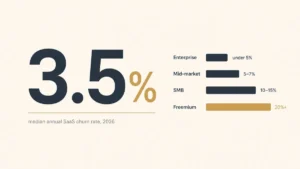
If your average revenue per user (ARPU) is $100/month and your monthly churn rate is 3%, your LTV is $3,333. At 5% churn, it drops to $2,000. That single variable, churn, changes customer value by 67%. This is why retention improvements are the highest-leverage pricing move most SaaS companies can make.
2. Check LTV:CAC Ratio
Formula: LTV:CAC = Customer Lifetime Value ÷ Customer Acquisition Cost
A healthy ratio is 3:1 or higher. Below 3:1, you’re spending too much to acquire customers relative to what they’re worth. Above 5:1, you might be underinvesting in growth. If your LTV:CAC ratio is below 3:1, you have two options: raise prices (increase LTV) or reduce acquisition costs (lower CAC). For most SaaS companies below $10M ARR, pricing changes are faster and easier to implement than restructuring your entire go-to-market.
3. Measure CAC Payback Period
Formula: CAC Payback = CAC ÷ (ARPU × Gross Margin)
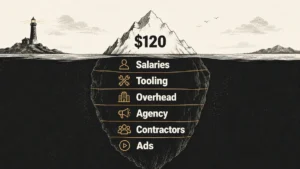
If it costs $600 to acquire a customer who pays $100/month at 80% gross margin, your payback is 7.5 months. Industry benchmarks suggest keeping payback under 12 months for SMB SaaS and under 18 months for mid-market. If payback exceeds 18 months, you either need higher prices or lower acquisition costs because you’re tying up cash in customers who may churn before you break even. That payback math is only useful when the CAC input is fully-loaded; a 7.5-month payback period built on incomplete CAC math often runs 10 once you add in the missing inputs. Those thresholds also read tighter than what companies actually report: measured medians land at 16 months blended and 14 to 18 months for mid-market, so price against the band for your segment rather than the round number.
4. Model the Price Change Impact
Before raising prices, run this scenario: a 10-20% price increase typically causes 3-7% additional churn in the first quarter. If your current ARPU is $80 and you raise to $96 (20% increase) while losing 5% of customers, your net MRR impact is positive as long as you retain more than 83% of your customer base. Most SaaS companies find the math works in their favor. The key is testing on new customers first before rolling changes to existing accounts.
PRO TIP
Don’t model pricing in isolation. A price increase that improves LTV:CAC from 2.5:1 to 4:1 can justify spending more on acquisition, which accelerates growth. The best pricing decisions create a positive feedback loop between retention, expansion, and acquisition economics.
5 SaaS Pricing Mistakes to Avoid
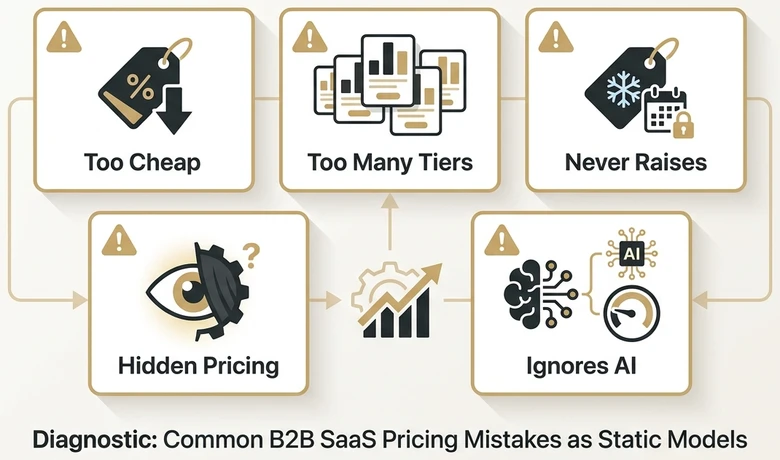
Pricing Too Low to “Win” Customers
Low prices don’t just reduce revenue. They signal low value. B2B buyers are skeptical of the cheapest option because they assume it’s cheap for a reason. Price your product to reflect the value it delivers, not to undercut competitors by 50%. If your product saves a customer $100,000/year, charging $5,000/year isn’t aggressive. It’s leaving $95,000 in perceived value gap that makes buyers nervous.
Creating Too Many Tiers
More than three tiers creates decision paralysis. When a prospect lands on your pricing page and sees five options with 30 feature rows, they don’t choose. They leave. The “Good, Better, Best” structure works because it makes comparison easy and nudges buyers toward the middle option (the compromise effect).
Never Raising Prices
Your product improves every month. Your costs increase. Your value increases. But if you never raise prices, you’re capturing less value every year relative to what you deliver. Build annual price reviews into your process. Even a 5-10% increase every 12-18 months compounds significantly over time. Track your SaaS marketing metrics alongside pricing changes to measure the real impact on acquisition and churn.
Hiding Pricing on Your Website
If buyers can’t find your pricing, they assume it’s expensive and move to a competitor who’s transparent. Published pricing reduces friction in the buying process and self-qualifies prospects. You can still offer custom enterprise pricing above your highest published tier, but give most buyers a clear price to anchor on.
Ignoring the AI Pricing Shift
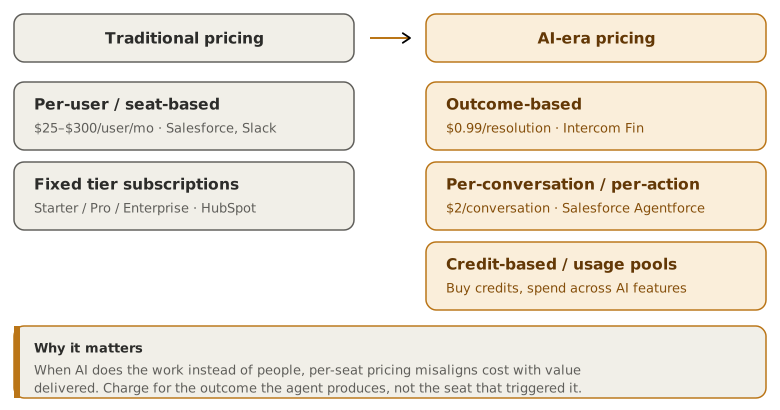
AI-powered SaaS products are breaking traditional per-user models because value delivery is increasingly automated and variable. If your product uses AI to complete tasks that previously required human users, charging per seat makes less sense. Consider usage-based or outcome-based components that align with how AI delivers value.
This shift is already happening at scale. Intercom charges $0.99 per AI resolution instead of per agent seat. Salesforce Agentforce costs $2 per conversation. HubSpot’s Breeze introduced outcome-based pricing tiers in 2026. Credit-based models, where customers buy a bucket of AI credits and spend them across features, are emerging as a middle ground between predictability and usage alignment. If your product uses AI to deliver value, your pricing model needs to reflect that. Charging per seat for AI work is like charging per person for automated manufacturing. For a deeper look at how B2B pricing strategy is evolving alongside these shifts, see our complete guide.
Frequently Asked Questions
SaaS pricing refers to the models and strategies that software-as-a-service companies use to charge customers for ongoing access to their product. Unlike traditional software sold as a one-time purchase, SaaS pricing is subscription-based, with customers paying monthly or annually. Stripe’s guide to SaaS pricing models breaks down how different structures affect revenue predictability and churn. The pricing structure (flat-rate, tiered, per-user, usage-based, freemium, or hybrid) determines how costs scale as usage or team size grows.
The 3-3-2-2-2 rule is a SaaS growth benchmark that describes healthy growth rates by stage: triple revenue for two consecutive years (3x, 3x), then double for three years (2x, 2x, 2x). It’s often cited as the path to reaching $100M+ ARR. While it’s a revenue growth rule rather than a pricing rule, pricing decisions directly affect your ability to hit these targets. Higher prices with strong retention (high NRR) make doubling revenue much easier than low prices requiring constant new customer acquisition.
The four foundational pricing types are cost-plus (adding a margin to your costs), competitor-based (pricing relative to competitors), value-based (pricing based on customer-perceived value), and penetration pricing (pricing low to gain market share quickly). In SaaS specifically, value-based pricing is the most effective long-term strategy because software margins are high and customer value often far exceeds delivery cost.
Netflix is a SaaS (Software as a Service) company. It delivers a software application (streaming video) over the internet on a subscription basis. PaaS (Platform as a Service) provides a development platform for building applications, like Heroku or Google App Engine. Netflix is SaaS because end users consume a finished product rather than building on top of a platform. Its tiered pricing model (Basic, Standard, Premium) is one of the most well-known examples of SaaS pricing in the consumer market.
Review pricing quarterly and make adjustments at least annually. Major structural changes (new model, new tiers) should happen 1-2 times per year with proper customer communication and grandfathering for existing customers. Minor adjustments (price increases on new plans, feature bundling changes) can happen more frequently. The key is having a systematic review process rather than changing pricing reactively when revenue targets are missed.
Divide your average revenue per user (ARPU) by your monthly churn rate. If ARPU is $100 and monthly churn is 4%, LTV is $2,500. Then compare LTV against your customer acquisition cost (CAC). A healthy LTV:CAC ratio is at least 3:1. If your ratio is below 3:1, raising prices or improving retention are the two fastest fixes. Reducing churn from 5% to 3% increases LTV by 67% without acquiring a single new customer.