Your marketing team hit their MQL target last quarter. Sales still complained about lead quality. Pipeline didn’t grow. Sound familiar?
This is what happens when B2B teams run lead generation without demand generation, or worse, when they use the terms interchangeably and end up doing neither well. Salesforce’s State of Sales research found that 81% of buyers research brands on their own before ever talking to sales. If your brand isn’t part of that research phase, your lead gen is fishing in an empty pond.
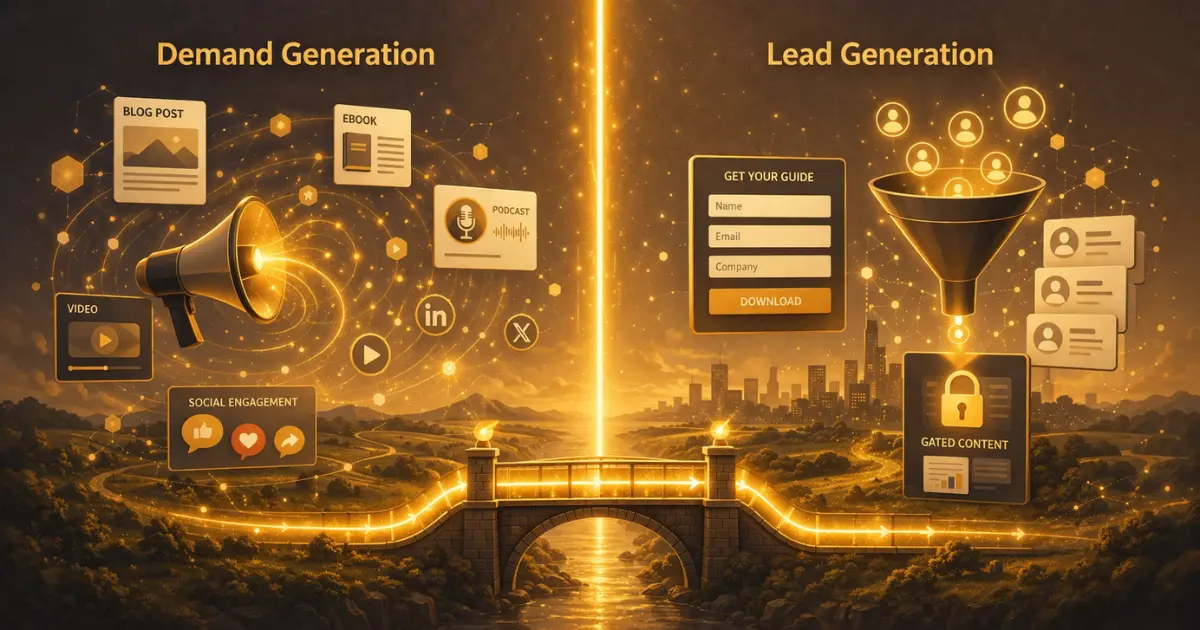
Demand gen and lead gen aren’t competing strategies. They’re sequential phases of the same pipeline-building process. But knowing when to weight one over the other, and how to connect them, is the difference between a marketing team that generates contacts and one that generates revenue. The third question that sits behind both is when execution capacity is the actual bottleneck, because the answer changes whether you build the function in-house or rent SDR coverage from an agency until the team catches up.
This guide breaks down the real differences between demand generation and lead generation, when to prioritize each, and how to build a system where both feed the same pipeline.
For accounts that already show intent, shifting to account-based tactics works well — see these ABM strategy examples for campaign blueprints.
Key Takeaways
- Demand generation builds awareness and trust before buyers are ready to purchase. Lead generation captures contact information from buyers who are already showing intent.
- Only about 5% of B2B accounts are actively in-market at any given time. Demand gen reaches the other 95% so they know your brand when they start evaluating.
- Running lead gen without demand gen produces low-quality contacts that waste sales time. Cold leads close at roughly 0.2%, while warm inbound leads close at 15-20%.
- The strongest B2B teams run both in parallel, with demand gen creating the audience and lead gen converting the best of that audience into qualified pipeline.
What Is Demand Generation?
Demand generation is a long-term marketing strategy focused on building awareness, educating your target market, and creating interest in your category and brand before buyers are ready to purchase. The goal isn’t to collect contact information. It’s to make sure that when someone in your market starts evaluating solutions, your brand is already on their shortlist.
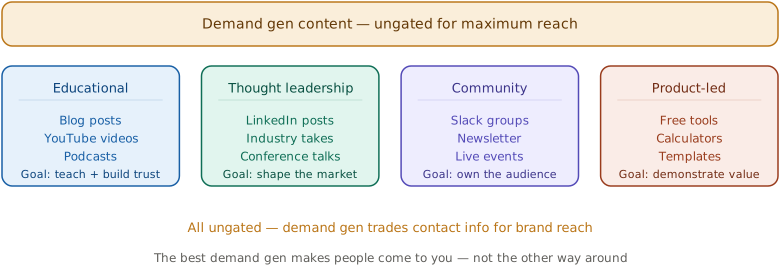
Demand gen operates at the top of the funnel and beyond. It includes activities like publishing ungated content (blog posts, podcasts, social media), building thought leadership, running brand awareness campaigns, speaking at events, and participating in the communities where your buyers spend time.
The defining characteristic: demand gen gives value without asking for anything in return. No forms, no gates, no “download this PDF by entering your email.” The trade-off is that results are harder to measure in the short term but compound dramatically over time.
Common Demand Gen Tactics
Ungated blog posts, guides, and research reports. Organic LinkedIn content and engagement. Podcast appearances and guest speaking. YouTube and video content. Community participation on Reddit, Slack groups, and industry forums. Brand awareness advertising (display, social, podcast sponsorships). Webinars and events positioned as educational rather than sales-driven. LinkedIn ads support both motions — Thought Leader Ads for demand creation, Lead Gen Forms for demand capture — with very different cost economics.
Demand Gen Metrics
Brand search volume (how many people Google your company name). Direct traffic growth. Organic traffic from non-branded keywords. Social engagement and share of voice. Podcast downloads and video views. Self-reported attribution (“How did you hear about us?”). Inbound demo request volume over time.
What Is Lead Generation?
Lead generation is the process of capturing contact information from people who have shown interest in your product or category. The goal is to identify individuals with buying intent and move them into your sales pipeline for direct follow-up. Capturing the contact is the start, not the finish, because before it moves to a rep the lead has to pass a validation and qualification gate. OpenAI Presence’s inbound qualification model shows how that gate can move inside the first voice or chat interaction, provided the team has already defined what counts as a qualified lead.
Lead gen operates in the middle and bottom of the funnel. It targets buyers who are already aware of their problem and actively researching solutions, which is the same in-market moment paid search is built to capture in the PPC versus display comparison. The tactics are conversion-focused: gated content, webinar registrations, free trials, demo requests, and form fills. Webinar registrations sit near the front of that list for a reason, but a registration only becomes a lead once you score attendance and intent, not the moment someone fills the form.
The defining characteristic: lead gen asks for an exchange. The prospect gives you their name, email, company, and role. In return, they get something they perceive as valuable enough to justify sharing that information.
Common Lead Gen Tactics
Gated ebooks, whitepapers, and templates. Webinar and event registrations. Free trial and freemium signups. Demo request forms. Content syndication through third-party publishers. Paid search campaigns targeting high-intent keywords. LinkedIn Lead Gen Forms and conversation ads. Chatbot-driven qualification on your website. The conversion-point-by-content-type mapping lives in our content marketing lead generation system, and the geographically-bounded SMB variant — different channels, different CPL math — gets its own treatment in local lead generation.
Lead Gen Metrics
Number of MQLs and SQLs generated. Cost per lead (CPL). Lead-to-opportunity conversion rate. Form conversion rates by channel. Speed-to-lead (time from form fill to first sales touch). Pipeline sourced from lead gen campaigns.
Demand Gen vs Lead Gen: Key Differences
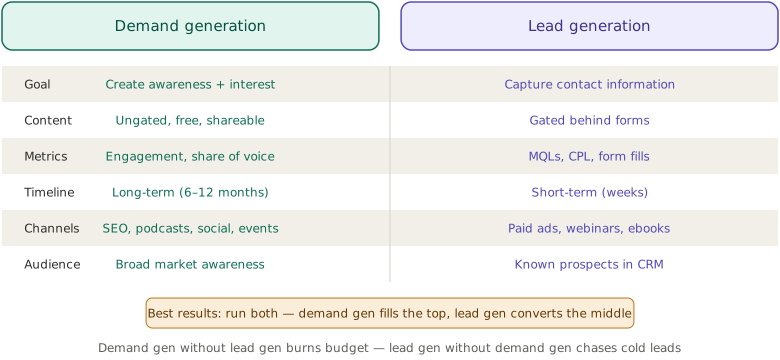
The confusion between these two strategies costs B2B teams real money. Here’s where they actually differ.
| Dimension | Demand Generation | Lead Generation |
|---|---|---|
| Goal | Build awareness and trust | Capture contact information |
| Funnel stage | Top of funnel (and pre-funnel) | Middle and bottom of funnel |
| Content approach | Ungated, educational, freely shared | Gated, conversion-optimized |
| Audience | The 95% not yet in-market | The 5% actively evaluating |
| Timeline | Long-term (6-18 months to compound) | Short-term (results within weeks) |
| Primary metric | Brand search volume, inbound demo requests | MQL count, cost per lead |
| Attribution | Difficult (multi-touch, dark funnel) | Direct (form fill = lead) |
| Sales relationship | Indirect (creates future pipeline) | Direct (feeds leads to sales now) |
The Critical Difference Most Teams Miss
Lead gen works best when the audience is already familiar with your brand and category. Without demand gen feeding the top of the funnel, lead gen pulls in contacts who have low context, low trust, and low conversion potential. That’s why many marketing teams hit their MQL targets while sales teams complain about lead quality. The leads were captured, but the demand was never created. The conversion gap is not subtle either, because demand you capture from a warm audience converts many times higher than demand you interrupt cold, which is the real reason a demand-gen-fed funnel beats a pure lead-gen one on revenue rather than raw lead count.
Research shows that 79% of leads never convert into sales, often due to poor nurturing and qualification. The root cause isn’t usually the lead gen process itself. It’s that the leads entered the funnel before they understood the problem or trusted the brand. A sales accepted lead handoff at least stops the worst of those leads from reaching a rep, since sales reviews each one against agreed criteria before accepting it, but the durable fix is feeding the funnel with demand first.
How Demand Gen and Lead Gen Work Together
The most effective B2B marketing engines run demand gen and lead gen as a connected system, not as separate programs with separate budgets and separate teams. Here’s how the sequence works in practice. Turning that sequence into something repeatable is its own job, and our five-stage demand generation framework gives each phase a goal, a channel mix, and a metric so the system runs the same way every quarter.
Phase 1: Create Demand (Months 1-6)
Publish ungated content that addresses your market’s biggest problems. Build a LinkedIn presence where your team shares insights daily. Launch a podcast or contribute to industry publications. Run awareness ads to your ICP. The goal: when people in your market think about your category, they think about you.
Phase 2: Capture Demand (Ongoing, Accelerates After Month 3)
As awareness builds, some of those educated prospects will start showing buying signals. They visit your pricing page, search for your brand name, or request a demo. Lead gen captures these high-intent actions. Gated content should only gate material that’s genuinely valuable enough to justify the exchange (templates, tools, detailed frameworks), not basic blog content repackaged as a PDF. Those signals map to the awareness and consideration stages of the B2B customer journey, which is where demand quietly turns into intent.
Phase 3: Convert and Measure (Continuous)
Track self-reported attribution (“How did you hear about us?”) to measure demand gen’s influence. Compare pipeline quality between inbound leads (demand gen-sourced) and outbound/gated leads. In our experience, inbound leads from demand gen efforts close 3-5x faster than cold outbound leads and at higher deal sizes, because the trust was built before the sales conversation started. The cold outbound side of that comparison only earns its share of pipeline when the email actually reaches the inbox — the DNS-level verification gates that decide whether the email lands in the inbox or the spam folder are the precondition every reply-rate benchmark assumes is in place.
The category shift is visible in HubSpot retiring the INBOUND label, which shows how inbound, demand gen, and customer events are merging into broader growth systems.
When outbound is part of your lead gen mix, your subject line is the first filter. See our breakdown of cold email subject lines that get replies in B2B for formulas that consistently hit 35-50% open rates.
PRO TIP
Add a “How did you hear about us?” field to your demo request form as a free-text box (not a dropdown). This self-reported attribution data is the most reliable way to measure demand gen’s real impact, because it captures signals that no analytics platform can track: podcast mentions, word-of-mouth, LinkedIn posts seen months ago, and conference conversations.
When to Prioritize Demand Gen vs Lead Gen
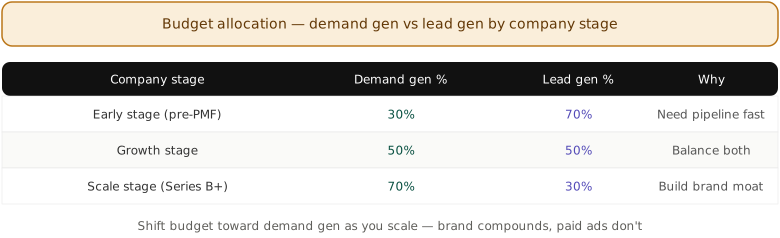
Both strategies should run in parallel, but the allocation of budget and team time depends on your company’s stage and pipeline health.
Prioritize Demand Gen When…
You’re entering a new market or launching a new product category. Your brand has low awareness among target buyers. Sales reports that prospects have never heard of you during discovery calls. Your inbound demo request volume is flat or declining. You have a long sales cycle (6+ months) where trust matters more than speed. Your ICP is clearly defined but you’re struggling to get in front of them.
Prioritize Lead Gen When…
Your brand already has strong awareness in the market. You have existing demand but aren’t capturing it efficiently. Sales needs more pipeline volume in the next 30-60 days. You’re in a well-established category where buyers are actively searching for solutions. Your B2B marketing campaigns are producing traffic but not converting visitors into contacts. When in-house capacity is not there to capture that demand, the 12 B2B lead gen specialist companies by category are the outsourced-execution option for getting the conversion done.
The Recommended Split
For most mid-market B2B companies, we recommend a 60/40 to 70/30 split favoring demand gen. Here’s why: if you invest 70% of effort in demand gen and 30% in lead gen, the leads you capture will be higher quality because they come from an audience that already knows and trusts you. The result is fewer leads but more pipeline, which is what actually matters.
If your CEO or board is pushing for “more leads,” the answer isn’t to shift budget from demand gen to lead gen. It’s to show them the pipeline quality data: close rates, deal sizes, and sales cycle length for demand gen-sourced leads versus cold captured leads. The numbers always make the case.
Real-World Example: How Cognism Shifted from Lead Gen to Demand Gen
One of the clearest examples of this shift comes from Cognism, a B2B data platform. Their marketing team moved away from a traditional lead scoring and gated-content approach toward an ungated, demand gen-first strategy. They invested in organic LinkedIn content, ungated research, and brand-led paid media.
The results: inbound pipeline grew from $2 million to $13 million. Win rates increased because the leads already understood the product and category. Sales cycles shortened because less education was needed during the sales process. They didn’t abandon lead gen entirely. They simply stopped treating it as the primary engine and started treating demand gen as the fuel that makes lead gen work.
5 Mistakes B2B Teams Make With Demand Gen and Lead Gen
Gating Everything
When you gate every piece of content, you optimize for contact collection at the expense of reach and trust. A blog post that could have been read by 5,000 people and built brand awareness instead gets downloaded by 200 people, most of whom gave fake email addresses because they didn’t want another sales sequence. Gate your best, most actionable assets. Ungate everything else.
Measuring Demand Gen Like Lead Gen
If you try to attribute demand gen to last-click conversions, it will always look like it’s underperforming. Demand gen influences pipeline through channels that are invisible to standard analytics: word of mouth, dark social, podcast mentions, and LinkedIn posts seen months before a demo request. Use self-reported attribution alongside your analytics data to get the full picture.
Running Lead Gen Without Demand Gen
Lead gen in isolation produces contacts with no brand familiarity. These leads close at extremely low rates because sales has to build trust from zero. The fix isn’t to abandon lead gen. It’s to run demand gen first, then use lead gen to capture the interest you’ve already created.
Stopping Demand Gen When Pipeline Looks Full
Pipeline takes 6-12 months to build. If you pause demand gen when things look good, pipeline dries up two quarters later. Demand gen should be an always-on program, not a campaign you turn on and off based on quarterly pipeline numbers. Think of it like fitness: you don’t stop exercising because you’re healthy today.
Treating Them as Separate Programs
The worst organizational mistake is having a “demand gen team” and a “lead gen team” with separate KPIs, budgets, and strategies. They should be one connected program with shared goals. The demand gen team’s content should create natural entry points for lead gen conversion. The lead gen team’s data should inform which topics and angles resonate most for demand gen content. Your B2B marketing framework should connect these two functions as stages of a single system, not competing departments.
Demand Gen vs Lead Gen vs Demand Capture
There’s a third concept worth understanding: demand capture. While demand generation creates new interest, demand capture targets people who are already searching for solutions. Think of it this way.
Demand generation: Making people aware they have a problem your product solves. Demand capture: Reaching people who already know they have the problem and are evaluating options. Lead generation: Converting that awareness or intent into a named contact your sales team can follow up with. Budgets rarely split this cleanly because the software splits along the same three lines, and four of the categories only ever serve the first two, which is why a stack assembled category by category tends to buy the middle stage twice.
Demand capture tactics include paid search campaigns on high-intent keywords (“best CRM for mid-market”), SEO for bottom-of-funnel terms, review site optimization (G2, Capterra), and B2B Google Ads targeting competitors. These are critical because they capture existing demand that competitors will take if you don’t. The mistake is relying solely on demand capture without investing in demand creation. If you only fish where fish already are, you’re always competing on price and features instead of brand trust. Knowing which accounts are already in that market, before they ever search, is what B2B intent data is for.
Frequently Asked Questions
In B2B marketing, “demand generation” (often shortened to “demand gen”) refers to the full spectrum of activities that create awareness and interest in your product or category. It’s a compound term, not two separate concepts. Demand gen builds the desire for a solution before a buyer is ready to purchase, using tactics like ungated content, thought leadership, and brand advertising.
The 3-3-3 rule suggests that a sales email should take no more than 3 seconds to identify the sender, 3 seconds to understand the value proposition, and 3 seconds to know the next step. It’s a formatting guideline for cold outreach, emphasizing brevity and clarity. While not directly related to demand gen vs lead gen, it’s relevant to how sales teams follow up on leads generated through either strategy.
Demand generation is a subset of marketing focused specifically on creating awareness and interest in your brand. Marketing is a broader discipline that includes demand gen, lead gen, branding, product marketing, customer marketing, and more. You can think of demand gen as the top-of-funnel engine within your overall go-to-market strategy.
The 4 C’s of B2B marketing are Customer (understanding their needs and pain points), Cost (the total cost of ownership, not just price), Convenience (how easy it is to buy and use your product), and Communication (how you engage and build relationships with buyers). Both demand gen and lead gen play roles across all four C’s, with demand gen particularly focused on Communication and Customer, while lead gen targets Convenience and Cost justification.
Yes, and you should. The strongest B2B marketing teams run both in parallel. Demand gen builds the audience through ungated content, brand advertising, and community engagement. Lead gen captures the highest-intent members of that audience through gated assets, demo forms, and trial signups. The key is connecting them: demand gen creates the trust that makes lead gen convert at higher rates. Start with a 70/30 split favoring demand gen, then adjust based on your pipeline data.