LinkedIn now claims 39% of B2B ad budgets and produces 113% return on ad spend, according to 2025 platform benchmark data. But the median click costs $3.94 and the median CTR is 0.52%, which means a lot of B2B teams are spending real money on LinkedIn without knowing whether their ads look anything like the ones that work.
This guide collects 18 LinkedIn ad examples organized by the 9 formats B2B teams actually run. Each format gets the benchmark numbers, two real-world example patterns from named B2B brands, and the gotcha most teams hit. Skip to the format you’re about to launch, or read straight through to see why Thought Leader Ads now run 77% cheaper per click than Single Image Ads (per ZenABM’s 2026 benchmark report) and why Lead Gen Forms still convert at roughly twice the rate of external landing pages.
Key Takeaways
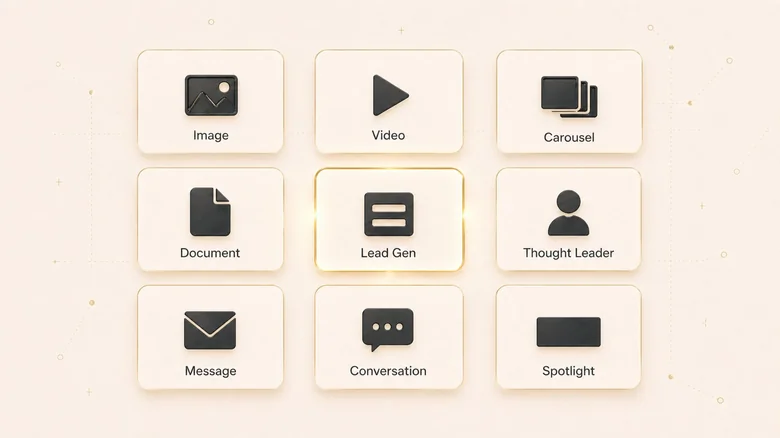
- LinkedIn has 9 B2B-relevant ad formats: Single Image, Video, Carousel, Document, Lead Gen Form, Thought Leader, Message, Conversation, and Spotlight/Text/Event. Format choice changes cost-per-click by 5x or more.
- Median LinkedIn CTR is 0.52%, median CPC is $3.94, and Lead Gen Forms convert at 6-10% (roughly 2x external landing pages).
- Thought Leader Ads cost about 77% less per click than Single Image Ads, according to ZenABM’s 2026 benchmark report. Most B2B budgets still over-index on Single Image.
- Native-looking creative beats polished corporate design on LinkedIn. Real screenshots, real people, and specific points of view outperform generic stock photography across every format.
- The 5 most common LinkedIn ad mistakes: wrong format for goal, broad job-title targeting, sending traffic to landing pages instead of Lead Gen Forms, single creative for entire campaign, and optimizing CTR without tracking pipeline.
- Refresh creative every 14 days to fight LinkedIn’s high frequency penalty. Same ad, same audience, third week is when CTR collapses.
How to Read LinkedIn Ad Examples
LinkedIn ads work differently from Meta or Google ads in three structural ways. The audience is smaller and more expensive (CPC $5-10 is typical, vs $1 on Meta). The buying journey is longer (211 days on average per HockeyStack data). And the ad formats matter more, because the spread between best-performing and worst-performing format is wider than on any other platform.
The 9 Formats Worth Studying
LinkedIn officially supports 11 ad formats, but only 9 deserve serious attention from B2B teams: Single Image, Video, Carousel, Document, Lead Gen Form, Thought Leader, Message, Conversation, and a small grouping of Spotlight/Text/Event ads. Job ads and Follower ads serve narrow use cases (recruitment and audience-building) that fall outside most B2B campaign briefs.
LinkedIn ads work best when paired with intent-capture on the other side of the funnel — most B2B teams running LinkedIn well are also running B2B Google Ads for the high-intent search demand that LinkedIn awareness generates, since the two platforms target the same buyer at different decision stages.
Single Image Ad Examples
Single Image Ads are the workhorse of LinkedIn advertising. They appear directly in the feed, support up to 3,000 characters of intro text, and accept one 1200×627 image. Median CPC is roughly $5-10, and median CTR sits at 0.44-0.65% per global benchmarks. They’re the format most B2B teams default to, which is also why they’re the most expensive format on a per-click basis.
Example 1: Salesforce: Research Stat as Hook
Salesforce’s “State of Sales” report ads typify the research-stat-as-hook pattern. The image is clean, branded, and built around a single data point (“87% of sales teams now use AI” or similar). The intro copy frames the stat, then the CTA drives to a gated PDF download. The pattern works because the stat does the persuasion before the click. Salesforce can afford to spend on this format because the report drives demo-qualified leads downstream.
Example 2: Gong: Provocative Insight + Demo CTA
Gong’s Single Image Ads typically lead with a provocative finding from their call-recording dataset (“Top reps say [X] in their first 30 seconds”). The image carries a quote-card design, the intro paragraph teases the analysis, and the CTA goes to a Gong Labs blog post or product page. The format works because Gong owns proprietary data nobody else has, which removes the “another vendor pushing content” pattern.
Video Ad Examples
Video ads on LinkedIn saw video inventory grow 74% in 2025, and view rates climbed roughly 5% year-over-year per Huble’s benchmark data. Median CPC sits a touch higher than Single Image at $6-10, but completion rates are meaningfully higher when the campaign objective is set to lead generation rather than awareness.
Example 3: HubSpot: 30-Second Product Walkthrough
HubSpot’s video ads keep the format tight. A 30-second walkthrough showing the actual CRM interface, a clear “what changes for you” voiceover, and a closing demo CTA. They almost never run cinematic brand video on LinkedIn because B2B prospects scrolling the feed at 11pm want function, not aspiration. The pattern is replicable for any SaaS with a screen-shareable product.
Example 4: Zoom: Customer Story Format
Zoom’s video ads frequently use a 60-90 second customer story format, where a named customer (typically a CIO or VP of Engineering at a recognizable company) explains a specific outcome. These ads run more for brand lift and account-based influence than for direct clicks, which is why Zoom can tolerate the lower CTR, the same awareness logic that governs the awareness half of the PPC versus display split. Track these against influenced pipeline, not click volume.
Carousel Ad Examples
Carousel ads outperformed Single Image Ads on CTR across all regions in Huble’s 2025 benchmark analysis. They allow up to 10 cards in a single ad, which suits multi-feature products and step-by-step explanations. Targeting `linkedin carousel ad examples` directly, two patterns dominate B2B carousel use.
Example 5: Asana: Feature Walkthrough Carousel
Asana’s carousel ads typically run 6-8 cards, each highlighting one workflow capability (timeline view, dependencies, automation, custom fields, dashboards, and so on). The first card frames the problem (“Project status updates take 4 hours a week”), the middle cards show features, and the last card closes with a free trial CTA. The format wins because it answers the “what does this product actually do” question that single-image ads can’t.
Example 6: Notion: Template Showcase Carousel
Notion uses carousels to showcase pre-built templates, with each card displaying a different use case (engineering wiki, product roadmap, OKR tracker). The visual appeal is higher because the templates themselves are the product demonstration. The CTA drives to a template gallery, where users self-segment by use case. This pattern only works for products with strong visual surface area.
Document Ad Examples
Document Ads launched in 2022 and have become the preferred format for analyst reports, ebooks, and playbooks. They allow PDF previews directly in the feed, which lets users skim 2-3 pages before deciding whether to download. They typically deliver lower CPC than Single Image Ads because the format gives more value upfront.
Example 7: Demandbase: ABM Playbook Preview
Demandbase’s Document Ads frequently preview their ABM playbook PDFs directly in the feed. Three pages of the playbook are visible without leaving LinkedIn, and the lead form triggers when the user clicks “see all pages.” The format works because B2B buyers can verify quality before exchanging their email. For the broader ABM context these ads support, see our ABM strategy examples guide.
Example 8: Gartner-Style Analyst Report Previews
Many B2B SaaS companies (Snowflake, ServiceNow, Workday, and others) use Document Ads to distribute Gartner Magic Quadrant or Forrester Wave reports. Two pages of the executive summary preview in the feed, then the gated download starts. This is one of the highest-intent ad placements available on LinkedIn because anyone interested in a Magic Quadrant is actively evaluating vendors.
Lead Gen Form Ad Examples
Lead Gen Forms convert at 6-10% on LinkedIn, roughly twice the rate of external landing pages, per multiple 2025 benchmark sources. The form pre-fills with the user’s LinkedIn profile data, removing form-fill friction entirely. Any B2B campaign optimized for lead volume should use this format by default. Whether you run those forms in-house or hand them to the agencies and tools built to run LinkedIn lead-gen-form campaigns is the next decision once the format is set.
Example 9: 6sense: ABM Strategy Guide With Pre-Filled Form
6sense routinely runs Lead Gen Form ads offering an “ABM Strategy Guide” or “Buyer Signal Report.” The Single Image Ad creative previews the cover, the form pops up in-platform with name, email, company, and title pre-filled, and submission is one click. Their typical conversion rate sits well above 8%, which means a $4 CPC produces a $50 cost per lead in a category where landing-page CPL often runs $150+.
Example 10: Drift: Conversational Marketing Playbook
Drift’s Lead Gen Form ads bundle a downloadable playbook with an option to “request a 15-minute consultation,” which uses LinkedIn’s secondary form field to qualify. The format separates pure content downloaders from active buyers in a single submission. For the broader inbound capture strategy these forms support, see our inbound lead generation guide.
PRO TIP
For any campaign with a “Get the Guide” or “Download the Report” offer, default to Lead Gen Forms over external landing pages. The 2x conversion rate uplift is real, and the lead quality is identical (the same person fills the same fields, just with less friction).
Thought Leader Ad Examples
Thought Leader Ads (TLAs) launched in late 2022 and let companies sponsor an organic post from an executive’s personal profile. ZenABM’s 2026 benchmark report found TLAs cost roughly 77% less per click than Single Image Ads. The economics are striking: $1,000 spent on TLAs produces about 327 clicks; $1,000 spent on Single Image produces about 71. Most B2B teams still under-allocate to this format. The same gap shows up on click-through rate, where TLAs post a 2.68% median against roughly 0.5% for Single Image, as our breakdown of how each format’s average CTR compares lays out. The format-level economics now sit inside a broader demand signal: LinkedIn revenue growth in FY26 Q4 reached 12%, with Microsoft naming Marketing Solutions as the primary driver.
Example 11: HubSpot CEO Content Amplification
HubSpot regularly amplifies posts from CEO Yamini Rangan and senior executives via TLAs. The original post lives on the executive’s personal profile (where it earns organic engagement), and the TLA puts it in front of a targeted audience that wouldn’t otherwise see it. The format works because the post reads as a personal opinion rather than a brand message, which clears the trust hurdle B2B buyers apply to corporate content. Picking which post to amplify means reading its unpaid numbers first, and how that organic engagement is actually counted decides whether a strong-looking post is genuinely earning clicks or just collecting logo taps.
Example 12: Snowflake Executive Insights
Snowflake amplifies posts from executives across their go-to-market team (CMO, CRO, VP Product) using TLAs. The format suits Snowflake’s audience because data and analytics buyers are deeply skeptical of vendor messaging, but they trust technical leaders speaking to their own experience. TLAs let Snowflake reach decision-makers without the polished-corporate filter.
Message and Conversation Ad Examples
Message Ads (formerly Sponsored InMail) deliver a one-shot personalized message into the recipient’s LinkedIn inbox. Conversation Ads extend the format with branching CTAs, letting the recipient self-route to different content paths. Both work best for narrowly-targeted campaigns under 5,000 accounts because cost-per-send is high.
Example 13: Webflow: Personalized Demo Invite
Webflow uses Message Ads to invite specific persona segments (design directors, engineering managers at e-commerce companies) to product demos. The message reads like a personal note from a Webflow team member, references the recipient’s company by name, and offers two demo time slots in the body. Open rates on Message Ads sit at 30-50%, far above email’s 15-20%, because LinkedIn inbox is much less crowded than email.
Example 14: Drift: Conversation Ad with Branching CTAs
Drift’s Conversation Ads typically open with “Are you spending on demand gen but not seeing pipeline?” and offer three reply paths: “Send me the playbook,” “Book a 15-min consult,” and “Just browsing.” Each path routes to a different content destination. The format mimics Drift’s own conversational marketing product, which makes the ad self-demonstrating.
Spotlight, Text, and Event Ad Examples
Three smaller formats round out the LinkedIn ad mix. Spotlight Ads target individual users and are visible only on the desktop right rail (good for account-targeted campaigns). Text Ads run in the right rail at very low CPM (~$2) but with negligible CTR. Event Ads promote LinkedIn-hosted events and webinars.
Example 15: Workday: Account-Targeted Spotlight Ads
Workday runs Spotlight Ads against named target-account lists during active sales cycles. The ad shows the prospect’s first name in the headline (“Sarah, see how Workday powers HR at companies like yours”) and clicks through to an account-personalized landing page. The format only works at scale when paired with a strong list-management discipline, but it’s the cheapest way to keep your brand in front of a specific buying committee.
Example 16: Text Ads for Niche B2B Categories
Smaller B2B SaaS companies use Text Ads as cheap brand-frequency reinforcement. A prospect who sees a Sponsored Content ad on Monday, a Conversation Ad on Wednesday, and a Text Ad in the right rail all week builds familiarity that improves overall campaign performance. CTR is near-zero, but CPM at roughly $2 makes them an air-cover layer rather than a primary lead driver.
Examples 17 and 18: Event Ads (SaaStr Annual and Drift’s Hypergrowth)
Conference event ads from SaaStr Annual and Drift’s Hypergrowth use the LinkedIn Event Ad format to drive registrations. The ad pulls live registration data, displays attendee count, and CTAs directly to the event RSVP. Event ads work for any in-person or virtual event with a clear date and a defined target audience.
7 Patterns That Make LinkedIn Ads Convert
Across the 18 examples above, seven patterns repeat. These are the design and execution choices that separate the LinkedIn ads worth studying from the ones that get scrolled past.
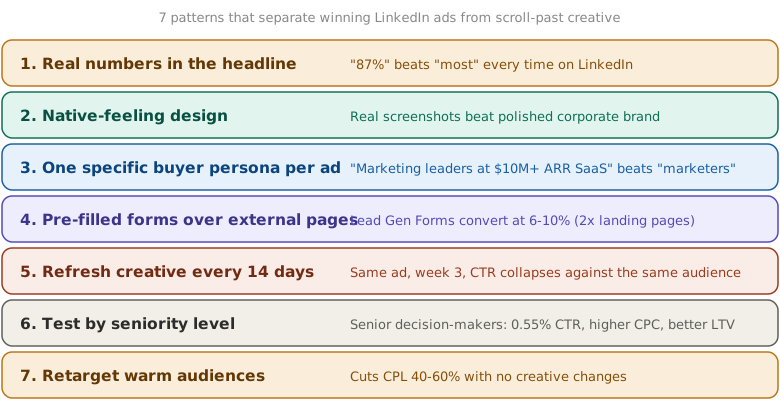
1. Real numbers in the headline. “87%” beats “most”; “211 days” beats “long buying cycle.” LinkedIn users are conditioned to skip generic claims, and specific numbers signal that the ad sits on top of actual data. The same instinct, that specific, testable claims beat vague ones, is what separates B2B copy that converts from copy that gets scrolled past, on every channel and not just LinkedIn.
2. Native-feeling design over polished corporate. The ads that win look like content the user might have created themselves: real screenshots, real people, candid imagery. Heavily-designed corporate brand assets get lower CTR because they read as ads instantly.
3. One specific buyer persona per ad. “Marketing leaders at $10M+ ARR SaaS” outperforms “marketers” by a wide margin. Persona-specific copy lets the audience self-identify in the first three seconds. Our lead scoring criteria guide covers the firmographic and behavioral signals that define a persona precisely enough to write to.
4. Pre-filled forms over external pages. Lead Gen Forms convert at 6-10% versus 2-4% on landing pages. The 2-3x lift is consistent across industries.
5. Refresh creative every 14 days. LinkedIn’s frequency caps don’t prevent ad fatigue, they only delay it. Same ad, same audience, third week of impressions is when CTR collapses. Plan a creative rotation calendar before the campaign launches.
6. Test by seniority level. Senior decision-makers have a global average CTR of 0.55%, slightly above the platform median, but their CPCs run higher. Run parallel campaigns segmented by seniority so the data tells you where each persona’s economics work.
7. Retarget warm audiences. First-touch LinkedIn ads to cold audiences run at $100-150 cost per lead. Retargeting site visitors and engaged-but-not-converted audiences typically cuts CPL by 40-60% with no creative changes. Tracking that CPL movement across every format here, and against your Google Ads spend in the same view, is the job of the PPC reporting tools that sit on top of LinkedIn ad spend, not the creative itself.
5 LinkedIn Ad Mistakes That Waste Budget
The mirror image of the patterns above. These five mistakes show up in nearly every B2B LinkedIn ad audit, and each is fixable in under a week.
1. Wrong format for the goal. Running Single Image Ads when the goal is lead capture (Lead Gen Forms convert better). Running Lead Gen Forms when the goal is brand awareness (Video or TLA work better at lower CPM). Match format to the campaign objective before drafting copy.
2. Targeting “all marketing managers.” LinkedIn’s targeting precision is the platform’s main value. Targeting broad job titles wastes the precision and inflates CPC. Specify function, seniority, company size, industry, and at least one behavioral or list-based qualifier before launching any campaign.
3. Sending traffic to landing pages instead of Lead Gen Forms. Especially for content downloads. The 2x conversion uplift on Lead Gen Forms is essentially free. The only reason to use external pages is when the destination requires custom tracking that LinkedIn’s pixel can’t capture.
4. Single creative for the entire campaign. Three weeks in, CTR halves. Running 3-5 creative variants per ad set, with a 14-day refresh cadence, prevents the fatigue cliff. Tools like Madgicx and AdEspresso can automate this.
5. Optimizing CTR without tracking pipeline. CTR is a leading indicator at best. The only metric that matters is influenced pipeline per dollar spent. ZenABM’s 2026 data showed top performers averaging $15.20 in influenced pipeline per ad dollar, against a median of $5.21. For the full measurement framework, see our B2B marketing metrics guide.
IMPORTANT
LinkedIn’s reporting attributes conversions to the click. But B2B buying journeys average 211 days. Connect LinkedIn impressions and engagement to your CRM at the account level (via the LinkedIn Conversions API or a tool like HockeyStack), or you’ll under-credit LinkedIn for pipeline it actually influenced.
LinkedIn Ad Quick-Reference: Specs and Costs
The benchmark numbers below come from HockeyStack 2025, ZenABM 2026, and HubSpot’s State of Marketing data. They’re median ranges, not absolute targets. Your actual numbers depend on industry, geography, and audience seniority.
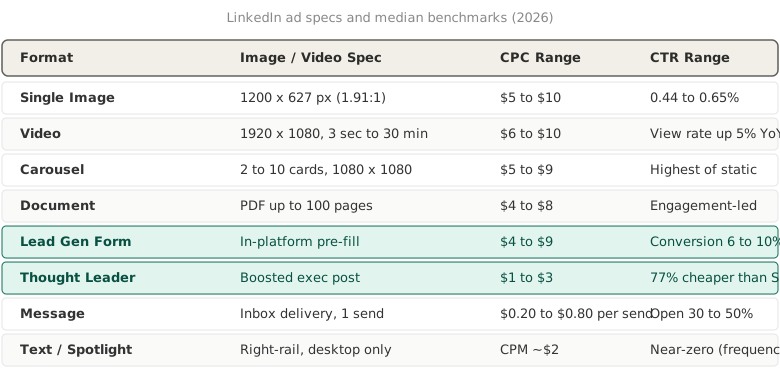
For the official LinkedIn ad specs in full detail, the LinkedIn Marketing Solutions ad guide is the canonical source. Specs change roughly twice a year, so cross-reference before any production cycle.
LinkedIn Ad Tools
The five tools below cover the LinkedIn ad workflow from creative production through attribution. The first two are free; the rest are paid platforms that pay for themselves at $5,000+ monthly LinkedIn spend.
The broader paid-acquisition strategy these formats support comes down to format-goal alignment: Sponsored Content for brand reach, Thought Leader Ads for cheap engagement, Document Ads for content-led nurture, Lead Gen Forms for capture, and Conversation Ads for late-funnel meetings. Picking three formats and running them well beats running all nine at half-effort.
Frequently Asked Questions
Lead Gen Forms convert at 6-10%, roughly twice the rate of Single Image Ads driving to external landing pages. For pure lead-volume campaigns, default to Lead Gen Forms. For brand awareness with a longer buying cycle in mind, Thought Leader Ads cost about 77% less per click than Single Image Ads per ZenABM’s 2026 benchmark data, making them the most cost-efficient awareness format.
Median CPC is $3.94 across formats per HockeyStack’s 2025 analysis, ranging from $2.59 in finance to $8.04 in SaaS. Median CPM sits at $31-$38, with high-competition industries reaching $50-$100. Cost per lead typically runs $60-$150 for B2B campaigns, and as much as $230 for senior-decision-maker targeting in North America.
Median LinkedIn CTR sits at 0.44-0.65% for Sponsored Content. Anything above 0.7% is excellent, and top-performing campaigns consistently exceed 1%. CTR varies by format: Carousel Ads run higher than Single Image, Video Ads run lower (engagement happens via view rate, not click). Compare your CTR to format-specific benchmarks rather than a blended platform average.
For most B2B teams, yes. Thought Leader Ads run roughly 77% cheaper per click than Single Image Ads per ZenABM’s 2026 benchmark report, and the format reads as a personal opinion rather than a brand message. The trade-off is content production: TLAs require executives willing to post regularly on their personal profiles, which is a content-supply problem more than an ad-platform problem.
Sponsored Content (Single Image, Video, Carousel, Document, Lead Gen Form) appears in the LinkedIn feed and reaches a broad targeted audience. Message Ads deliver one-shot personalized messages to a specific recipient’s LinkedIn inbox, with open rates of 30-50% but much higher cost-per-send. Use Sponsored Content for awareness and lead volume; use Message Ads for narrow, named-account outreach to under 5,000 prospects.
Your First Move
Pick one format that matches your highest-priority goal this quarter, run it for 14 days against a single tightly-defined audience, and measure influenced pipeline rather than CTR. Most B2B teams launch four formats simultaneously, run each at half-budget, and end up with no signal across any of them. Single-format, single-audience, 14-day tests produce real data; multi-format launches produce dashboards.
LinkedIn rewards consistency more than novelty. Pick the two formats your audience actually responds to, run them for six months with persona-specific creative, instrument influenced pipeline as the only metric that matters, and refuse to spread budget across the other seven formats until you’ve maxed out the first two. The teams that compound on LinkedIn are the ones who get boring on purpose.