Last updated: Q2 2026.
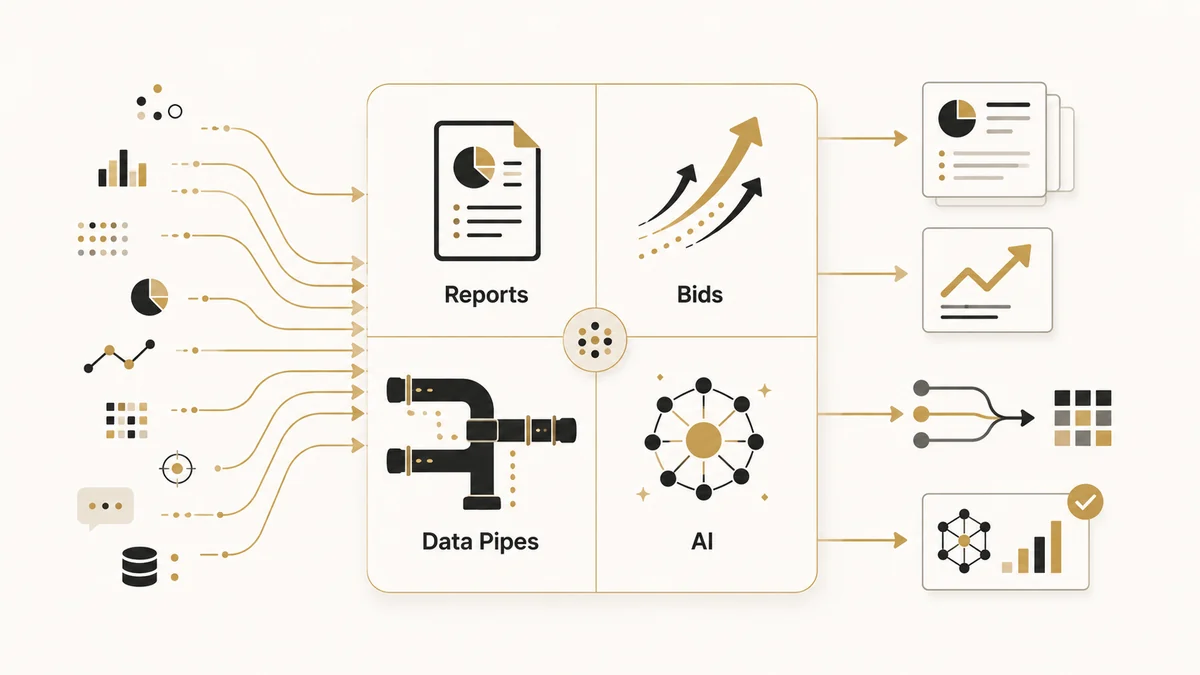
Most “best PPC reporting tools” lists quietly mix four different products and pretend they are interchangeable. A dashboard that builds client reports, a platform that automates bids, a pipe that moves ad data into a warehouse, and an AI tool that rewrites your creative are four separate jobs. Buy the wrong category and you pay for software that never touches the problem you actually have. The rise of AI ad-testing tools like Zappi Amplify AI makes that category split more important, because creative prediction is not the same job as bid management or reporting.
A PPC reporting tool pulls spend, clicks, conversions, and ROAS out of your ad accounts and turns them into something a human (or a client) can read without opening five tabs. The need is growing because the money is: worldwide B2B digital ad spend is on track to hit roughly $48 billion by 2026, close to triple its pre-pandemic level, according to eMarketer. More spend across more platforms means more reporting, and reporting is now the single biggest time drain in marketing: PHD Media and WARC found 88% of marketers now do reporting work regularly, a 57% jump in a decade.
This guide sorts 12 tools into the four categories that matter, with a starting price as of Q2 2026, the channels each one supports, and a one-line verdict on who it fits. After the reviews you get a comparison table, use-case picks, pricing benchmarks, and a plain explanation of what these tools do not do. The goal is a shortlist of two or three to trial, not a tab graveyard of fifteen.
Key Takeaways
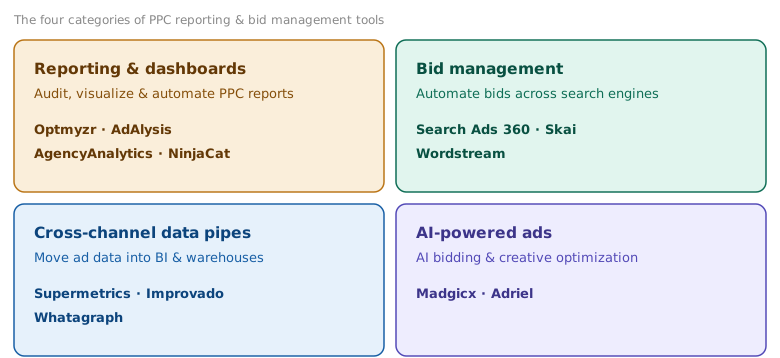
- PPC tools split into four jobs: reporting and dashboards (Optmyzr, AdAlysis, AgencyAnalytics, NinjaCat), bid management (Search Ads 360, Skai, Wordstream), cross-channel data pipes (Supermetrics, Improvado, Whatagraph), and AI-powered ads (Madgicx, Adriel). Match the category to your problem first, the brand second.
- Google’s AI Overview for “ppc reporting tools” cites Optmyzr, NinjaCat, AgencyAnalytics, TapClicks, DashThis, Whatagraph, and Supermetrics. Seven names, four jobs, no single winner.
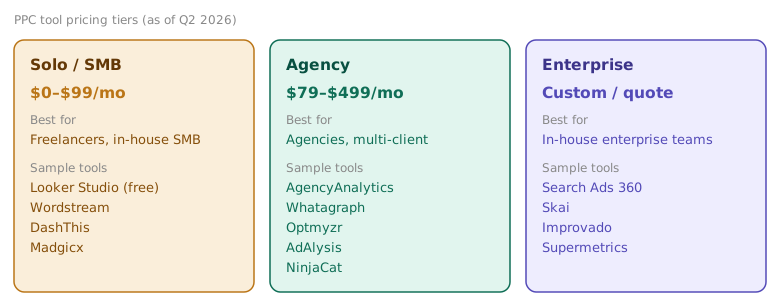
- Pricing splits three ways as of Q2 2026: solo and SMB tools at $0 to $99/month, agency platforms at $79 to $499/month, and enterprise bid and pipe tools that are quote-only.
- A PPC reporting tool is not a web analytics platform and not an ad creative tool. It reports on and optimizes the spend; it does not measure your whole site or design the ads.
- Reporting tools earn their keep when manual report-building eats more than a few hours a week, or when one account grows past the point where a spreadsheet stays accurate.
How We Chose These PPC Tools
The 12 tools below each had to clear four checks. Plenty of well-known names did not, and the ones we left out are named so you can see the reasoning.
1. Active and supported in Q2 2026. The product has to be selling, shipping updates, and serving customers right now. This single check removed Marin Software, a long-time bid-management name that was delisted from Nasdaq in mid-2025, filed Chapter 11 with a plan of dissolution, and was absorbed by ESW Capital. A tool whose independent future is uncertain does not belong on a 2026 shortlist.
2. Public pricing or a clear pricing tier. Either a published price or a stated model, so you can budget before a sales call. Tools that hide every number behind “contact us” still appear where they are genuinely enterprise-only, but the gate is noted.
3. Real Google Ads or LinkedIn Ads coverage. This guide is for B2B teams whose spend lives on search and LinkedIn. A tool had to report on or manage at least one of those channels to qualify, which is why a Meta-only optimizer earns a narrow, honest verdict rather than top billing.
4. A distinct job. Each pick had to own a different role. When two tools did the same thing, the one with the clearer B2B fit made the list and the other became a noted alternative. The four-category map below is the result.
The tools here sit on top of campaigns you are already running. If you have not built those campaigns yet, the tooling comes second: start with the tactics in our guide to running B2B Google Ads, then come back to pick the layer that reports on them.
PPC Reporting and Dashboard Tools
This is the category most people mean by “PPC reporting tools”: software that connects to your ad accounts and produces audits, dashboards, and client-ready reports. These four lead the specialist field, and they map cleanly to the B2B marketing metrics a paid team actually reports on.
1. Optmyzr: Best for Hands-On PPC Optimization Plus Reporting
Optmyzr is a PPC management and reporting platform built for people who run accounts daily. It pairs rule-based and one-click optimizations with a strong reporting engine, so the same tool that flags a wasted-spend problem also builds the report that explains it. It leans toward search: Google Ads, Microsoft Ads, and Amazon Ads, which fits the last-click strengths of paid search but leaves the assisted, view-through impact that matters in the PPC versus display advertising trade-off to other tools.
Best for: In-house PPC managers and agencies that want optimization and reporting in one place, not a read-only dashboard.
Standout: The optimization library (bid rules, n-gram analysis, budget pacing) is deeper than anything in a pure reporting tool, and the reports pull from that same data.
Starting price (as of Q2 2026): Around $249/month for the entry tier, scaling with managed ad spend and connected accounts.
2. AdAlysis: Best for Automated Auditing and A/B Testing
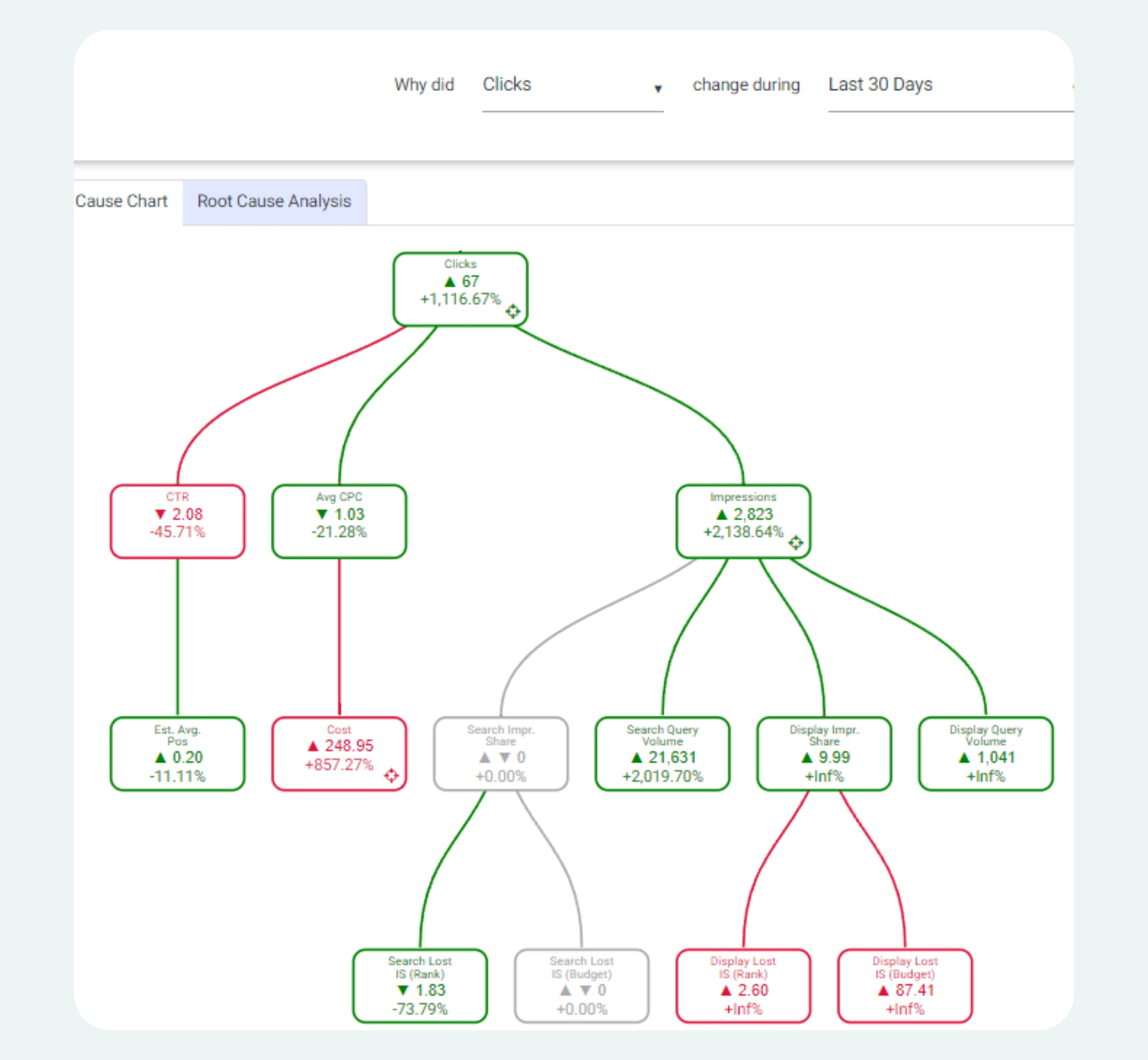
AdAlysis is a PPC auditing and optimization tool that watches a Google Ads or Microsoft Ads account continuously and surfaces what changed and what to fix. Its roots are in ad A/B testing, and it still does that better than most: it tracks every ad variation and tells you statistically which copy wins. Reporting is built around alerts and recommendations rather than glossy dashboards.
Best for: Search-heavy advertisers who want an always-on auditor catching account problems between manual reviews.
Standout: Statistical ad testing and account-wide alerting that flags issues a weekly manual check would miss.
Starting price (as of Q2 2026): From $149/month, with no contract and unlimited accounts on higher tiers.
3. AgencyAnalytics: Best for Multi-Client Agency Reporting
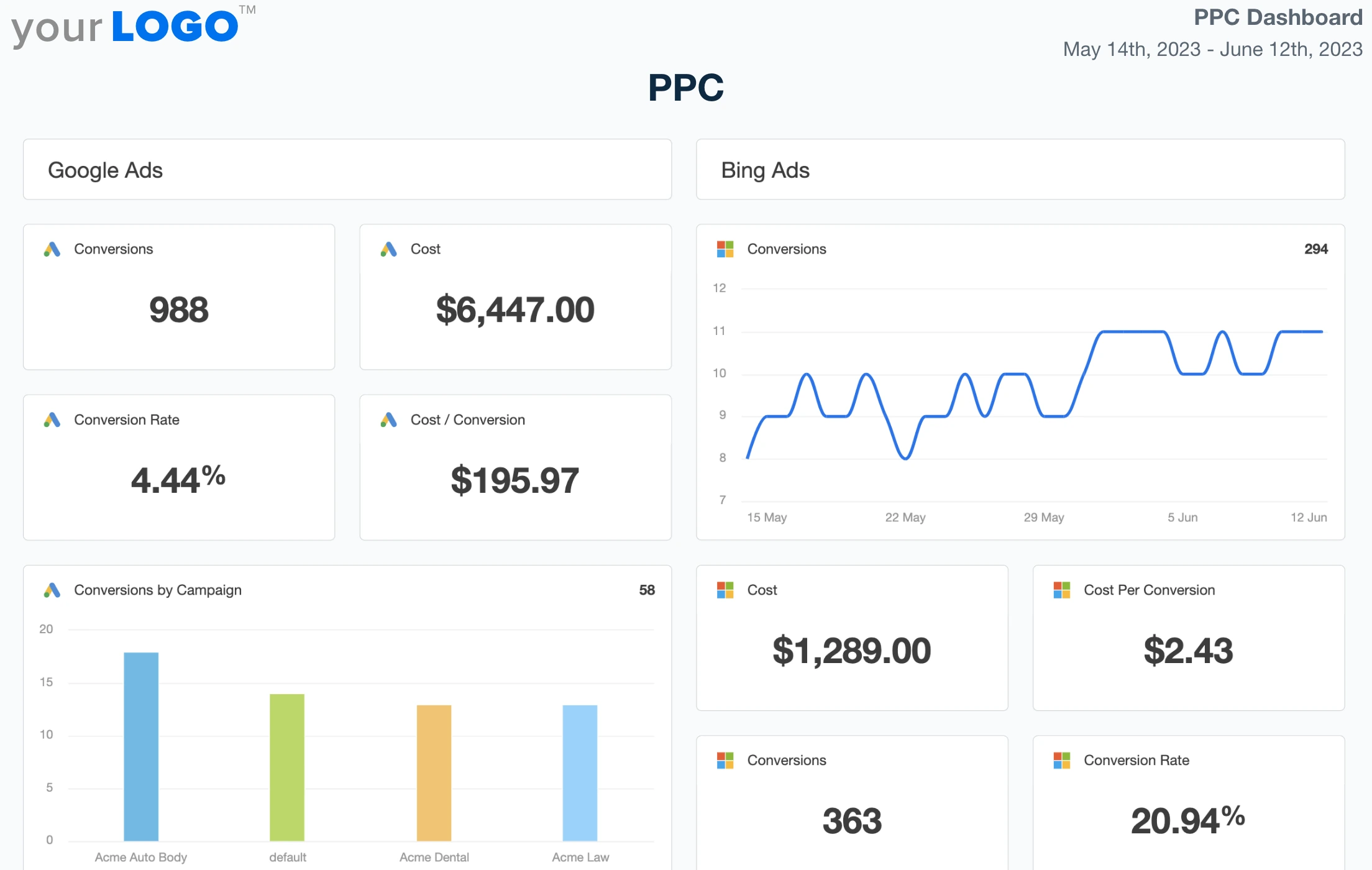
AgencyAnalytics is a reporting platform built for agencies that report to many clients across many channels. It connects to 80-plus integrations (Google Ads, Microsoft, Meta, LinkedIn Ads, TikTok, GA4, and most SEO tools) and turns them into white-label dashboards and scheduled PDF reports. It is a reporting layer, not a bid manager, and it does that one job at agency scale. It pairs naturally with the rest of a B2B marketing campaign stack.
Best for: Agencies that need branded, automated client reports across paid, organic, and social in one login.
Standout: White-label client dashboards plus one of the widest integration libraries in the category, at an SMB-friendly price.
Starting price (as of Q2 2026): From $79/month, scaling by the number of client campaigns.
4. NinjaCat: Best for Enterprise Agencies and Large In-House Teams
NinjaCat is a reporting and marketing-intelligence platform aimed at the top end of the agency and media-company market. It handles high data volume, custom report templates, and governance across many accounts, which is where lighter tools start to creak. The trade-off is that pricing is sales-led, so it suits teams big enough to warrant a quote rather than a self-serve plan.
Best for: Enterprise agencies, holding companies, and large in-house teams managing reporting across hundreds of accounts.
Standout: Enterprise-grade data handling and report governance that smaller dashboard tools cannot match.
Starting price (as of Q2 2026): Custom and quote-based; third-party listings report entry plans in the low hundreds per month.
PRO TIP
Two more reporting tools cited by Google’s AI Overview are worth knowing even though they did not make the 12: TapClicks (enterprise marketing-operations reporting, in NinjaCat’s lane) and DashThis (fast, lightweight client dashboards, in AgencyAnalytics and Whatagraph’s lane). Shortlist them if the named picks do not fit your size.
Bid Management Tools: The Other Half of PPC Tooling
Reporting tells you what happened. Bid management changes what happens next: it automates how much you pay per click, per conversion, and per account, usually across more campaigns than a human can tune by hand. These three cover the range from SMB to enterprise, and they fit inside a wider B2B go-to-market motion rather than replacing it. Whatever the tool automates, it should optimize toward the metrics that connect spend to pipeline, not just a cheaper click.
5. Search Ads 360: Best for Enterprise Cross-Engine Search Bidding
Search Ads 360 is Google’s enterprise search-management platform, built to run and bid on campaigns across multiple search engines from one place: Google Ads, Microsoft Advertising, Yahoo Japan, Baidu, and more, plus connected social. It is the default for large advertisers and agencies that buy search at scale and need cross-engine bidding, bulk editing, and budget management above what native interfaces allow.
Best for: Enterprise advertisers and agencies running heavy spend across more than one search engine.
Standout: True cross-engine bid management and bulk operations, backed by Google’s data and infrastructure.
Starting price (as of Q2 2026): Custom and quote-based through Google; positioned as an enterprise platform, not a self-serve tool.
6. Skai: Best for Enterprise Omnichannel and Commerce Media
Skai (formerly Kenshoo) is an omnichannel platform that manages and optimizes bids across paid search, paid social, and retail media in one system. Its center of gravity has shifted toward commerce and retail media in recent years, so the honest read is this: search and social bid management are still core capabilities, but Skai is now best understood as an enterprise commerce-media platform that also does B2B search, not a pure-play search bidder.
Best for: Large advertisers who run search and social alongside retail media and want one platform for all of it.
Standout: Machine-learning bid and budget optimization across search, social, and retail media, with strong commerce data.
Starting price (as of Q2 2026): Custom and quote-based; enterprise contracts only.
7. Wordstream: Best for SMBs and Hands-Off Bid Help
Wordstream (now part of LocaliQ) is the approachable end of bid management. It helps small and mid-size advertisers manage and improve Google Ads, Microsoft Ads, and Meta campaigns with guided recommendations, and its free Google Ads Performance Grader is still one of the fastest ways to audit an account. It is less a heavy bid engine than a guardrail-and-guidance layer for teams without a dedicated PPC specialist.
Best for: SMBs and lean teams that want structured guidance instead of an enterprise platform.
Standout: The free Performance Grader plus plain-language recommendations make it the easiest on-ramp in this category.
Starting price (as of Q2 2026): Paid management from roughly $49/month and up, scaling with ad spend; the Performance Grader is free.
Cross-Channel Data Pipes
These tools do not build the prettiest report or place a single bid. They move ad data out of every platform and into the place you actually analyze it: a spreadsheet, a BI tool, or a warehouse. They are the plumbing under a serious reporting stack, and they pull paid spend alongside the organic performance from your B2B SEO strategy so the two live in one view. For teams running multi-channel ABM campaigns, this is the layer that proves which channel actually moved each account.
8. Supermetrics: Best for Pulling Ad Data Into Sheets and BI
Supermetrics is the most popular way to get marketing data out of ad platforms and into Google Sheets, Looker Studio, Excel, or a data warehouse. It supports 150-plus sources, including Google Ads, Microsoft, Meta, and LinkedIn Ads, and it is built for analysts who would rather model data in tools they already know than learn another dashboard. It moves data; it does not interpret it for you.
Best for: Analysts and data-literate teams who want ad data inside Sheets, Looker Studio, or a warehouse.
Standout: Breadth of connectors and destinations, with a mature Google Sheets and Looker Studio workflow.
Starting price (as of Q2 2026): From about $37/month, billed annually and scaling by the number of data sources.
9. Improvado: Best for Enterprise Marketing Data Warehousing
Improvado is an enterprise marketing-data platform that aggregates, cleans, and harmonizes spend and performance from 500-plus sources into a governed warehouse. It is built for large organizations where data lives in dozens of systems and someone needs a single source of truth for paid performance. This is heavier infrastructure than a connector tool, and it is priced and scoped accordingly.
Best for: Enterprise marketing and data teams that need governed, harmonized data across many platforms.
Standout: Data normalization and governance at enterprise scale, with managed onboarding rather than DIY setup.
Starting price (as of Q2 2026): Custom and quote-based; reported entry around $2,000/month, enterprise-only.
10. Whatagraph: Best for Cross-Channel Reporting With Less Setup
Whatagraph sits between a pure data pipe and a dashboard tool. It pulls from 55-plus integrations (Google Ads, LinkedIn Ads, Meta, GA4, and more), then builds visual cross-channel reports without the spreadsheet work Supermetrics assumes. Teams pick it when they want client-ready, multi-platform reports fast and do not want to live inside Looker Studio. It reports across channels; it does not manage bids.
Best for: Marketing teams and agencies that want fast visual cross-channel reports without building them by hand.
Standout: Cross-channel report automation that balances ease of use with genuine multi-platform coverage.
Starting price (as of Q2 2026): From $229/month, billed annually and scaling by data-source credits.
AI-Powered Ad Tools
The newest category puts machine learning on top of bidding and creative. It is also the category most likely to be mis-sold as a do-everything reporting tool, so the channel coverage matters more here than anywhere else. These tools also overlap with the wider set of lead generation tools a growth team runs.
11. Madgicx: Best for AI Optimization on Meta (With Caveats)
Madgicx is an AI ad platform that audits, optimizes, and auto-generates creative, with autonomous bidding agents. The honest caveat for a B2B search and LinkedIn audience: its optimization and bidding run on Meta only (Facebook and Instagram). It can pull Google Ads, TikTok, and GA4 data into a unified report, but it cannot manage those channels. If your spend is Meta-heavy it is excellent; if it is Google or LinkedIn, it is a reporting add-on at best.
Best for: Meta-heavy advertisers who want AI bidding and creative in one tool.
Standout: Autonomous AI optimization and creative generation for Facebook and Instagram, with cross-channel reporting bolted on.
Starting price (as of Q2 2026): Spend-based; reported entry around $49/month with a free trial, rising with ad spend.
12. Adriel: Best for AI Cross-Channel AdOps Dashboards
Adriel is an AI-driven AdOps and reporting platform that connects to 650-plus channels, including Google Ads and LinkedIn Ads, and builds real-time, no-code dashboards across all of them. It is an official LinkedIn Marketing Partner for reporting, which is rare in this list and makes it the strongest genuinely cross-channel pick for a B2B team running search and LinkedIn together. It monitors and reports; it is not a bid-execution engine. When the LinkedIn channel itself needs running and optimizing rather than only reporting, that work sits with the LinkedIn-specialist tools and agencies that sit alongside cross-channel reporting like this.
Best for: Mid-market teams and agencies that need unified, real-time reporting across LinkedIn, Google, and many more channels. A dashboard only shows your own numbers, though; pair it with the LinkedIn CTR baselines to measure against so a 0.5% click rate gets judged as good or poor by format, not in a vacuum.
Standout: 650-plus integrations and an official LinkedIn reporting partnership, wrapped in no-code dashboards.
Starting price (as of Q2 2026): Custom and quote-based, with a free trial; plans scale by ad spend and features.
PPC Tool Comparison Table
The table below lines up all 12 tools on the dimensions buyers ask about: category, who it fits, starting price as of Q2 2026, the channels it covers, its standout, and a one-line verdict. Scroll sideways on mobile.
| Tool | Category | Best For | Starting Price (Q2 2026) | Channels | Standout | Verdict |
|---|---|---|---|---|---|---|
| Optmyzr | Reporting + optimization | Hands-on PPC managers | ~$249/mo | Google, Microsoft, Amazon | Deep optimization library | Best all-rounder for search PPC |
| AdAlysis | Reporting + auditing | Search-heavy advertisers | $149/mo | Google, Microsoft | Statistical ad A/B testing | Best always-on auditor |
| AgencyAnalytics | Reporting dashboards | Multi-client agencies | $79/mo | 80+ incl. Google, LinkedIn | White-label client reports | Best value for agencies |
| NinjaCat | Reporting dashboards | Enterprise agencies | Custom | 150+ integrations | Enterprise data governance | Best for high-volume reporting |
| Search Ads 360 | Bid management | Enterprise search buyers | Custom | Google, Microsoft, Baidu + | Cross-engine bidding | Best for multi-engine scale |
| Skai | Bid management | Enterprise omnichannel | Custom | Search, social, retail media | Commerce-media optimization | Best if retail media matters |
| Wordstream | Bid management | SMBs and lean teams | ~$49/mo | Google, Microsoft, Meta | Free Performance Grader | Best easy on-ramp |
| Supermetrics | Data pipe | Analysts and BI teams | ~$37/mo | 150+ incl. Google, LinkedIn | Sheets and Looker workflow | Best for data into BI |
| Improvado | Data pipe | Enterprise data teams | Custom (~$2K/mo) | 500+ integrations | Governed data warehouse | Best enterprise pipe |
| Whatagraph | Data pipe + reporting | Fast cross-channel reports | $229/mo | 55+ incl. Google, LinkedIn | Low-setup visual reports | Best middle ground |
| Madgicx | AI-powered ads | Meta-heavy advertisers | ~$49/mo (spend-based) | Meta only (reports others) | AI bidding + creative | Skip unless Meta is core |
| Adriel | AI-powered ads | Cross-channel B2B teams | Custom | 650+ incl. Google, LinkedIn | LinkedIn reporting partner | Best AI cross-channel reporting |
Quick Verdicts by Use Case
If you would rather skip the deliberation, here is the shortest path to a pick based on the situation you are actually in.
Best for a solo agency or freelancer: AgencyAnalytics. White-label client reports at $79/month (as of Q2 2026) without enterprise overhead.
Best for enterprise media buyers: Search Ads 360 for cross-engine search, or Skai if retail media sits next to your search and social spend.
Best for a Google-Ads-only team: Optmyzr for optimization plus reporting, or AdAlysis if you mainly want an always-on auditor.
Best for cross-channel reporting: Adriel for no-code dashboards across LinkedIn and Google, or Supermetrics if you would rather model the data yourself in BI.
Best for AI-driven creative and bidding: Madgicx, but only if Meta is a real part of your mix. For B2B search and LinkedIn, treat it as optional.
PPC Tool Pricing Benchmarks (Q2 2026)
Pricing in this market splits into three bands. Knowing the band you belong in saves you from over-buying an enterprise platform or under-buying a tool that breaks at your account size.
Solo and SMB: $0 to $99/Month (as of Q2 2026)
Free and low-cost tools for a single advertiser or a small in-house team. Looker Studio is free, Wordstream starts near $49/month, and DashThis and Madgicx sit under $99/month for entry use. Best for one or two accounts where a spreadsheet is starting to fail but enterprise software would be overkill.
Agency: $79 to $499/Month (as of Q2 2026)
The working tier for agencies and multi-client teams. AgencyAnalytics ($79/month), Optmyzr (around $249/month), Whatagraph ($229/month), and AdAlysis ($149/month) live here. You pay for white-label reporting, more accounts, and deeper optimization. Most B2B agencies should shop in this band first.
Enterprise: Custom Quote (as of Q2 2026)
Search Ads 360, Skai, Improvado, and NinjaCat are quote-only, priced on spend, seats, and data volume. Improvado’s reported entry is around $2,000/month. This tier buys cross-engine bidding, governed data warehousing, and report governance that the lower tiers cannot deliver, and it only pays off above a real scale of spend and accounts.
IMPORTANT
Most tools here price on ad spend or data sources, not a flat seat fee. A $79/month plan can become a $400/month plan as you add accounts or connectors. Before you commit, model the price at next year’s spend, not today’s, so the tool that fits now still fits at scale.
What PPC Reporting Tools Don’t Do
The fastest way to waste money here is to buy a PPC reporting tool expecting it to be something else. It owns the paid-spend layer, and two neighboring categories own the rest.
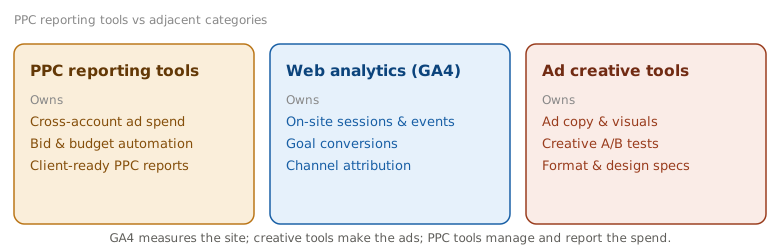
They are not a web analytics platform. A PPC reporting tool reads your ad accounts. It does not measure on-site behavior, multi-channel session attribution, or what visitors do after the click. That job belongs to GA4, and setting it up correctly is its own discipline, covered in our guide to tracking traffic in Google Analytics. Use both: the PPC tool reports the spend, GA4 reports the site. And when the question is which of those touches actually produced pipeline across the whole funnel, that is a third job again, handled by cross-touch B2B attribution software that sits downstream of the ad-account reporting these tools do.
They are not ad creative tools. Reporting and bid management tell you a campaign is underperforming; they do not write better copy or design a better image. For the creative side of paid, especially on LinkedIn, study real examples instead, like the patterns in our LinkedIn ad examples by format. A reporting tool measures the creative; it does not make it. The TikTok Agentic Hub workflow model shows why the categories are separating further: reporting, creative drafting, and campaign actions can each become distinct AI Skills with different approval rules.
They do not set your strategy. A dashboard showing a rising cost per lead does not tell you whether to fix targeting, change the offer, or cut the channel. That decision sits in your measurement framework and your account-based marketing metrics for target-account programs. The tool surfaces the number; you still have to read it. For context, the average Google Ads cost per lead reached $70.11 across industries in 2025 per WordStream, but the right number for you depends on deal size and close rate, which no reporting tool knows.
Frequently Asked Questions
PPC reporting tools connect to your paid-advertising accounts (Google Ads, LinkedIn Ads, Microsoft, Meta) and turn raw spend, click, and conversion data into dashboards and reports. The leading specialist tools include Optmyzr, AgencyAnalytics, Whatagraph, and NinjaCat, with Supermetrics and Improvado moving the underlying data into BI tools and warehouses. They report on campaigns; they do not run web analytics or create ad creative.
Reporting tools (AgencyAnalytics, Whatagraph, NinjaCat) tell you what your campaigns did and package it for clients or leadership. Bid management tools (Search Ads 360, Skai, Wordstream) act on the account, automating how much you bid per click and conversion across campaigns. Some tools like Optmyzr do both, and both sit on top of the B2B Google Ads campaigns you already run. If you need to explain performance, you want reporting; if you need to change it at scale, you want bid management.
Use a cross-channel tool that connects to both platforms. Adriel is an official LinkedIn reporting partner and also pulls Google Ads, making it a strong single-dashboard option. Supermetrics and Whatagraph also cover both and suit teams that prefer BI tools or fast visual reports. Native dashboards alone force you to switch tabs and reconcile numbers by hand, which is the exact problem these tools remove.
As of Q2 2026, pricing splits three ways: solo and SMB tools run $0 to $99/month (Looker Studio is free, Wordstream starts near $49), agency platforms run $79 to $499/month (AgencyAnalytics from $79, Whatagraph from $229, Optmyzr around $249), and enterprise bid and data tools (Search Ads 360, Skai, Improvado) are custom-quoted on spend and data volume. Most tools price on ad spend or data sources, so costs rise as you scale.
Your First Move
Start by naming your problem in one sentence. If it is “I waste hours building client reports,” shop the reporting tier (AgencyAnalytics, Whatagraph). If it is “my bids do not scale,” shop bid management (Wordstream for SMB, Search Ads 360 for enterprise). If it is “my data lives in ten places,” shop the pipes (Supermetrics, Improvado). The category follows the problem, not the brand.
Then trial two tools from that one category, not five from across all four. Connect a real account, build one report or run one optimization you would actually use, and judge it on whether it saved you time this week. A 14-day trial against live data tells you more than a month of demos. The tools that earn a permanent spot are the ones that disappear into your routine, not the ones with the longest feature list.