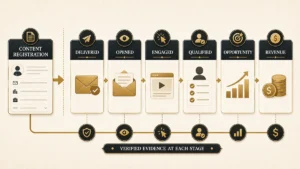

Demand generation tools and lead generation tools get sold as two separate markets, and in 2026 there are 250+ platforms across both claiming to find, capture, qualify, or convert buyers. Most of them solve overlapping problems with overlapping price tags. Pick wrong and you’re paying $200/user/month for a contact database when a $9 browser extension would have done the job. Pick right and you can run the entire outbound stack of a 10-person sales team for under $500 a month.
This guide does two things most roundups don’t. It organizes 18 lead generation tools by the 6 jobs they actually do, with re-verified Q3 2026 pricing and the gotcha most buyers hit. Then it maps those categories against the four demand-gen categories that lead gen software never covers, and marks the zones where the two stacks genuinely overlap so you can see what you’re about to double-pay for.
Direct answer — what are demand generation tools?
Demand generation tools are software platforms that create and capture buying interest at the account level, before a named lead exists. The four categories that define them are intent data providers, ABM platforms, content syndication networks, and website visitor identification. Lead generation tools sit downstream and work a known contact: contact databases, email outreach, lead capture, and sales engagement. Several vendors sell into both sets, which is where most stacks overpay.
Key Takeaways
- Lead generation tools split into 6 functional categories: B2B contact databases (Apollo, ZoomInfo, Cognism), email outreach (Smartlead, Instantly, Lemlist), lead capture (OptinMonster, Typeform, HubSpot), LinkedIn automation (Wiza, Expandi, Phantombuster), sales engagement (Salesloft, Outreach), and AI-powered scraping (Clay, Lead Sniper).
- Demand generation tools add four categories lead gen software does not cover: intent data providers (Bombora, G2 Buyer Intent), ABM platforms (6sense, Demandbase), content syndication networks (NetLine, Integrate, Madison Logic), and website visitor identification (Leadfeeder, RB2B, Albacross).
- The two stacks overlap in eight specific places, and three vendors sell across both sides. Buying an intent provider and an ABM platform separately is the most common way B2B teams pay twice for the same signal.
- Apollo.io leads the B2B database category with 270M+ contacts, priced $49 to $119 per user per month on annual billing (as of Q3 2026). ZoomInfo and Cognism publish no rates at all: both are quote-only.
- Most B2B teams need 3-4 tools, not 1. The all-in-one platform that handles everything is usually mediocre at most things and expensive overall. Build the stack from focused tools that integrate cleanly.
- Free or near-free starter stack: Apollo Free + Smartlead trial + LinkedIn Sales Navigator (1-month) + HubSpot Free CRM. Workable for an SDR generating 50-100 contacts/month before paid tier upgrade.
Demand Generation Tools vs Lead Generation Tools
Demand generation tools create and capture interest at the account level before a named lead exists. Lead generation tools work a contact you can already name. The distinction matters commercially because the two sets have different buyers, different price points, and different failure modes.
| What it does | Buy it when | Skip it when | |
|---|---|---|---|
| Demand generation tools | Surface accounts showing buying behaviour, and put your category in front of them before they search | You sell a considered, multi-stakeholder deal and your problem is that nobody knows they need you yet | You have more inbound than you can work, or your ACV can’t carry a five-figure platform |
| Lead generation tools | Find, capture, and contact a specific named person, then run the sequence that books the meeting | You know exactly who to talk to and the bottleneck is reaching them at volume | Nobody replies because the category isn’t understood, not because your data is bad |
| The overlap | Enrichment, intent signals, and routing sit in both stacks, and several vendors sell into both | Always audit it. This is where the double-spend hides | Never skip the audit, even on a two-tool stack |
The strategic argument for which motion a company should run belongs elsewhere, and our breakdown of where demand gen and lead gen actually diverge settles the budget-split question this page deliberately doesn’t reopen. What follows is the tooling consequence: which software serves which job, and where the two lists collide.
How to Choose Between Them
Lead generation tools are software platforms that help businesses find, capture, qualify, or convert potential customers into sales-ready leads. The category covers everything from B2B contact databases (Apollo, ZoomInfo) to landing-page builders (Unbounce), LinkedIn automation (Wiza, Expandi), email outreach platforms (Smartlead, Instantly), and AI-powered scrapers (Clay, Lead Sniper).
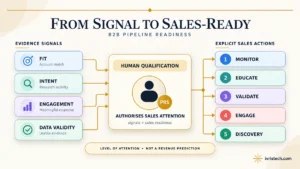
The mistake most buyers make is shopping by feature list. The right way is to start with the job to be done, then pick the focused tool that does that job best, then layer in adjacent tools as the workflow demands. A 5-person SDR team typically runs 3-4 tools well; a solo founder can start with 1-2 free or low-cost tools and produce real pipeline. The tool stack only earns its keep if it sits on top of a working acquisition motion — our inbound lead generation playbook covers the demand side these tools amplify, and lead scoring criteria covers what to do with the volume once it arrives.
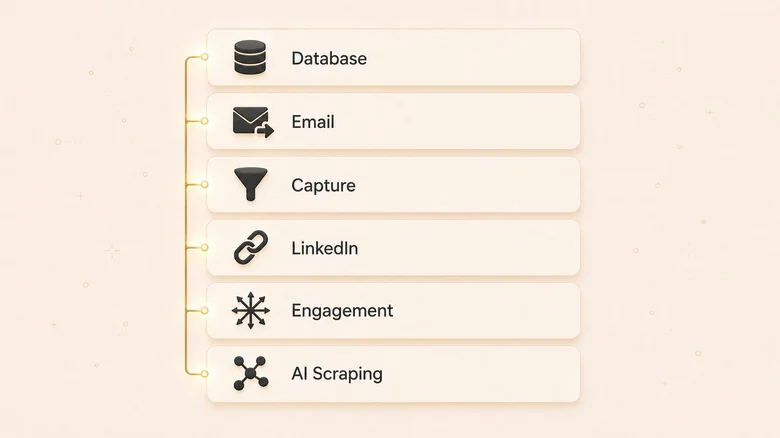
The 6 Jobs Lead Gen Tools Do
Every lead generation tool fits one of six functional categories. Knowing which category your problem sits in eliminates 80% of the shortlist before you start comparing features.
The Tool Category to Funnel Stage Map
Twelve tool categories cover the whole demand-to-close path: the six lead gen jobs above, plus four demand generation categories, plus paid channels and revenue attribution. Mapping them against five stages shows which cells genuinely belong to one category and which are contested.
Most roundups present each tool as owning a clean lane. It isn’t true, and the pretence is what makes stacks expensive. The eight shaded cells below are the places where two categories do the same job well enough that buying both is usually a duplicate purchase rather than a layered one.
| Tool category | Create demand | Capture intent | Convert | Route & qualify | Measure |
|---|---|---|---|---|---|
| Intent data providers | · | ▨ | ○ | ○ | · |
| ABM platforms | ▨ | ▨ | ○ | ○ | ▨ |
| Content syndication networks | ● | ● | ○ | · | · |
| Website visitor identification | · | ▨ | ○ | ○ | ○ |
| Paid demand channels | ▨ | ○ | ○ | · | ○ |
| Webinar & virtual event platforms | ● | ● | ● | · | ○ |
| Marketing automation platforms | ● | ○ | ▨ | ○ | ○ |
| B2B contact databases | · | ▨ | ● | ○ | · |
| Email outreach platforms | · | · | ▨ | · | ○ |
| Lead capture & landing pages | · | ● | ▨ | · | ○ |
| Sales engagement platforms | · | · | ▨ | ● | ○ |
| Revenue attribution & analytics | ○ | ○ | · | · | ● |
Legend. ● primary fit: this is the category’s core job. ○ secondary fit: it does this, but you wouldn’t buy it for this. ▨ overlap zone: at least one other category does the same job to a similar standard, so check before buying both. · not a job this category does.
How categories and cells were decided. The twelve categories are the union of the tool sets published by the six pages currently ranking for demand generation tools and lead generation tools on Google US desktop as of August 2026, plus the categories named in Google’s AI Overview for that query, deduplicated by function rather than by vendor. A cell is marked primary when the category’s own vendors position that job as the product’s main purpose on their pricing or product pages; secondary when the capability ships but is not the headline; and an overlap zone when two or more categories both meet the primary test for the same stage. This is an IVRIS classification of publicly available vendor positioning, not a benchmark, a performance study, or a test.

PRO TIP
Cite this map as: IVRIS. “Demand Gen and Lead Gen Tools: Where They Actually Overlap.” Updated August 2026. Classification of publicly available vendor positioning across 12 tool categories. https://ivristech.com/lead-generation-tools/
B2B Contact Database Tools
B2B contact databases are the foundation of most outbound lead generation. They give you the names, titles, emails, phone numbers, and company firmographics of your target buyers. On the map they are primary at Convert and a contested overlap at Capture intent, because the two largest vendors also sell intent data.
1. Apollo.io
Apollo claims 270M+ contacts across its database with 65+ filter attributes, and prices from a free tier to Basic at $49/user/month, Professional at $79/user/month, and Organization at $119/user/month on annual billing (as of Q3 2026). Month-to-month billing runs meaningfully higher at $59, $99, and $149 respectively (as of Q3 2026). The platform combines contact data, email sequencing, dialer, and AI assistance in one interface. The defining capability is consolidation: most teams replace 3-4 tools with Apollo. Apollo’s Perplexity workflow launch extends that consolidation argument into the AI workspace, where research, enrichment, and outreach prep can happen from one conversation.
The gotcha is the credit system. Each tier carries a unified credit allowance spent on verified emails, phone numbers, enrichment, and AI research, and mobile reveals consume credits far faster than email reveals. Real-world spend often runs above the advertised seat price once overages and exports are factored in. Published 2026 pricing reviews report email bounce rates of 15-20% on certain segments, especially in EMEA and APAC where coverage is weaker than North America.
2. ZoomInfo
ZoomInfo is the enterprise default with the largest verified B2B contact database in the market and intent data layered on top. ZoomInfo publishes no pricing at all (checked Q3 2026); every plan is quote-only. Published third-party estimates put mid-market contracts in the $15K-$30K+ annual range and enterprise agreements above $100K (as of Q3 2026), but treat those as reported ranges rather than rate-card figures. The defining capability is data depth: org charts, technographic data, intent signals, and real-time event triggers (job changes, funding rounds, M&A) that smaller platforms can’t match.
Worth it when you’re selling enterprise deals where one closed account justifies the platform. Overkill for SMB-focused outbound where Apollo or Cognism does 80% of the job at a fraction of the cost. Note the overlap: ZoomInfo’s bundled intent removes most of the reason to buy a standalone intent provider alongside it.
3. Cognism
Cognism is the strongest alternative to ZoomInfo for teams selling into Europe and the UK. The platform’s mobile data accuracy in EMEA is widely considered best-in-class, and it includes phone-verified contact data that meets GDPR’s stricter consent requirements. Pricing is quote-only across two prospecting tiers, Standard and Pro, each including 5 seats, on a credits model where one credit reveals one contact (as of Q3 2026). Worth shortlisting if more than 30% of your TAM sits outside North America.
Email Outreach Tools
Email outreach platforms send the cold emails. They handle sending infrastructure, sequencing, A/B testing, deliverability protection, and reply detection. On the map they are a Convert-stage overlap zone, because marketing automation platforms and sales engagement platforms both send sequenced email too. The market has bifurcated in 2026 between high-deliverability infrastructure-led tools (Smartlead, Instantly) and personalization-led tools (Lemlist). Whichever side of that split you pick, none of these tools can compensate for misconfigured DNS at the domain layer — the actual deliverability foundation lives upstream in SPF, DKIM, and DMARC records you verify with terminal commands before the first email leaves. Nor can the tool choose sequence logic that decides what each follow-up adds; the software schedules the next touch, while the operator must decide whether that touch contributes relevance, proof, a different angle, or a stop.
4. Smartlead
Smartlead pairs email warmup with multi-inbox rotation across hundreds of sending mailboxes. The platform is the deliverability-first choice for cold outreach at scale. Pricing runs $39/month for Base, $94 for Pro, $174 for Unlimited Smart, and $379 for Unlimited Prime (as of Q3 2026), with warmup quality tiered by plan rather than uniformly unlimited. Most B2B teams running 5,000+ cold emails per month default to Smartlead because the deliverability infrastructure pays for itself in reply rate.
5. Instantly.ai
Instantly competes head-to-head with Smartlead on infrastructure. The outreach Growth plan runs $47/month month-to-month or $37.60/month on annual billing, with Hypergrowth and Lightspeed tiers above it and Lightspeed at $358/month (as of Q3 2026). Growth includes unlimited email accounts and unlimited warmup at 5,000 sends a month. Choose between Smartlead and Instantly based on UX preference; their core deliverability capabilities are roughly equivalent in 2026. They are only the two best-known names in a category that now runs a dozen deep, so once email outreach becomes the bottleneck in your stack, our breakdown of the best cold email software for B2B outbound compares them against Saleshandy, Lemlist, QuickMail, and the rest on price and deliverability.
6. Lemlist
Lemlist’s defining feature is personalization at scale: dynamic image personalization, video embeds, and LinkedIn-aware sequences that combine email with profile-view automation. The Email plan is $55/month on annual billing or $69 month-to-month, and the per-user Multichannel plan is $87 annual or $109 monthly (as of Q3 2026). The platform wins for teams running smaller, higher-touch campaigns where personalization beats raw volume. The trade-off: Lemlist’s deliverability infrastructure is solid but doesn’t match Smartlead or Instantly at high volume. For the email subject lines that decide whether any of these tools succeed, see our cold email subject lines guide.
Lead Capture Tools
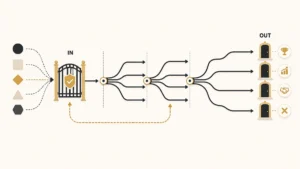
Lead capture tools convert website traffic into form submissions, demo requests, and trial signups. They live on your site (popups, embedded forms, exit-intent), at landing pages, or as standalone form builders. On the map they own Capture intent outright but share Convert with marketing automation platforms, which is why the two are so often bought twice. Capturing a submission is only half the job, though; the criteria a captured lead must pass before routing decide whether it reaches sales or gets held back. Routing itself is a separate purchase from capture, and four different product categories hide behind that one word, which is why feature tables that mix them are misleading before you check a single claim.
7. OptinMonster
OptinMonster is the long-running leader in popup and lead-capture forms with exit-intent triggers, scroll-depth rules, and on-site behavior targeting. Annual-billing pricing runs $7/month for Basic, $19 for Plus, $29 for Pro, and $49 for Growth (as of Q3 2026); month-to-month costs roughly 50% more. The platform integrates with most CRMs and email tools, making it the default popup tool for mid-market sites.
8. Typeform
Typeform is the form builder for teams that need conversational, branded, multi-step forms beyond the basic embedded box. Basic starts at $25/month on annual billing or $29 month-to-month, with Plus at $50 and Business at $83 annual (as of Q3 2026). Typeform’s strength is form completion rate: the conversational format converts at 25-40% higher rates than traditional multi-field forms in many B2B contexts.
9. HubSpot Free CRM (with forms)
HubSpot’s free tier includes a CRM, form builder, contact management, deal pipelines, and a reporting dashboard for up to 2 users and 1,000 contacts (as of Q3 2026). For SMB and early-stage B2B teams, the free HubSpot stack is genuinely viable as a first lead-gen platform. Paid Starter begins at $15/month per seat (as of Q3 2026), and upgrade pressure arrives at the contact volume ceiling and at advanced automation needs. Our HubSpot vs Salesforce comparison covers the platform tradeoffs in depth.
LinkedIn Automation Tools
LinkedIn automation tools extract contact data from Sales Navigator and run connection, message, and profile-view sequences. LinkedIn is the highest-intent B2B channel, and these tools have proliferated since 2023. LinkedIn’s Terms of Service technically prohibit most of these activities, so tool selection requires balancing safety with capability.
10. Wiza
Wiza extracts verified contact data from LinkedIn Sales Navigator searches, returning emails and phone numbers for entire prospect lists in one export. Pricing is credit-based: a free tier gives 20 valid emails and 5 phone numbers, Starter is $49/month per user for 100 of each, Email is $99, and Email + Phone is $199 (as of Q3 2026). The defining capability is the browser extension that exports Sales Navigator lists in seconds without touching LinkedIn’s actual UI in suspicious ways.
11. Expandi
Expandi handles LinkedIn outreach automation: connection requests, follow-up messages, profile views, and InMail sequences with safety guardrails to mimic human behavior. The Business plan is $99/month per LinkedIn account month-to-month, or $79 on annual billing, with an Agency tier at custom pricing from 10 seats (as of Q3 2026). Used heavily by agencies running outbound for multiple clients. The risk: aggressive automation still triggers LinkedIn restrictions, so even Expandi requires conservative settings. Agencies running outreach across several clients also need somewhere to land those leads, and a CRM built for agency client work keeps each client’s pipeline, retainer, and contact history separate rather than pooled in one funnel.
12. Phantombuster
Phantombuster is the technical alternative for teams who want full control: automation scripts that scrape LinkedIn, Twitter, and other platforms. Starter is $69/month with 20 execution hours and 5 automation slots, Pro is $159, and Team is $439 (as of Q3 2026), with roughly 20% off on annual billing. Steeper learning curve than Expandi but cheaper and more flexible for teams with technical capability.
Sales Engagement Tools
Sales engagement platforms manage the multi-touch outreach sequence: email, phone, LinkedIn, and tasks across hundreds or thousands of prospects. They own Route & qualify on the map and share Convert with email outreach tools, which is the single most common redundant purchase in a mid-market stack. Once these databases and capture tools have produced the leads, the rep-execution layer that works those leads is a separate buying decision across engagement platforms, CRM-native automation, AI SDRs, and dialers.
13. Salesloft
Salesloft is the established sales engagement leader with email cadences, dialer, conversation intelligence, and forecasting in one platform. Salesloft publishes no pricing (checked Q3 2026); the pricing page routes every visitor to a sales conversation. Reported mid-market deployments have historically landed around $125-$165/user/month (as of Q3 2026), but that is a third-party range, not a published rate. The platform pays off for sales teams of 10+ reps managing 100+ active opportunities each.
14. Outreach
Outreach competes directly with Salesloft at comparable feature depth and is likewise quote-only (checked Q3 2026). Note that the company’s web presence now redirects from outreach.io to outreach.ai, so older bookmarks and citations will bounce. Marginally stronger on AI-driven sequence optimization and Salesforce integration in 2026. The choice between Outreach and Salesloft usually comes down to existing tool stack: Salesforce-heavy teams often pick Outreach; HubSpot-heavy teams often pick Salesloft. Both are overkill for sub-10-rep teams.
AI-Powered Scraping and Enrichment Tools
AI-powered enrichment tools combine multiple data sources, enrich contacts in real time, and run waterfall enrichment across many providers to maximize coverage and accuracy. This is the fastest-growing category in 2026 and it has changed the economics of building targeted prospect lists. Popl and RocketReach’s event-data agreement brings that model into event GTM, using professional profiles to enrich exhibitors and build pre-show outreach lists.
15. Clay
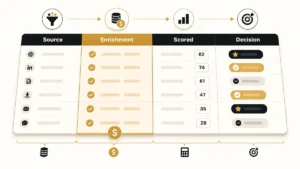
Clay is the breakout platform of 2025-2026 in this category. The platform stitches together 150+ data providers into a single waterfall enrichment workflow, then layers AI prompts to score, qualify, or write personalized messages per contact. The tier structure changed in 2026: there is now a Free plan (500 actions and 100 data credits a month), Launch from $167/month, Growth from $446/month, and a custom Enterprise tier, with data credits billed separately from platform actions (as of Q3 2026). Clay has rewritten what’s possible for outbound personalization at scale. Scoring is the cheapest of those jobs to run, because a scoring table charges for enrichment and nothing for the arithmetic, which puts the whole bill in how many rows you let reach the enrichment columns.
16. Lead Sniper
Lead Sniper extracts leads directly from Google Maps, including business contact info, reviews, and category data. Useful for local lead generation campaigns and for B2B teams targeting brick-and-mortar businesses. It is licensed as a one-time purchase rather than a subscription, typically $149-$249 per licence depending on how many installations you need (as of Q3 2026), which makes the total cost of ownership unusual for this list. For local lead gen context, see our local lead generation guide.
17. Smartlead Scraper
Smartlead’s adjacent product (separate from the email outreach platform) extracts business data from various sources for outreach prep. A free browser-extension tier exists, with paid tiers for higher volume. Worth pairing with the Smartlead email platform for teams already in that ecosystem.
18. Surfer AI (for SEO-driven leads)
Surfer is an SEO content platform increasingly used to generate inbound leads through AI-optimized content production. Annual-billing pricing starts at $49/month for Discovery, with Standard at $99 and Pro at $182 (as of Q3 2026), a material drop from its 2025 entry price. Different category from outbound tools but worth listing because content-driven inbound now competes with cold outreach for many B2B segments. For the SEO foundation, see our B2B SEO strategy guide.
PRO TIP
Don’t subscribe to Apollo and Smartlead and Lemlist and Wiza simultaneously to “compare.” Pick one tool per category for your first 90 days, run real campaigns, and only add a second tool when you’ve identified a specific gap. Tool sprawl is the most expensive form of indecision in B2B sales. The sharper version of that rule is to pick per layer, not per category, working out which part of the path is genuinely missing before buying anything that claims to cover all of it.
Demand Generation Tools: The Four Categories Lead Gen Software Misses
Demand generation tools work before a lead exists. Four categories do that job, and none of the 18 tools above covers any of them. Each one below is a category brief rather than a product review, with the deeper vendor comparison linked where IVRIS already has one.

Intent data providers
Intent data providers tell you which accounts are researching your category right now, before anyone fills in a form. Bombora aggregates third-party content consumption across a publisher co-op, G2 Buyer Intent reports activity on review-site category and comparison pages, and both ZoomInfo and Cognism bundle intent into their platform tiers.
Buy it when your ACV justifies acting on a signal that names an account but rarely names a person. Skip it when your sales team can’t work an account-level signal, because an intent feed with no play attached is an expensive report. The mechanics of signal types, decay windows, and what a surge score actually measures are covered in our guide to how B2B intent data signals are built and where they break.
ABM platforms
ABM platforms combine account selection, intent scoring, advertising, and web personalization in one system. 6sense leads on predictive account intelligence, and Demandbase pairs account intelligence with its own advertising layer. Both sit in three overlap zones on the map at once, which is why they are the most contested purchase in the demand stack.
The honest warning: an ABM platform absorbs the jobs of a standalone intent provider, a chunk of your paid targeting, and part of your attribution reporting. Buying one alongside all three is the most expensive mistake in this article. 6sense gets a full product review in our roundup of the AI marketing tools that earn a place in a B2B stack, and the campaign mechanics that make or break the platform investment sit in our ABM campaign planning guide.
Content syndication networks
Content syndication networks place your gated asset in front of a target account list on someone else’s media property and deliver the contacts who download it. NetLine, Integrate, Madison Logic, and TechTarget are the established names, usually priced per lead rather than per seat.
This is the only category here that reliably produces named contacts, which is why it sits at the seam between the two stacks. It is also the category with the widest quality variance: the same spend can return a clean, in-ICP list or a batch of unqualified downloads, and the contract rarely distinguishes. Insist on a replacement clause for out-of-ICP leads and score the delivery yourself before it touches your CRM. Webinars and virtual events do a similar demand-creation job with better lead quality and worse scale, and our webinar lead generation guide compares the platforms that run them.
Website visitor identification
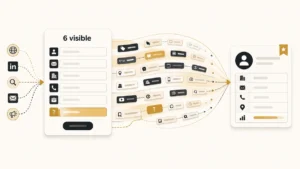
Website visitor identification tools reverse-resolve anonymous traffic to a company, and in some cases to a person, so you can act on interest that never converted. Leadfeeder is the established company-level option, Albacross covers similar ground in Europe, and RB2B pushes person-level identification for US traffic. Compare them on coverage and you hit a wall immediately, because the resolved share is two numbers, not one, and the published figures are measured against populations no vendor states.
Match rates vary enormously by traffic mix, and person-level identification carries privacy exposure that company-level resolution does not, particularly under GDPR. Treat any vendor-quoted match rate as a claim about their traffic sample, not yours, and run a paid pilot on your own site before committing. In practice what that exposure actually consists of comes down to the balancing test, where a probabilistically inferred identity is far harder to justify than one the person published themselves. This category overlaps heavily with intent data at the Capture stage: both answer “who is interested,” one from your own property and one from the wider web.
Where the Two Stacks Overlap
Eight cells on the map are shaded, and each one is a place where two categories do the same job well enough that most teams only need one. These are the duplicate purchases worth auditing before your next renewal.
Intent data and ABM platforms, at Capture. 6sense and Demandbase both ingest and score third-party intent. Running Bombora alongside either usually means paying twice for the same co-op data. Buy the standalone provider only when you want the raw feed in your own warehouse.
Intent data and contact databases, at Capture. ZoomInfo and Cognism both bundle intent into their platform tiers. If you already pay for either at mid-market level, a separate intent subscription needs a specific reason.
Website visitor identification and intent data, at Capture. One watches your property, the other watches the web. Teams with fewer than about 5,000 monthly visitors get more from intent; teams with real traffic and no form conversion get more from visitor identification.
Marketing automation and email outreach, at Convert. HubSpot and Marketo both send sequenced email. The genuine reason to run a cold-outreach tool alongside them is sending infrastructure and inbox rotation, not sequencing, so if you aren’t sending cold volume you don’t need both.
Sales engagement and email outreach, at Convert. Salesloft and Outreach include cadences. A separate cold email platform earns its place only when deliverability at volume is the constraint.
Marketing automation and lead capture, at Convert. Every marketing automation platform ships forms and landing pages. A dedicated capture tool has to beat them on conversion rate to justify the line item.
ABM platforms and paid channels, at Create. ABM platforms buy media. Running the same account list through LinkedIn Ads separately splits frequency and muddies measurement. Our comparison of the LinkedIn advertising tools and agencies worth paying for covers when the direct route wins.
ABM platforms and attribution, at Measure. ABM platforms report their own influence, which is not a neutral measurement. Keep attribution independent of the platform whose spend it evaluates, and our roundup of the B2B attribution software that survives a real audit explains what independence costs.
IMPORTANT
Three vendors sell on both sides of this map: ZoomInfo (database plus intent), HubSpot (capture plus marketing automation plus CRM), and Clay (enrichment plus workflow orchestration). That isn’t a criticism. It does mean a category-by-category shortlist will double-count them unless you audit the overlap first.
How to Build Your Stack
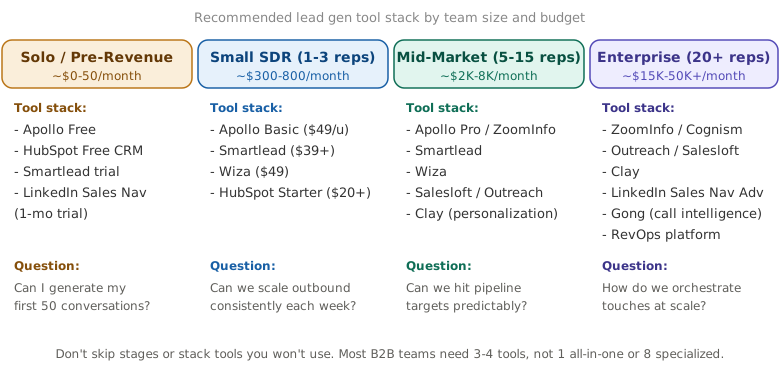
The right stack depends on your team size, deal size, and outbound volume. The framework below has scaled from solo founder to 50-person sales orgs without major redesign. Teams that prefer renting the SDR motion entirely rather than running the stack in-house should compare against the 12 B2B lead gen companies that bundle these tools into a managed retainer, which trades higher monthly cost for zero learning curve on the tool stack itself.
Stack Recommendations by Team Size
- Solo founder / pre-revenue (free or near-free, ~$50/month, as of Q3 2026): Apollo Free + LinkedIn Sales Navigator (paid trial or 1-month commit) + HubSpot Free CRM + Smartlead trial. The question is “can I generate my first 50 conversations?” Free tools get you there if you put in the manual work. No demand generation tools at this stage: you don’t have the traffic for visitor identification or the ACV for intent.
- Small SDR team / 1-3 reps (~$300-800/month): Apollo Basic ($49/user) + Smartlead ($39+) + Wiza ($49) + HubSpot Starter ($15+/seat), all as of Q3 2026. The question shifts to “can we scale outbound consistently?” Now infrastructure matters more than free tier limits. The first demand-side purchase worth testing here is website visitor identification, because it monetizes traffic you already have.
- Mid-market sales team / 5-15 reps ($2K-$8K/month, as of Q3 2026): Apollo Professional or ZoomInfo + Smartlead + Wiza + Salesloft or Outreach + Clay for personalization. The question becomes “can we hit pipeline targets predictably and improve reply rates?” This is the tier where intent data starts to pay, and also the tier where buying it twice is easiest: check whether your database contract already includes it.
- Enterprise sales org / 20+ reps ($15K-$50K+/month, as of Q3 2026): ZoomInfo or Cognism + Outreach or Salesloft + Clay + LinkedIn Sales Navigator Advanced + Gong (conversation intelligence) + an ABM platform + independent attribution. The question is “how do we coordinate hundreds of touches across thousands of accounts?” For the broader measurement infrastructure, see our B2B marketing metrics guide.
6 Tool Mistakes That Waste Budget
Six mistakes show up in nearly every B2B tool audit. Each is fixable, and fixing them typically cuts tool spend by 30-50% without losing capability.
1. Buying for features you won’t use. Apollo Organization at $119/user/month (as of Q3 2026) includes intent topics and advanced workflows that small teams never touch. Most teams need Basic at $49 for 80% of the value. The same applies up the stack: a five-figure ZoomInfo contract rarely makes sense if Apollo’s $49/user plan would have done the job.
2. Ignoring data accuracy variance by region. Apollo’s North American coverage is strong; EMEA and APAC are noticeably weaker with bounce rates of 15-20% on certain segments. ZoomInfo and Cognism cover EMEA much better. Buying the wrong database for your geography means your reply rate caps low regardless of how good your sequencing is.
3. No email warmup before outreach. New email accounts and domains need 2-4 weeks of warmup before sending any cold volume. Skipping this step lands your emails in spam, kills your domain reputation, and wastes the entire outbound investment. Smartlead’s warmup pool is the cheap insurance policy that prevents this category of failure.
4. Treating browser extensions as primary tools. Free extensions are useful supplements but not primary tools. Their data quality is inconsistent, they break frequently when sites update, and they lack the support infrastructure of paid platforms. Use them for one-off enrichment, not as backbone.
5. Switching tools every 6 months instead of mastering one. The best teams pick a tool, learn its quirks deeply, and build process around it for 12-24 months before considering migration. Switching costs (data export, sequence rebuild, training time, integration redo) typically exceed the marginal capability gain of the new tool. For broader campaign strategy context, see our B2B marketing campaign strategies guide.
6. Buying demand generation tools before you have demand to capture. An intent feed or an ABM platform tells you which accounts are already interested. If nobody in your category knows you exist, those tools report a market you have no share of, at five figures a year. Fix the demand side first, then buy the software that reads it. The sequence matters more than the shortlist, which is why the demand generation framework these tools support comes before the purchase order.
Demand Gen and Lead Gen Tools Compared
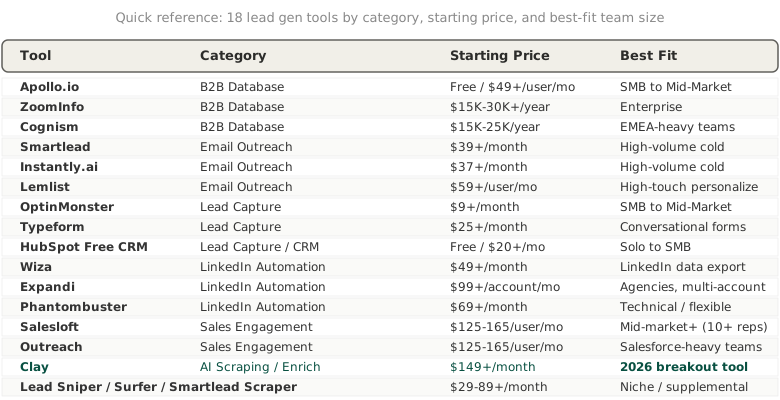
The table below covers all 18 lead generation tools by category, entry price, and best-fit team size, followed by the four demand generation categories and their typical entry point. Use it as a shortlist filter before reading individual product pages.
| Tool or category | Category | Entry price (as of Q3 2026) | Best for |
|---|---|---|---|
| Apollo.io | B2B contact database | Free; $49/user/mo annual | Consolidating 3-4 tools into one |
| ZoomInfo | B2B contact database | Quote-only | Enterprise deals, bundled intent |
| Cognism | B2B contact database | Quote-only, 5 seats minimum | EMEA and UK mobile data |
| Smartlead | Email outreach | $39/mo | Cold sending at volume |
| Instantly.ai | Email outreach | $37.60/mo annual | Unlimited inboxes on entry tier |
| Lemlist | Email outreach | $55/mo annual | High-touch personalized sequences |
| OptinMonster | Lead capture | $7/mo annual | Exit-intent and on-site popups |
| Typeform | Lead capture | $25/mo annual | Conversational multi-step forms |
| HubSpot Free CRM | Lead capture + CRM | Free to 1,000 contacts | First platform for SMB teams |
| Wiza | LinkedIn automation | Free; $49/user/mo | Sales Navigator list exports |
| Expandi | LinkedIn automation | $79/mo annual per account | Agency multi-client outreach |
| Phantombuster | LinkedIn automation | $69/mo | Technical teams wanting control |
| Salesloft | Sales engagement | Quote-only | 10+ rep teams, HubSpot-heavy |
| Outreach | Sales engagement | Quote-only | 10+ rep teams, Salesforce-heavy |
| Clay | AI enrichment | Free; $167/mo Launch | Waterfall enrichment at scale |
| Lead Sniper | AI scraping | $149 one-time licence | Google Maps and local targets |
| Smartlead Scraper | AI scraping | Free tier | Existing Smartlead users |
| Surfer AI | SEO-driven inbound | $49/mo annual | Content-led lead generation |
| Intent data providers | Demand generation | Four to five figures annually | Account-level buying signals |
| ABM platforms | Demand generation | Five figures annually | Coordinated account programs |
| Content syndication | Demand generation | Priced per delivered lead | Named contacts at target accounts |
| Visitor identification | Demand generation | Low three figures monthly | Monetizing existing traffic |
Tools amplify a working acquisition strategy; they don’t substitute for one. A team running the wrong play with the best tools usually loses to a team running the right play with the basics. Get the GTM motion sorted first, then add tooling category by category as the bottleneck moves.
Frequently Asked Questions
For most B2B teams in 2026, Apollo.io is the most-cited starting point because it combines a 270M+ contact database with email sequencing, dialer, and AI assistance at $49-$119/user/month on annual billing (as of Q3 2026). Apollo wins on consolidation. ZoomInfo wins for enterprise teams selling into Fortune 500 accounts. Cognism wins for teams with significant EMEA target markets. The right tool depends on geography, deal size, and whether you want one platform or a focused multi-tool stack.
Demand generation includes everything that creates and captures buying interest before a named lead exists: category education, paid demand channels, webinars and events, content syndication, intent monitoring, and account-based programs. On the tooling side that means four software categories lead generation tools don’t cover: intent data providers, ABM platforms, content syndication networks, and website visitor identification. Lead generation picks up once a specific person is identifiable.
Lead generation is legal in nearly every jurisdiction, but specific tactics are regulated. GDPR (EU), CAN-SPAM (US), CASL (Canada), and CCPA (California) restrict how cold contact data can be collected, stored, and used. Cold email to business addresses is generally permitted under CAN-SPAM with proper unsubscribe handling. EMEA outreach typically requires legitimate-interest documentation under GDPR. Tools like Cognism are explicitly built for GDPR compliance with phone-verified consent.
Not directly. ChatGPT and similar AI tools don’t have real-time access to verified B2B contact databases, so they can’t produce email addresses or phone numbers reliably. Where AI is meaningfully changing lead generation in 2026: tools like Clay use AI to enrich, score, and personalize outreach at scale; AI-native sequencers automate message variation per contact; and AI Overviews in search are reshaping inbound discovery. AI augments lead gen tools rather than replacing them.
For B2B, the fastest tested-and-true path is paid LinkedIn Lead Gen Forms or Google Search Ads with high-intent keywords. Both can produce qualified leads within 24-48 hours of campaign launch with $500-$2,000 in test spend. For outbound: Apollo + Smartlead can have your first cold email sequence live in 4-6 hours including domain warmup verification. The slowest path with the highest long-term ROI is content-driven inbound through SEO; budget 6-12 months before meaningful pipeline.
Yes, with caveats. Apollo Free, HubSpot Free CRM, and LinkedIn Sales Navigator (free trial) are genuinely useful starting points and can produce real pipeline for solo founders and pre-revenue teams. The free tier limits become binding once you’re sending more than 50-100 cold emails per month or trying to scale a 2+ person SDR team. Plan to upgrade within 60-90 days of consistent use. Free browser extensions are useful supplements but not reliable as primary tools.
Your First Move
If you’re a solo founder or pre-revenue, start with Apollo Free + HubSpot Free CRM + Smartlead 14-day trial. Three tools, total cost $0 for the first 30 days. Run 100 manually-personalized cold emails to your ICP, measure reply rate, then decide whether to upgrade Apollo (more credits) or Smartlead (sending volume) based on which limit you hit first. Buy nothing from the demand generation side yet.
If you have 1-3 SDRs, your one move this week is to commit to Apollo Basic ($49/user) + Smartlead ($39), both as of Q3 2026, + a CRM you’re already using. Resist adding Lemlist, Wiza, Clay, and Outreach until you’ve run that core stack for 90 days and identified the actual gap. Most teams don’t need a fifth tool; they need to run the first three better. The harder strategic call sits one level up — whether to outsource the entire SDR motion or run an in-house AI stack instead, which the cost-per-meeting math turns into a break-even calculation rather than a preference.
If you’re 10+ reps, your one move is the buy-vs-build decision on the data layer, and the overlap audit that goes with it. Apollo at $119/user × 10 reps is $14,280/year on annual billing (as of Q3 2026). ZoomInfo and Cognism are quote-only and land in five figures for comparable depth, with intent bundled in. Don’t run all three, and don’t buy a standalone intent feed until you’ve checked whether your database contract already includes one.
The teams that compound on tooling are the ones who pick a stack and stay with it long enough to master the workflow inside each tool, not the ones who churn through new software every quarter chasing the next feature list. Mastery beats novelty every time on this part of the stack.