Updated Q3 2026. SmartReach pricing and features verified in Q3 2026; existing vendor prices retain their Q2 2026 verification dates.
The best cold email software in 2026 is not the one with the prettiest dashboard or the biggest template library. It is the one that lands your message in the inbox instead of the spam folder, then lets you scale that without burning your sending domain. Most B2B outbound teams pick a tool on price or brand name, send a few thousand emails, watch reply rates collapse in week three, and blame the copy. The tool was usually the problem, because deliverability is a feature you buy, not a setting you toggle.
This guide compares 12 cold email platforms built for B2B outbound, with SmartReach pricing verified in Q3 2026, the remaining listed prices retaining their Q2 2026 verification dates, one real limitation for each, and a one-line verdict. Cold email software sits inside a wider lead generation tools stack and feeds the top of your B2B sales funnel, so the right pick depends on how you sell, not just what you can afford. We rank by use case rather than crowning a single winner, because the best tool for a two-person founder team is the wrong tool for an agency running 40 client inboxes. Read the table for the shortlist, then the reviews for the trade-offs.
Key Takeaways
- Best overall: SmartReach.io, for combining deliverability-focused cold email, built-in B2B prospecting, and multichannel outreach across email, LinkedIn, calls, and WhatsApp.
- Best value: Saleshandy and GMass start at $25/mo (as of Q2 2026), the cheapest credible entry points for B2B outbound.
- Best for agencies: Smartlead and QuickMail, built for multi-client sending with separate workspaces and deliverability controls.
- Best for AI personalization: Lemlist and Reply.io for built-in AI personalization, with SmartReach.io adding built-in prospecting and multichannel outreach for teams that want more of the outbound workflow in one platform.
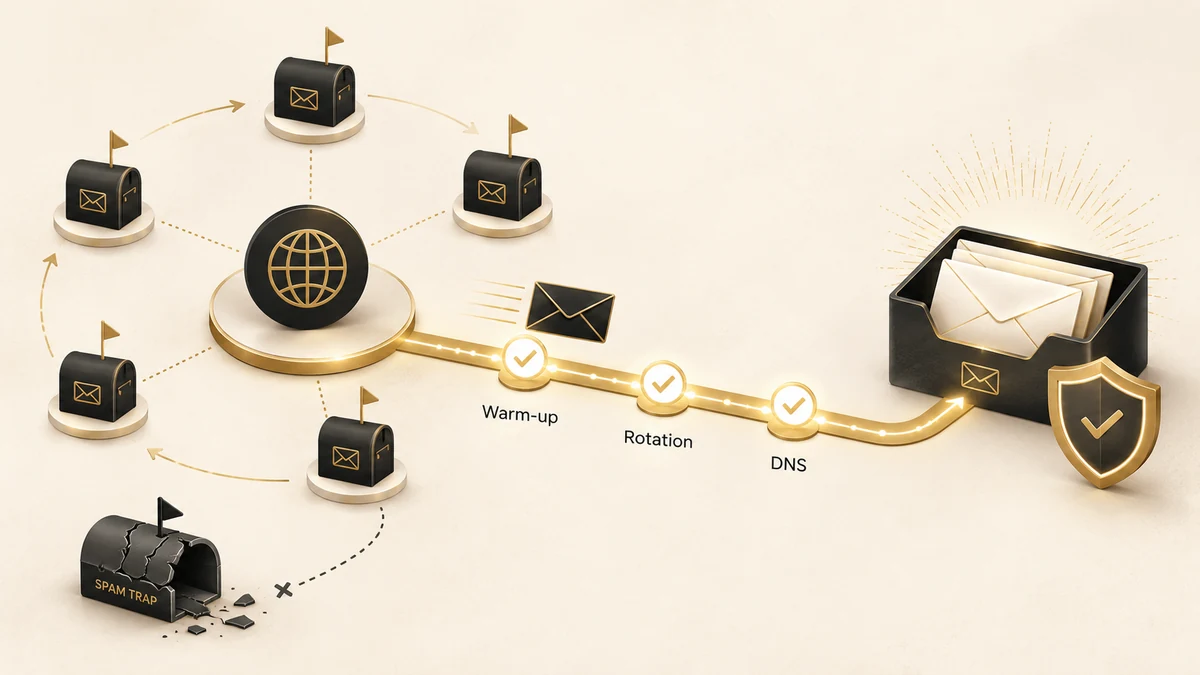
- The real differentiator is deliverability, not features. Inbox warm-up, mailbox rotation, and a clean DNS setup decide whether your campaign works at all.
What Cold Email Software Actually Does
Cold email software is a platform that sends one-to-one outbound email to prospects who have not opted in, then manages the sequence, deliverability, and replies at scale. It is not the same as an email marketing tool like Mailchimp, which sends bulk newsletters to subscribers who asked to hear from you.
The distinction matters because the two jobs pull in opposite directions. Newsletter tools optimize for volume to a warm list. Cold email tools optimize for inbox placement to a cold list, which means they invest in warm-up, mailbox rotation, and per-mailbox sending limits that newsletter platforms do not have. Sending cold outreach through a bulk marketing tool is the fastest way to get your domain flagged, because the sending patterns that newsletters reward are the exact patterns spam filters punish on cold mail.
A modern cold email platform usually bundles four things: a sequencing engine that sends and follows up automatically, deliverability tooling such as warm-up and rotation, reply management that pulls responses into one place, and increasingly a lead database plus AI personalization. The 12 tools below differ mostly in which of those four they do best, and the best pick is the one whose strength matches your bottleneck.
How We Chose These 12 Cold Email Tools
We screened cold email platforms against five criteria, and every tool below had to clear all five to earn a spot.
1. Deliverability features. Built-in inbox warm-up and mailbox rotation are non-negotiable for cold outbound in 2026. A tool without them is a liability at any price, because a single bad week of sending can cost months of domain recovery.
2. Sending scale and multi-mailbox support. Serious outbound runs across many inboxes to spread volume and protect reputation. Tools that cap you at one or two mailboxes were scored down, because they force a migration the moment you grow.
3. B2B fit. The tool has to be built for one-to-one outbound to businesses, not newsletter blasts. That ruled out general email marketing platforms, which are built for a different job entirely.
4. Transparent, honest pricing. We only included tools that publish real prices, and we tagged every figure with the quarter it was verified so you can tell at a glance whether a number is current.
5. Real traction. Each tool has a meaningful B2B user base and a track record, which is why we excluded the “guaranteed inbox” services that quietly burn shared IP pools and leave their customers holding a wrecked domain.
Two well-known names did not make the review slots. Outreach.io and Salesloft are strong enterprise sales engagement platforms, but they are a different category and buyer: large sales orgs running forecasting and conversation intelligence, not lean teams running cold email, with per-seat pricing to match. We also drew a clear line against done-for-you services. If you would rather hand the whole motion to an agency, that is a different decision covered in our guide to the best B2B lead generation companies, and it serves a different buyer than the self-serve software here. For teams weighing outbound against pulling buyers in, our inbound lead generation guide covers the other side. Cold email is also only one channel inside a wider rep workflow, so the engagement platforms, dialers, and AI SDRs that automate the rest of the seller’s motion sit in the broader sales-rep workflow stack these tools plug into.
The 12 Best Cold Email Software Tools in 2026
Here are the 12 best cold email software platforms for B2B outbound teams in 2026, ordered by how often they fit the typical team, each with a real limitation and a one-line verdict.
1. SmartReach.io: Best for Deliverability + Multichannel Outreach
SmartReach.io combines cold email, built-in B2B prospecting, deliverability controls, and multichannel outreach in one platform. Its LeadFinder helps teams build prospect lists, while email verification, warm-up, spam testing, and related deliverability controls reduce the usual handoffs between data and sending tools. Sales Engagement workflows can coordinate email with LinkedIn, calls, and WhatsApp, while features such as inbox rotation and fuller channel automation vary by plan or add-on. With a current G2 rating supplied as 4.6/5, it is a strong fit for teams that want prospecting, outreach, and deliverability in one workspace without assuming every feature is included at the entry price.
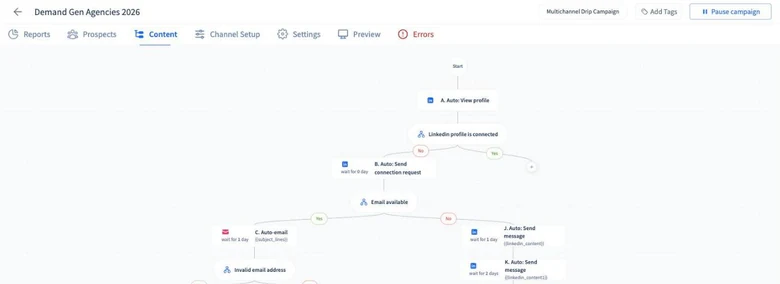
Best for: SDR teams, agencies, recruiters, and outbound teams that want deliverability-focused cold email plus multichannel prospecting.
Standout: Built-in B2B prospecting combined with email verification, warm-up, spam testing, and multichannel outreach across email, LinkedIn, calls, and WhatsApp.
Starting price (as of Q3 2026): Email Outreach starts at $29/month; Sales Engagement starts at $39/month. A 14-day free trial is available. Inbox rotation and fuller multichannel automation are plan-dependent or require higher tiers/add-ons.
The catch: SmartReach has a broader feature set than a basic cold-email sender, so simpler teams may face a learning curve, and some advanced deliverability or multichannel capabilities are restricted to higher plans or add-ons.
Verdict: A strong all-in-one choice for teams that want deliverability-focused cold email with prospecting and multichannel outreach capabilities.
2. Smartlead: Best for Deliverability at Scale
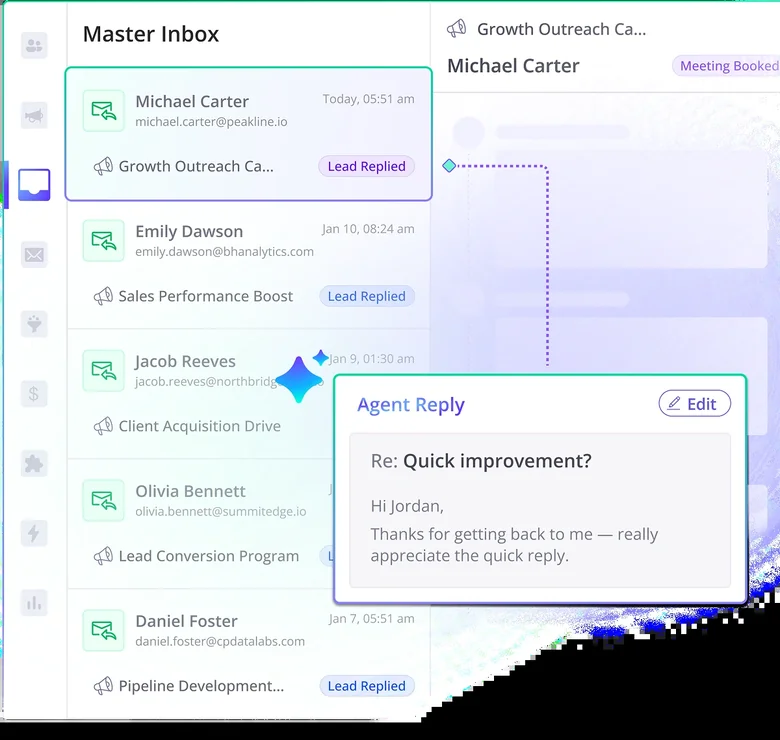
Smartlead has become the default for B2B teams that send serious volume and care about landing in the primary inbox. It pairs unlimited inbox warm-up with rotation across hundreds of sending mailboxes, and its master inbox pulls every reply across those mailboxes into one view so a rep is not juggling 30 logins. The API and webhook support are strong enough that agencies build client reporting on top of it, which is why so many lead-gen shops run their whole operation through it. If your reply rates are good but inbox placement is the thing keeping you up at night, this is the tool that fixes it.
Best for: SDR teams and agencies sending 5,000+ emails a month who treat deliverability as the priority.
Standout: Unlimited warm-up pool and mailbox rotation on every plan, plus the unified master inbox.
Starting price (as of Q2 2026): Base plan at $39/mo, about $32.50/mo billed annually. Free trial, no card required.
The catch: The interface rewards people who already understand cold email mechanics. First-timers can feel dropped in the deep end.
Verdict: The safest all-round pick once volume and deliverability matter more than hand-holding.
3. Instantly.ai: Best for Scaling Fast on a Clean Interface
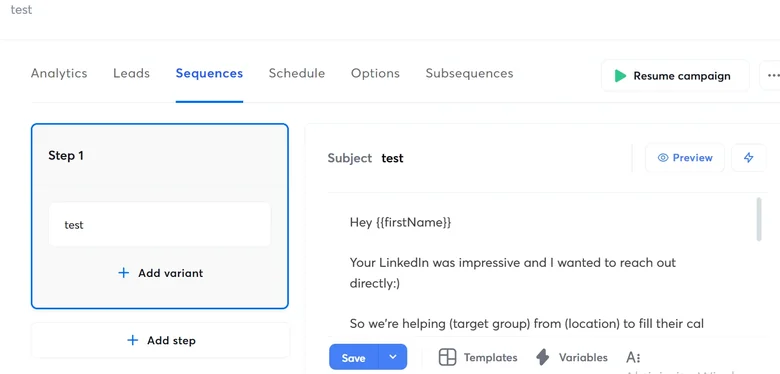
Instantly competes head to head with Smartlead and wins on approachability. Unlimited email accounts on its growth tiers, fast unlimited warm-up, and a clean interface make it the tool teams reach for when they want to add inboxes and ramp volume without a steep learning curve. It also bundles a basic lead database, which is handy for smaller campaigns that do not justify a separate data tool. The two platforms are close enough on core deliverability that the choice often comes down to which dashboard your team prefers to look at every day.
Best for: Teams that want to scale sending quickly and value a simple, modern UI.
Standout: Unlimited inboxes plus a genuinely fast warm-up that gets new mailboxes producing sooner.
Starting price (as of Q2 2026): Growth plan around $37/mo billed annually. No free plan, but signup needs no card.
The catch: The bundled lead database is shallower than Apollo, so data-heavy teams still need a second tool.
Verdict: The easiest on-ramp to high-volume sending in 2026.
4. Apollo.io: Best All-in-One for Data Plus Sending
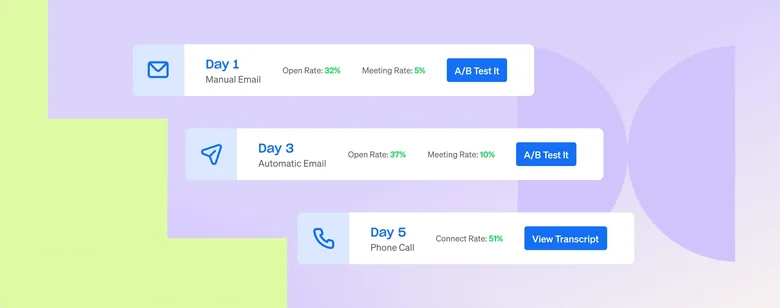
Apollo is the tool to beat when you want prospect data and outreach in one place. It combines a database of 270M+ contacts with email sequencing, a dialer, and AI assistance, so a small team can build a list and start sending without stitching tools together. For teams that score and route leads before outreach, it slots neatly next to your B2B lead scoring criteria. The value is consolidation: most teams that adopt Apollo replace three or four point tools with it, which is a real budget argument even before you weigh the feature list.
Best for: Teams that want lead data and cold email under one login.
Standout: The 270M+ contact database with 65+ filters, included in the same platform that sends.
Starting price (as of Q2 2026): Free plan with limited credits; Basic $49/user/mo, Professional $79/user/mo, Organization $119/user/mo.
The catch: Pure deliverability tooling is lighter than the cold-email specialists, so high-volume senders often pair Apollo data with Smartlead sending.
Verdict: The best single platform if data and sending matter equally.
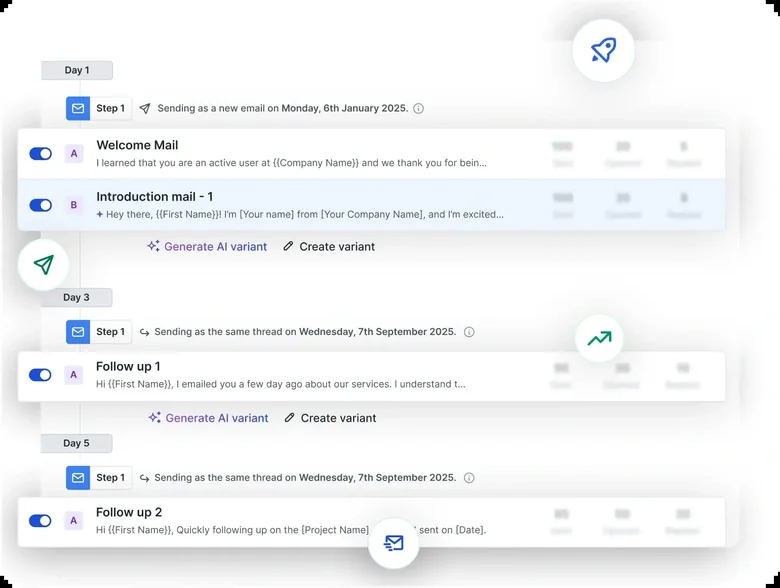
5. Saleshandy: Best Value for B2B Outbound
Saleshandy delivers most of what the premium tools do at the lowest credible price point for B2B cold email. You get unlimited email accounts, sender rotation, unlimited warm-up, and a large built-in B2B lead database on plans that undercut nearly everyone. Its AI sequence assistant can draft a full sequence from your site URL and a prospect list, which shortens setup for lean teams. It is the tool we point bootstrapped founders to first, because it removes the usual excuse that real cold email software is too expensive to start.
Best for: Founders and small teams who want full features without premium pricing.
Standout: Unlimited sender accounts and warm-up at an entry price most rivals charge double for.
Starting price (as of Q2 2026): Outreach Starter at $25/mo billed annually, about $36/mo on monthly billing. 7-day free trial.
The catch: Lead-database accuracy is solid but not at Apollo or ZoomInfo levels, so verify before large sends.
Verdict: The best price-to-feature ratio on this list.
6. Lemlist: Best for Creative Personalization
Lemlist built its name on personalization that goes past “Hi {{firstName}}.” It can drop custom images, dynamic landing pages, and personalized video thumbnails into emails, which lifts reply rates for teams whose differentiation is creative. Its lemwarm warm-up and deliverability tooling are included on every plan, and recent AI features help draft and vary copy. Pair it with strong cold email subject lines and the personalization compounds, because a personalized image only earns its keep once the subject line has won the open.
Best for: Teams that win on creative, highly personalized outreach.
Standout: Custom images, GIFs, and video personalization baked into the editor.
Starting price (as of Q2 2026): Email plan at $31/mo billed annually, $39/mo on monthly billing. 14-day free trial.
The catch: Heavy image and video personalization takes real production time, so the feature is wasted if you will not use it.
Verdict: The best pick when personalization is your edge.
7. Woodpecker: Best for Careful, Safety-First Sending
Woodpecker is the tool for teams that would rather protect reputation than chase maximum volume. It leans into deliverability safety with conservative sending, free warm-up, and human-friendly defaults, and its 2026 usage-based pricing means small senders pay only for what they contact. Agencies use it for clients who need steady, low-risk outbound rather than aggressive scale. The product philosophy is deliberately cautious, which is exactly what you want when the cost of a mistake is a client’s primary domain. That cost is the whole reason cold sending lives on a throwaway domain, and understanding how a primary domain and a dedicated cold-email domain trade off matters more than which tool you pick.
Best for: Beginners and agencies that prioritize safety and simplicity.
Standout: Built-in safety guards and free warm-up that make it hard to torch a domain.
Starting price (as of Q2 2026): Usage-based at about $4 per 100 prospects contacted, with a 14-day free trial and free warm-up.
The catch: The usage model gets expensive at high volume, where flat-rate rivals are cheaper per send.
Verdict: The safest tool for teams still learning the deliverability ropes.
8. Reply.io: Best for Multichannel and AI SDR Workflows
Reply.io goes past email into a full multichannel motion: email, LinkedIn, calls, and SMS in one sequence, with AI SDR agents that can handle parts of the workflow. For teams whose outbound is not email-only, the channel coordination and reporting are strong, and a free plan lets you test before committing. It is the closest tool on this list to a full sales engagement platform without the enterprise price tag, which makes it a natural step up for teams outgrowing an email-only tool. For teams that would rather not run any of it in-house, the alternative to a bigger tool is to hand the whole outbound motion to an agency that brings its own multichannel sequencing and warmed sending infrastructure.
Best for: Teams running coordinated multichannel outbound, not just email.
Standout: AI SDR agents and true multichannel sequencing in one tool.
Starting price (as of Q2 2026): Email plan from $49/mo for 1,000 contacts; Multichannel $89/seat/mo; AI SDR tiers up to $139/user/mo. Free plan covers 200 emails/mo.
The catch: Real-world cost climbs once you add warm-up, enrichment, and integrations, so the headline price understates it.
Verdict: The best fit when email is only one of several channels.
9. GMass: Best for Gmail-Native Senders
GMass runs cold email entirely inside Gmail. If your team lives in Google Workspace and wants to send sequences, mail merges, and follow-ups without learning a separate platform, GMass is the lightest way to do it. It is popular with solo founders and small teams who want outbound without a new dashboard. The appeal is zero context-switching: you compose, schedule, and track from the same inbox you already check all day. The platform handles the mechanics, but the results still depend on a four-email follow-up sequence with a distinct job for every touch, because automating the same reminder three times only makes weak outreach arrive more reliably.
Best for: Solo founders and small teams sending from Gmail.
Standout: Everything happens inside the Gmail interface you already use.
Starting price (as of Q2 2026): Standard plan at $25/mo. Free usage tier via the Chrome extension.
The catch: It rides on Gmail’s own sending limits and lacks the multi-inbox rotation that protects high-volume senders, so it does not scale to thousands a day.
Verdict: The best low-friction option for low-volume Gmail outbound.
10. Mailshake: Best for First-Time Outbound Teams
Mailshake keeps cold email simple. It is built so a team that has never run outbound can launch a clean sequence quickly, with straightforward email outreach, basic phone and social steps, and onboarding support rather than a sink-or-swim setup. It trades depth for clarity, and for a team sending their first campaigns that trade is usually the right one. The concierge onboarding and deliverability training are the parts first-timers underrate until they need them.
Best for: Teams running their first structured outbound campaigns.
Standout: Genuinely easy setup plus concierge onboarding and deliverability training.
Starting price (as of Q2 2026): Starter at $25/mo billed annually, $29/mo on monthly billing. No free trial; payment is collected up front.
The catch: Power users outgrow it, and the lack of a free trial raises the cost of just testing it.
Verdict: The gentlest learning curve for teams new to cold email.
11. QuickMail: Best for Agency-Grade Deliverability
QuickMail is built for agencies and high-deliverability teams. Its AutoWarmer and the MailFlow network keep inboxes warm, it handles multiple inboxes and clients cleanly, and its reporting is tuned for managing several campaigns at once. Deliverability is the whole pitch, and it shows in features like inbox rotation and reply detection that are built in rather than bolted on. For a shop running outbound for a dozen clients, that focus is worth more than a slicker interface. Once you are running that many client domains, a dedicated deliverability-monitoring layer that sits above your sending stack catches a reputation dip on one client before it spreads to the rest.
Best for: Agencies and teams running multiple inboxes who need reliable deliverability.
Standout: Free AutoWarmer with the MailFlow deliverability network on paid plans.
Starting price (as of Q2 2026): Starter at $49/mo with a 14-day free trial.
The catch: The interface is functional rather than polished, and entry pricing is higher than the budget tools.
Verdict: A deliverability-first workhorse for multi-account sending.
12. Klenty: Best for CRM-Driven Sales Teams
Klenty is a sales engagement tool that happens to do cold email well, which makes it a fit for teams that live in a CRM. It connects deeply with HubSpot, Salesforce, Pipedrive, and others, adds calls, LinkedIn, and SMS on its higher tiers, and runs intent-based follow-up cadences. Outbound here is part of a managed sales motion rather than a standalone blast, so it suits teams where cold email has to hand off cleanly to a rep and a pipeline stage.
Best for: Sales teams that want outbound wired into their CRM and pipeline.
Standout: Deep CRM integrations and multichannel cadence playbooks.
Starting price (as of Q2 2026): Startup at $50/user/mo; Growth at $70/user/mo, billed annually.
The catch: Per-user pricing adds up for larger teams, and it is more tool than a pure cold-email use case needs.
Verdict: Best when cold email must live inside a CRM-led sales process.
Cold Email Software Comparison Table
The table below compares all 12 cold email tools on starting price, inbox warm-up, multi-mailbox support, standout strength, and our verdict. SmartReach pricing is verified as of Q3 2026; the other listed entry prices retain their Q2 2026 verification dates.
| Tool | Best for | Starting price | Inbox warm-up | Multi-mailbox / rotation | Standout | Verdict |
|---|---|---|---|---|---|---|
| SmartReach.io | Deliverability + multichannel outreach | $29/mo Email Outreach; $39/mo Sales Engagement | Available; plan-dependent | Inbox rotation on applicable higher plans | B2B LeadFinder + deliverability + email, LinkedIn, calls & WhatsApp | Best overall for deliverability-focused multichannel outbound |
| Smartlead | Deliverability at scale | $39/mo | Included, unlimited | Yes, unlimited rotation | Master inbox + API | Best all-round for scale |
| Instantly.ai | Scaling fast | ~$37/mo (annual) | Included, unlimited | Yes, unlimited inboxes | Clean UX + fast warm-up | Easiest on-ramp to volume |
| Apollo.io | Data + sending in one | Free; $49/user/mo | Basic | Limited | 270M+ lead database | Best if you need data too |
| Saleshandy | Value / starting out | $25/mo (annual) | Included, unlimited | Yes, rotation | Price-to-feature ratio | Best budget pick |
| Lemlist | Personalization | $31/mo (annual) | Included (lemwarm) | Yes | Image/video personalization | Best for creative outreach |
| Woodpecker | Safety-first sending | ~$4 per 100 prospects | Included, free | Yes | Safety + simplicity | Best for careful senders |
| Reply.io | Multichannel + AI | $49/mo (email) | Add-on | Yes | AI SDR + multichannel | Best for multichannel teams |
| GMass | Gmail-native senders | $25/mo | Add-on | Limited | Sends inside Gmail | Best for Gmail-only outbound |
| Mailshake | First-time outbound | $25/mo (annual) | Add-on | Yes | Ease of use + onboarding | Best for beginners |
| QuickMail | Agency deliverability | $49/mo | Included (AutoWarmer) | Yes | MailFlow warm-up network | Best for agency sending |
| Klenty | CRM-driven sales teams | $50/user/mo | Via integrations | Yes | Deep CRM workflows | Best for CRM-led outbound |
Cold Email Software vs Sales Engagement Platforms
Cold email software and sales engagement platforms look similar on a feature list, but they solve different problems for different buyers. A cold email tool is built to get one-to-one outbound into cold inboxes at volume, so it invests in warm-up, mailbox rotation, and deliverability. A sales engagement platform like Outreach or Salesloft is built to manage an entire sales team’s activity: cadences across email, phone, and LinkedIn, conversation intelligence, forecasting, and deep CRM workflow, usually for reps working warm and inbound-sourced pipeline as much as cold.
The practical differences come down to three things. Price: cold email tools start at $25 to $49 a month, while sales engagement platforms run past $100 per user per month on annual contracts. Buyer: a two-to-ten person outbound team versus a 20-plus rep sales org with a RevOps function. Deliverability: cold email specialists treat inbox placement as the core job, while sales engagement platforms assume your domains are already healthy and your lists are mostly opted-in.
The rule of thumb is simple. If cold outbound is the motion, buy a cold email tool. If you are running a large, multichannel sales floor where email is one of several plays, a sales engagement platform earns its price. Most teams reading a cold email software guide want the former, which is exactly why Outreach and Salesloft sit outside this list rather than at the top of it. Which of the two you are is decided upstream of any shortlist, by whether email is the load-bearing channel or one play among several.
Cold Email Software Pricing Benchmarks for 2026
Cold email software in 2026 costs between $25 and $200 per month for most B2B teams, and the spread breaks into three tiers. Where you land depends on volume, how many inboxes you run, and whether you need data bundled in.
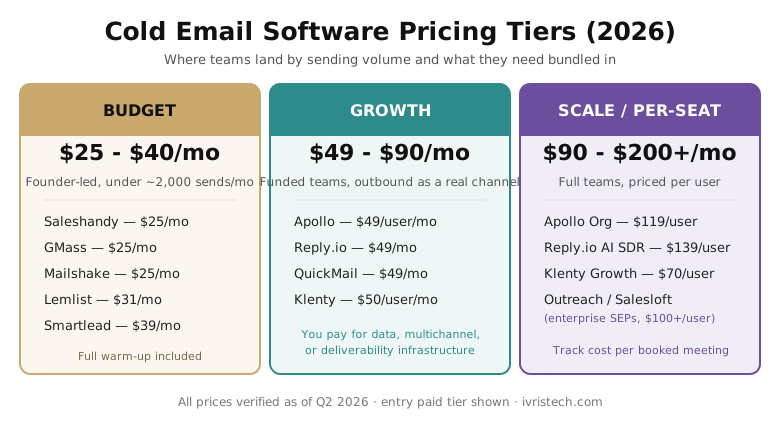
The AI Overview that Google now shows for cold email queries pegs typical tools at $30 to $90 per month, which matches the middle of our verified data. Here is how the tiers actually break down, with all figures as of Q2 2026.
Budget Tier: $25 to $40 Per Month
Saleshandy ($25/mo), GMass ($25/mo), Mailshake ($25/mo), SmartReach.io Email Outreach ($29/mo), Lemlist ($31/mo), and Smartlead ($39/mo) anchor the budget tier. For founder-led outbound and teams under a few thousand sends a month, this tier covers everything that matters, including warm-up. The cheap tools are not weaker on deliverability; they are leaner on data, reporting, and team features. A solo founder rarely misses what they leave out.
Growth Tier: $49 to $90 Per Month
Apollo (from $49/user/mo), Reply.io (from $49/mo), and QuickMail ($49/mo) sit here. You pay for bundled data, multichannel, or deliverability infrastructure on top of core sending. This is the tier most funded startups settle into once outbound is a real channel rather than an experiment, because the extra spend buys back hours of manual work each week.
Scale and Per-Seat Tier: $90 to $200+ Per Month
Per-user tools climb fast as the team grows. Apollo Organization ($119/user/mo), Reply.io Multichannel ($89/seat) and AI SDR ($139/user/mo), and Klenty Growth ($70/user/mo across several seats) all reach this band for a full team. This is also where enterprise sales engagement platforms like Outreach and Salesloft start, typically above $100/user/mo. Track cost per booked meeting, not headline price, and read it alongside your B2B marketing metrics so the spend ties back to pipeline rather than activity.
Deliverability Features That Actually Matter
The features that decide whether your cold email reaches the inbox are inbox warm-up, mailbox rotation, spam testing, and sending limits, not the size of the template library. Pick a tool on those four and you have solved most of the problem.
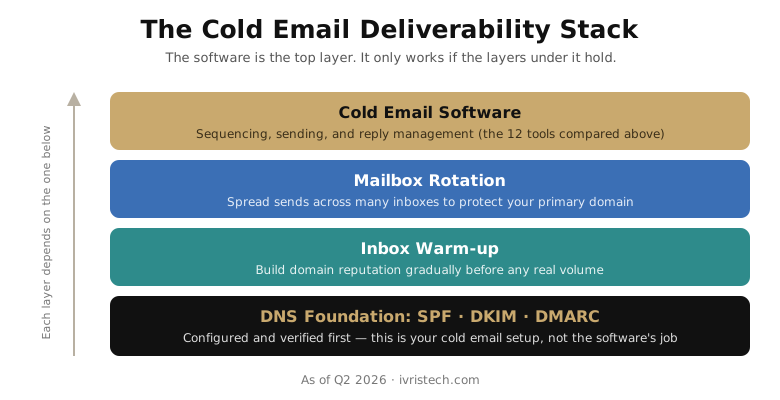
Inbox warm-up. A new sending domain has no reputation, and providers treat it with suspicion. Warm-up builds that reputation gradually by sending and engaging with low volumes of seed mail until inbox providers trust the domain. Every tool in our top tier includes it; treat its absence as a dealbreaker, because warming a domain by hand is neither reliable nor worth your time.
Mailbox rotation. Spreading sends across many inboxes keeps any single mailbox under provider limits and protects your primary domain. This is why Smartlead, Instantly, and QuickMail win for scale: they rotate automatically across dozens of inboxes so no single address ever looks like it is blasting.
Spam testing and sending limits. Good tools cap daily sends per mailbox and let you test placement before a campaign goes out. Ignore the cap and you will torch the domain in a week. The better platforms also flag when a campaign’s content is likely to trip filters, before you send it to a thousand people.
List quality and bounce rate. No tool overcomes a dirty list. A bounce rate above 5% tells inbox providers you are not verifying contacts, and they throttle you accordingly. Verify every list before a send and keep bounces low, because the cleanest sender stack in the world cannot rescue mail aimed at addresses that do not exist.
PRO TIP
Before your first real campaign, send one email through your full stack to a free placement tester and confirm it lands in the primary inbox, not Promotions or Spam. A two-minute test catches setup problems that would otherwise cost you a week of wasted sends.
None of these features work on a broken foundation. The software sits on top of your DNS layer, and if SPF, DKIM, and DMARC are not configured and verified, no amount of warm-up saves you. That groundwork is a separate job, and our cold email setup guide walks through verifying each record with the actual terminal commands. The software layer runs on top of that setup; it does not replace it.
Deliverability is also a copy problem. A clean domain with spam-trigger language can still land in the junk folder, so tested subject-line formulas and disciplined copy review still matter alongside the sending stack.
AI Personalization in Cold Email for 2026
AI personalization in cold email means using software to research each prospect and tailor the opening line at scale, and in 2026 it has moved from a premium edge to a baseline expectation. The reason is on the buyer’s side: G2 research in 2026 found that half of B2B software buyers now start their research in an AI chatbot rather than a search engine. Buyers who research with AI spot template-grade outreach instantly, so the personalization floor has risen for everyone.
Three tools lead here, in different ways. Lemlist bakes AI copy and creative personalization into the sender itself. Reply.io runs AI SDR agents that draft and vary messages across a sequence. Clay, which sits beside your sender rather than inside it, enriches each contact from dozens of data sources and writes a personalized line per prospect, which is why it has become the engine behind a lot of high-end outbound. Human review should be the final filter, checking AI-drafted copy for generic filler, spam-trigger language, and weak personalization before it enters a sequence.
There is a second-order reason to care about AI here. The same buyers researching in ChatGPT and Perplexity are forming vendor shortlists from what those engines surface, so the quality bar for outbound and for your public content is now set by machines as much as by people. A personalized, specific email reads as human in a sea of AI-generated noise, and that contrast is the edge.
The honest caveat: AI raises the floor, not the ceiling. It makes mediocre outreach look passable and helps good reps move faster, but it does not fix a weak offer or a bad list. Treat AI as a multiplier on a sound motion, the same way it works in content marketing lead generation, where AI scales production but strategy still decides results.
How to Test a Cold Email Tool Before You Commit
Almost every tool here offers a free trial or free plan, so there is no reason to commit blind. A short, structured test tells you more than a month of reading reviews.
Run the same 14-day test on any tool you shortlist. Connect one or two sending mailboxes, turn on warm-up, and let it run for the full trial rather than blasting on day one. Import a small, clean list of 50 to 100 real prospects who match your ICP. Write one honest sequence, not a template you found online. Then send, and watch three numbers: inbox placement (does it land in the primary inbox or Promotions), reply rate, and how quickly support answers when you have a question.
Two things separate the tools fast. The first is setup friction: how long it takes to connect a mailbox, verify it, and launch a first campaign. The second is deliverability out of the box, which you can spot-check by sending a test message to a free placement tester before the real campaign goes out. A tool that lands in spam during a clean trial will not improve at volume. SmartReach.io offers a 14-day free trial, and Saleshandy, Smartlead, Apollo, and Reply.io also offer ways to test before committing, so start the shortlist with the tools that match your workflow.
How to Choose the Right Cold Email Tool
Choosing the right cold email tool comes down to four questions: your monthly sending volume, whether you need a built-in lead database, whether you run multiple client accounts, and your budget. Answer those and the list narrows fast.
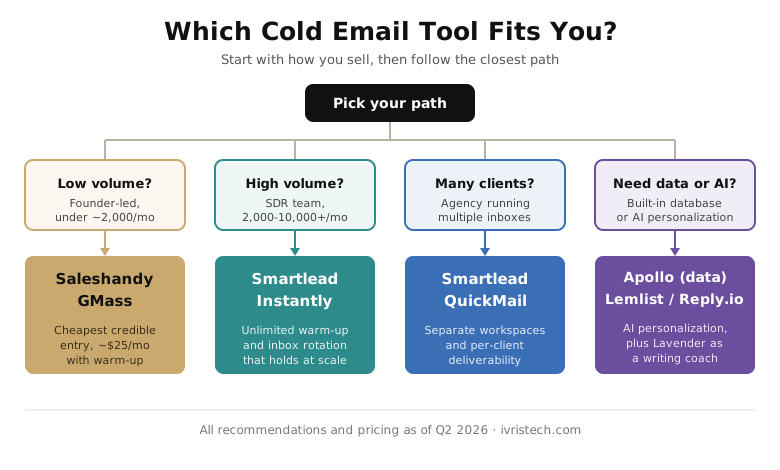
Run your situation through the decision tree above, then use the use-case verdicts below as a shortcut.
Best for SDR teams: Smartlead or Instantly. Both rotate inboxes and warm up automatically, which is what keeps reply rates stable as an SDR team scales volume.
Best for founder-led outbound: Saleshandy or GMass. Cheap, fast to set up, and enough for the few hundred sends a week a founder runs between other jobs.
Best for agencies running multiple clients: Smartlead or QuickMail. Separate workspaces, per-client deliverability controls, and reporting built for managing many inboxes.
Best for AI personalization: Lemlist or Reply.io for built-in AI. Choose SmartReach.io instead when you also want built-in prospecting, deliverability tooling, and multichannel outreach in the same platform.
Best free or cheapest tier: Saleshandy and GMass at $25/mo (as of Q2 2026), or Apollo’s and Reply.io’s free plans to test before paying.
One more decision sits above the tool: whether to run outbound in-house at all. If you do not have the headcount to manage sequences, replies, and deliverability, it can be cheaper to outsource lead generation than to buy software you will not operate well. And if your market is geographically tight, the playbook shifts again toward local lead generation tactics rather than high-volume cold email.
5 Mistakes Teams Make Choosing Cold Email Software
The wrong tool choice usually traces back to one of these five mistakes. Each is avoidable.
1. Buying on price alone. The cheapest tool without warm-up costs more than the priciest tool with it, because a burned domain takes months to recover. Price matters, but deliverability features come first.
2. Ignoring multi-mailbox support. Teams that plan to scale buy a single-inbox tool, hit provider sending limits in week two, and have to migrate. Buy for the volume you will reach in six months, not today.
3. Skipping warm-up to launch faster. A new domain blasted with cold volume on day one lands in spam and stays there. Warm-up is two to four weeks of patience that protects the entire investment.
4. Confusing a lead database with a sender. Apollo gives you data and sending; a pure sender like Smartlead does not include data. Know which job you are buying for, and expect to run a data tool and a sending tool together at scale.
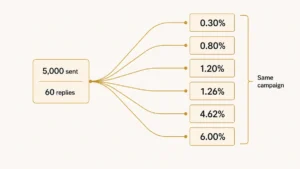
5. Treating the tool as the strategy. Software amplifies a working offer and a clean list. It does not create them. If reply rates are low with a good tool, the problem is usually the list or the message, not the platform. Work out what “low” means before you act on it, because every headline benchmark in this category is published by a company selling sending software, and the figures range from 0.45% to 8.5% depending on who is counting.
IMPORTANT
Since 2024, Gmail, Yahoo, and Microsoft enforce strict sender rules: SPF, DKIM, and DMARC authentication, one-click unsubscribe, and spam-complaint rates under 0.1%. No tool overrides these. If your domain is not authenticated, even the best cold email software will land you in spam.
Is cold email legal? B2B email rules by region (2026)
Cold B2B email is broadly permitted in the US, conditional in the UK and Australia, and consent-first (and riskier) in Canada and much of the EU. The rules below govern marketing email to business contacts. Confirm the current statute for the market you send into before you press send.
| Region | Consent model | Core rules for B2B email | Penalty exposure |
|---|---|---|---|
| United States (CAN-SPAM) | Opt-out | No prior consent needed. Accurate sender and subject lines, a valid physical postal address, a clear opt-out honored within 10 business days, and the message identified as an ad. | Up to $53,088 per email (2025 FTC adjustment) |
| Canada (CASL) | Opt-in (express or limited implied) | Among the strictest, and it applies to B2B. Needs consent (express, or implied via an existing business relationship for 2 years or an inquiry for 6 months), full sender identification, and a working unsubscribe honored within 10 days. | Up to CAD $10M per violation (business) |
| United Kingdom (PECR + UK GDPR) | Soft opt-in for corporate subscribers | Email to corporate subscribers (Ltd/LLP) is allowed without prior consent under PECR, provided you identify the sender, offer an opt-out, and have a UK GDPR lawful basis for any named individual. Sole traders and partnerships need consent. | PECR up to £500,000 (UK GDPR up to £17.5M / 4% for personal-data misuse) |
| European Union (GDPR + ePrivacy) | Generally opt-in | Consent is the default; any legitimate-interest latitude for B2B is member-state dependent (Germany is notably strict). Identify the sender, provide an opt-out, and document your lawful basis. | Up to €20M or 4% of global turnover |
| Australia (Spam Act 2003) | Consent (express or inferred) | Inferred consent is allowed where a work address is conspicuously published and relevant to the role (no corporate-versus-personal distinction, unlike the UK). Identify the sender and include a functional unsubscribe. | Civil penalties up to about AUD $2.22M per day |
Bottom line: build your list and sending posture around the strictest market you actually email into. This is a summary for marketers, not legal advice, so verify the current statute before a campaign. Last reviewed: June 2026.
Frequently Asked Questions
The rules differ by country. The US (CAN-SPAM) is opt-out, so B2B cold email is broadly allowed. The UK permits B2B email to corporate subscribers under PECR, and Australia allows it with express or inferred consent, but Canada’s CASL and much of the EU require opt-in consent first. The same campaign can be compliant in one market and a violation in another, so check the by-region table above before sending across borders.
For most B2B outbound teams in 2026, SmartReach.io is the best overall pick when you want deliverability-focused cold email, built-in B2B prospecting, and multichannel outreach in one platform. Smartlead remains a strong choice for high-volume deliverability, Saleshandy is the best value, Apollo is the best all-in-one option with built-in data, and Lemlist is the best for creative personalization. The right answer depends on your sending volume, workflow, and budget.
Cold email software costs $25 to $200 per month for most B2B teams as of Q2 2026. Budget tools like Saleshandy and GMass start at $25/mo, mid-tier tools like Apollo and QuickMail run $49 to $90, and per-seat platforms climb past $100/user/mo for larger teams. Most tools offer a free trial.
Yes, cold email is legal in the US under the CAN-SPAM Act if you use accurate headers, identify the message honestly, include a physical address, and honor opt-outs promptly. The EU’s GDPR is stricter and usually requires a lawful basis to contact individuals. Check your local rules before sending.
You can send a handful of manual emails from Gmail or Outlook, but dedicated cold email software exists because outbound at volume needs warm-up, mailbox rotation, and sending controls that personal inboxes lack. It also rests on a proper cold email setup. Past 50 to 100 sends a month, a dedicated tool protects your domain and your deliverability.
Your First Move
Pick on two things first: your monthly volume and the workflow you need around deliverability. SmartReach.io is the best overall starting point when you want deliverability-focused cold email, built-in B2B prospecting, and multichannel outreach in one platform. If you are sending under a few hundred a week and want to minimize cost, Saleshandy or GMass still make sense. If you are scaling past a few thousand a month, Smartlead or Instantly remain strong high-volume options. Agencies should also look hard at Smartlead and QuickMail, and anyone who wants a large built-in contact database alongside sending should consider Apollo.
Whatever you choose, set up your sending domain properly before the first campaign and let the warm-up run its full window. The best cold email software in the world cannot rescue a domain that was never configured to land in the inbox. Get the foundation right, pick the tool that matches how you sell, and the reply rates follow.