Your cold email subject line gets about 0.3 seconds of attention before a B2B decision-maker decides to open, ignore, or delete. And here’s the uncomfortable truth most guides won’t tell you: the subject line isn’t the biggest factor in whether your email gets replies. Deliverability, targeting, and the email body matter more.
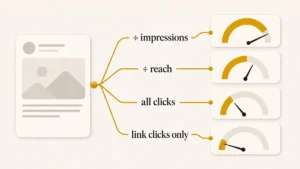
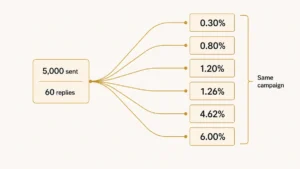
But a bad subject line kills even the best email before anyone reads it. Snov.io puts the average B2B cold email open rate around 27.7%, though open rate is a weak measure in 2026 because Apple Mail Privacy Protection preloads tracking pixels and inflates recorded opens. A stronger subject line won’t fix a broken list or a weak offer, but it will make sure the right people actually read what you wrote. Before benchmarking yourself against any of these figures, check what the published cold email reply rates are actually a percentage of, because one campaign reports anywhere from 0.30% to 6% depending on the formula.
We’ve tested over 150 subject line variations across B2B outreach campaigns for SaaS and professional services clients. The patterns below aren’t theory. They’re the formulas that consistently produce 35-50% open rates when paired with clean lists and warmed sending infrastructure. For the full email outreach platform comparison (Smartlead, Instantly, Lemlist), see our lead generation tools guide.
Key Takeaways
- Keep subject lines under 6 words. Shorter lines outperform longer ones because they look like messages from a colleague, not a marketing campaign.
- Personalization beyond first name (company name, a recent event, a specific pain point) increases open rates by 22-46% depending on the data source.
- Questions outperform statements. “Quick question about [Company]” consistently hits 25-30% response rates across practitioner tests.
- Stop optimizing for open rate alone. Positive reply rate is the only metric that correlates with pipeline. A 50% open rate with 0% replies is worse than 30% opens with 5% replies.
- The biggest ROI fix for underperforming cold email isn’t rewriting subject lines. It’s cleaning your list and fixing deliverability.
What Makes a Cold Email Subject Line Work?
A cold email subject line is the text a prospect sees in their inbox before deciding whether to open the message. In B2B outreach, it serves one purpose: get the email opened by someone who doesn’t know you. It’s not a headline, a tagline, or a pitch. It’s a first impression that needs to feel personal, relevant, and low-effort to engage with.
The subject lines that work in B2B cold email share two traits. First, they look like something a colleague would send, not something a marketing team approved. “Boost your pipeline by 300% with our AI platform” fails immediately. “Quick question” passes. Second, they signal that the sender knows something specific about the recipient’s business, role, or situation.
The data backs this up. Emails with personalized subject lines see a 46% open rate compared to 35% without, and reply rates jump from 3% to 7% when personalization is contextually relevant (not just a first-name variable). Subject lines under 36 characters have a 25% higher open rate than longer ones, according to Gong’s outreach research.
The 30/50/50 Rule for Cold Email Subject Lines
Before testing individual subject lines, understand the math that determines your results:
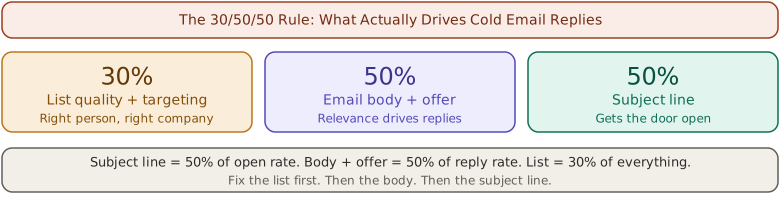
- 30% of success comes from the subject line (getting the email opened)
- 50% comes from the email body (getting a reply)
- 50% comes from targeting and deliverability (reaching the right inbox)
Yes, that adds up to more than 100%. That’s because these factors compound. A perfect subject line sent to the wrong person with a bad sending reputation produces zero results. This is why we always tell clients: fix your list and deliverability first, then optimize subject lines. You’ll get more ROI from cleaning 500 bad email addresses off your list than from A/B testing 20 subject line variants. The deliverability half of that equation is where most senders trust their ESP panel and discover the gap six weeks later — the verification checklist with the dig commands ESP control panels can’t replace is the audit that catches the broken records before they cost you a campaign cycle.
25 Cold Email Subject Lines That Get Replies
These subject lines are organized by type. Each includes when to use it, why it works, and the approximate performance range based on available data from practitioners and published benchmarks.
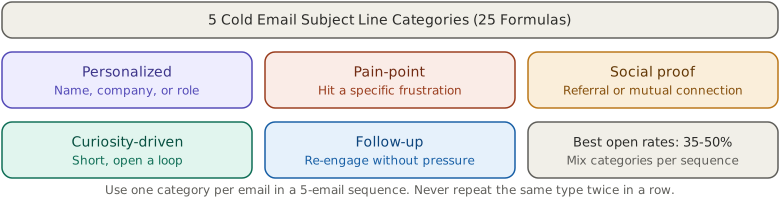
Personalized Subject Lines
These perform best when you’ve done genuine research on the prospect. The personalization must be specific enough to prove you didn’t just mail-merge a list.
- “Quick question, [First Name]” – 25-30% response rate. Simple, curiosity-driven, zero marketing smell. Works best for senior decision-makers who respect brevity.
- “[Their Company] + [Your Company]” – 20-25% response rate. Signals partnership intent, not a pitch. Effective for strategic outreach to potential partners or enterprise accounts.
- “[First Name] <> [Your Name]” – The double-bracket format hits 42% open rates in practitioner tests. Looks like an internal introduction. Best for warm-ish outreach where a mutual connection exists.
- “Idea for [Company]’s Q2 pipeline” – Specific to their timeline and a pain point every B2B leader cares about. Works best when you can back it up in the email body.
- “Saw your post on [specific topic]” – 30-35% response rate. Requires real research, which is exactly why it works. Reference a LinkedIn post, podcast appearance, or conference talk.
Pain-Point Subject Lines
These work by naming a problem the prospect already knows they have. Specificity is the key: “fixing deliverability” beats “fixing a problem” because it proves you understand their world.
- “[Specific pain] at [Company]?” – Frame the pain as a question. “Slow deal velocity at Acme?” opens a conversation without assuming you know their situation better than they do.
- “Still using spreadsheets for [process]?” – Calls out an outdated method without being condescending. Works well for selling software that replaces manual workflows.
- “[Company] is losing leads from [channel]” – Bold but effective when backed by data (e.g., you noticed their forms are broken, their ads lead to 404 pages, or their SEO rankings dropped).
- “The [role] problem nobody talks about” – Creates curiosity by referencing a challenge specific to their job title. “The VP Sales problem nobody talks about” makes a VP Sales click.
- “Thoughts on [industry trend]?” – Positions you as a peer, not a seller. Works when the trend is genuinely relevant and you have a take worth sharing in the email body.
Referral and Social Proof Subject Lines
These borrow trust from a third party. Data shows referral-framed subject lines hit a 46% open rate because the perceived risk of opening drops close to zero.
- “[Mutual connection] suggested I reach out” – The gold standard. Even when the mutual connection is loose (same LinkedIn group, same conference attendee list), naming someone specific dramatically increases opens.
- “How [Similar Company] solved [problem]” – Social proof in the subject line. Works best when the named company is a recognizable peer, not a direct competitor. “How Stripe solved payment churn” lands differently than “How your competitor beat you.”
- “[X] companies in [their industry] are doing this” – FOMO without being pushy. “14 SaaS companies are automating their lead routing” makes the prospect wonder if they’re behind.
- “We helped [Company] with [specific result]” – Direct proof of capability. Use real numbers: “We helped Clearbit cut CPL by 34%” beats “We help companies improve marketing.”
- “[Conference or event] follow-up” – After events, this simple format gets high opens because the context is pre-established. Use within 48 hours of the event for maximum impact.
Short and Curiosity-Driven Subject Lines
Ultra-short subject lines (2-4 words) work because they feel personal. Nobody sends a one-word subject line from a marketing platform. They look human.
- “Thoughts?” – Two to three-word subject lines dominate in follow-up emails. “Thoughts?” paired with a follow-up that references the original email consistently performs well.
- “One question” – Low commitment, high curiosity. The prospect opens because the ask feels small. Make sure the email delivers on the promise of being brief.
- “Not sure if this fits” – Humility in the subject line is disarming. It signals you’re not going to hard-sell, which makes B2B buyers more willing to engage.
- “Worth a look?” – Works best when linking to a relevant resource (case study, benchmark report, industry data) rather than a product page. The question format invites engagement.
- “For [First Name]” – Minimalist. Implies the email content was created specifically for them. Works best with highly personalized email bodies that deliver on this promise.
Follow-Up Subject Lines
Most replies come from follow-ups, not first emails. An 8.4% reply rate from single-email sequences shows that persistence (done right) works. The key is evolving the subject line across the sequence, not repeating “just checking in.” The message beneath that subject line has to progress too, which is why a follow-up sequence where each email earns the next reply adds relevance, proof, a new angle, and then a clean close instead of repeating the original pitch.
- “Following up — [specific reference]” – Proves you remember the context. “Following up — the lead routing idea” works better than “Just following up.”
- “Should I close the loop?” – A breakup email subject that creates a soft deadline. Prospects who are interested but busy often reply to this one because it signals you’re about to stop emailing.
- “One more thing about [topic]” – Add new value rather than repeating the same ask. If your first email offered a case study, the follow-up could offer a benchmark report.
- “Timing off?” – Acknowledges that the issue might be timing, not interest. This gives the prospect an easy out (“yes, try me in Q2”) that keeps the door open without pressure.
- “Closing the file on [Company]” – The final breakup email. Works because it triggers loss aversion. Prospects who were passively interested will reply to prevent losing the option.
PRO TIP
Test 4-5 subject line variants per campaign. Run each until it reaches at least 100 sends before drawing conclusions. Use your email platform’s A/B testing to auto-optimize, removing the need for manual winner selection.
How to A/B Test Subject Lines the Right Way
Most teams test subject lines wrong. They change the subject line, see a higher open rate, and declare a winner. But open rate alone is a misleading metric. What matters is positive reply rate: the percentage of replies that advance a conversation rather than opt-outs or angry responses. The platform you send from decides how cleanly you can run that test at all, since A/Z testing, per-variant reply tracking, and inbox rotation are features rather than givens, which is why the cold email software that runs these campaigns shapes which subject-line experiments you can even measure.
A curiosity-bait subject line might hit a 60% open rate but generate replies like “take me off your list” because the email body doesn’t deliver on the promise. A straightforward subject line with a 35% open rate that produces 8% positive replies is the actual winner. The body is where that promise gets kept or broken, which is the real job of B2B copy that earns the reply, not just the open.
Testing Framework
- Pick 4-5 variants from different categories (one ultra-short, one personalized, one pain-point, one referral, one follow-up)
- Set the winning metric to positive reply rate, not open rate
- Set a minimum sample size of 100 sends per variant before drawing conclusions
- Control all other variables. Same email body, same sending time, same list segment. Only the subject line changes
- Document the winner and add it to your team’s template library for that persona segment
After running tests for 30+ campaigns, we’ve found that the winning subject line typically outperforms the worst by 2-3x on reply rate, not just open rate. That difference compounds across thousands of sends.
6 Mistakes That Kill Cold Email Subject Lines
Writing Like a Marketer, Not a Human
“Exclusive Offer: Boost Your Revenue 300% with Our Award-Winning Platform” reads like spam. “Quick question about your hiring plans” reads like a person. Every prospect applies a mental filter: “Did a real person send this, or is this a campaign?” If it looks like a campaign, it gets deleted regardless of how good the offer is.
Using ALL CAPS or Excessive Punctuation
ALL CAPS subject lines, multiple exclamation points (!!!), and emoji-heavy lines trigger spam filters and human suspicion simultaneously. Keep formatting clean. Lowercase or sentence case only. One punctuation mark maximum.
Being Vague to Create “Mystery”
“You won’t believe this…” or “Important information inside” might get opens, but they destroy trust the moment the prospect reads the email body and realizes it’s a sales pitch. In B2B, trust is the currency. Don’t spend it on cheap tricks.
Optimizing for Open Rate Instead of Reply Rate
A 50% open rate with 0% positive replies is worse than a 30% open rate with 5% replies. Open rates tell you if the subject line is interesting. Reply rates tell you if the subject line attracted the right people. Always optimize for the metric that produces pipeline.
Ignoring Deliverability
The most brilliantly written subject line produces zero results if it lands in spam. Before testing subject lines, confirm: your domain has SPF, DKIM, and DMARC authentication, your sending volume is ramped gradually (not blasting 1,000 emails on day one), and your list bounce rate is under 5%. Deliverability is the prerequisite, not an afterthought. The tools that test inbox placement tell you whether your subject line is even being seen before you spend a week optimizing it.
Using the Same Subject Line for Every Persona
A VP of Marketing and a CTO respond to different triggers. The VP cares about pipeline and campaign performance. The CTO cares about integration security and implementation time. One subject line can’t speak to both. Segment your list by persona and match subject lines to the pain points each role actually has.
IMPORTANT
Gmail, Yahoo, and Microsoft enforced strict sending rules starting in 2024. Cold emails now require SPF, DKIM, and DMARC authentication, one-click unsubscribe headers, and spam complaint rates below 0.1%. Non-compliance means your emails never reach the inbox, regardless of your subject line. Those same rules are the reason for keeping cold sends off your primary domain entirely, so a complaint spike never touches the address your customers and invoices depend on.
Cold Email Subject Line Tools
These tools help you write, test, and deliver better subject lines:
Instantly is the go-to for cold email infrastructure. Its A/Z testing feature supports up to 26 subject line variants per campaign with auto-optimization, built-in inbox warmup, and deliverability analytics. Best for teams sending at scale.
Lavender uses AI to score your email in real time, including subject line effectiveness. It analyzes length, personalization, and spam trigger words before you hit send. Best for individual reps who want coaching on every email.
Clay pulls enrichment data from 50+ providers to power hyper-personalized subject lines. Instead of “Hi [First Name],” Clay lets you reference a prospect’s recent funding round, job change, or tech stack. Best for teams running ABM outreach at scale.
Lemlist combines cold email sending with personalization features including custom images and dynamic text. Its deliverability suite (lemwarm) handles inbox warmup. Best for teams that want sending and personalization in one platform.
Connecting Cold Email to Your B2B Pipeline
Subject lines and open rates are vanity metrics if they don’t connect to revenue. Here’s how to make that connection:
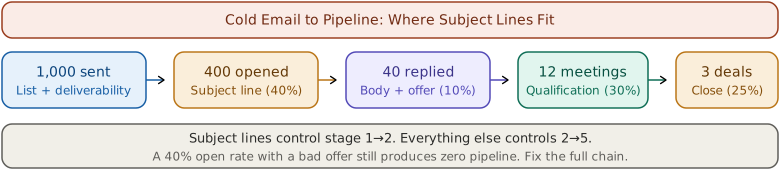
Track the full funnel. Your email platform shows opens and replies. Your CRM shows whether those replies became meetings, opportunities, and closed deals. Connect the two by passing UTM parameters or email platform IDs into your CRM contact records. Without this connection, you’re optimizing for activity instead of outcomes.
Measure cost per SQL, not cost per reply. A $50/month email tool that generates 3 SQLs per month costs $16.67 per SQL. A $500/month tool that generates 5 SQLs costs $100 per SQL. The cheaper tool wins on ROI even though the expensive one produces more absolute leads. This is how MQL to SQL thinking applies to outbound.
Feed insights back to your SEO and content strategy. The pain points that generate the most cold email replies are the same pain points your blog content should address. If “slow deal velocity” subject lines get 3x more replies than “pipeline reporting” subject lines, that tells your content team where to focus.
Is cold email legal? B2B email rules by region (2026)
Cold B2B email is broadly permitted in the US, conditional in the UK and Australia, and consent-first (and riskier) in Canada and much of the EU. The rules below govern marketing email to business contacts. Confirm the current statute for the market you send into before you press send.
| Region | Consent model | Core rules for B2B email | Penalty exposure |
|---|---|---|---|
| United States (CAN-SPAM) | Opt-out | No prior consent needed. Accurate sender and subject lines, a valid physical postal address, a clear opt-out honored within 10 business days, and the message identified as an ad. | Up to $53,088 per email (2025 FTC adjustment) |
| Canada (CASL) | Opt-in (express or limited implied) | Among the strictest, and it applies to B2B. Needs consent (express, or implied via an existing business relationship for 2 years or an inquiry for 6 months), full sender identification, and a working unsubscribe honored within 10 days. | Up to CAD $10M per violation (business) |
| United Kingdom (PECR + UK GDPR) | Soft opt-in for corporate subscribers | Email to corporate subscribers (Ltd/LLP) is allowed without prior consent under PECR, provided you identify the sender, offer an opt-out, and have a UK GDPR lawful basis for any named individual. Sole traders and partnerships need consent. | PECR up to £500,000 (UK GDPR up to £17.5M / 4% for personal-data misuse) |
| European Union (GDPR + ePrivacy) | Generally opt-in | Consent is the default; any legitimate-interest latitude for B2B is member-state dependent (Germany is notably strict). Identify the sender, provide an opt-out, and document your lawful basis. | Up to €20M or 4% of global turnover |
| Australia (Spam Act 2003) | Consent (express or inferred) | Inferred consent is allowed where a work address is conspicuously published and relevant to the role (no corporate-versus-personal distinction, unlike the UK). Identify the sender and include a functional unsubscribe. | Civil penalties up to about AUD $2.22M per day |
Bottom line: build your list and sending posture around the strictest market you actually email into. This is a summary for marketers, not legal advice, so verify the current statute before a campaign. Last reviewed: June 2026.
Frequently Asked Questions
The rules differ by country. The US (CAN-SPAM) is opt-out, so B2B cold email is broadly allowed. The UK permits B2B email to corporate subscribers under PECR, and Australia allows it with express or inferred consent, but Canada’s CASL and much of the EU require opt-in consent first. The same campaign can be compliant in one market and a violation in another, so check the by-region table above before sending across borders.
A cold email subject line is the preview text a prospect sees before opening an unsolicited business email. Effective B2B subject lines are under 6 words, personalized to the recipient’s company or role, and look like something a colleague would send rather than a marketing message. The goal is to earn the open so the email body can do the selling.
In B2B cold email, “catchy” means specific and relevant, not clever or gimmicky. Subject lines that reference the prospect’s company name, a recent event, or a specific pain point outperform generic attention-grabbers. “Quick question about Acme’s hiring plans” beats “You Won’t Believe This Secret to 10x Growth” because it signals genuine research instead of mass outreach.
The 30/50/50 rule breaks down cold email success into three components: 30% depends on the subject line (getting the email opened), 50% depends on the email body (getting a reply), and 50% depends on targeting and deliverability (reaching the right inbox). The factors compound, which is why fixing your list and sending reputation produces bigger gains than perfecting subject line copy.
For internship cold emails, use a specific subject line that names your target role and a relevant qualification. “Marketing intern — [Your University] + Google Analytics certified” works better than “Internship Application” because it gives the reader a reason to open. Keep it under 50 characters and avoid generic phrases like “seeking opportunities.”