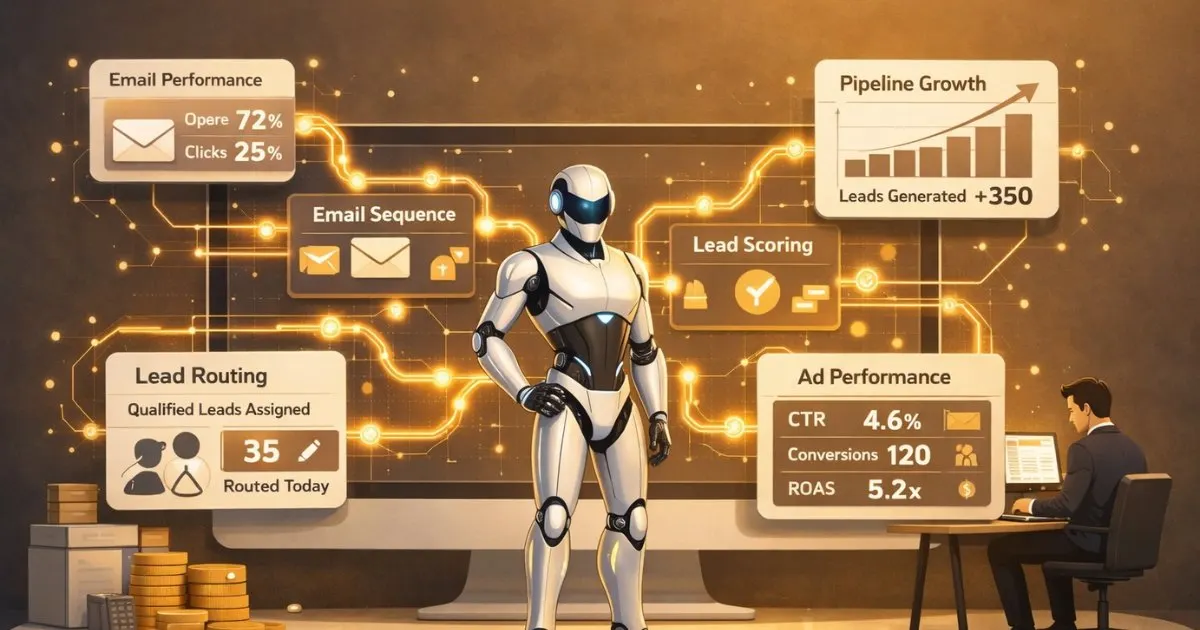
Generative AI gave marketers a faster way to write emails and brainstorm headlines. Agentic AI is something different entirely. Instead of waiting for a prompt, agentic AI systems take a goal (“increase demo requests from enterprise accounts by 20%”), break it into tasks, choose the right tools, execute across channels, and optimize based on results. No human in the loop for every step.
That shift from “AI as assistant” to “AI as autonomous operator” is already reshaping how B2B marketing teams run campaigns, score leads, and allocate budget. According to a GWI study, 80% of marketers say they would use an AI agent for audience targeting, and 72% are already comfortable letting agents summarize their data autonomously.
The same shift is already visible in the Zeta Athena AI agent, where campaign execution moves from assisted work to autonomous orchestration.
But the hype is running ahead of reality. Most “agentic AI” products in 2026 are repackaged chatbots with a new label. This guide cuts through the noise to explain what agentic AI actually is, where it’s delivering real results in B2B marketing, which tools are worth evaluating, and how to implement it without losing control of your brand.
Key Takeaways
- Agentic AI differs from generative AI because it autonomously plans, executes, and optimizes multi-step workflows instead of responding to individual prompts.
- The highest-value B2B use cases today are lead scoring and routing, campaign orchestration, content repurposing at scale, and real-time budget reallocation.
- Start with a single, measurable workflow (like lead routing) before attempting full campaign automation. Pilot projects with clear KPIs build internal trust.
- Human oversight isn’t optional. The best implementations use a “copilot-to-autopilot” progression where agents earn autonomy through demonstrated accuracy.
- Expect 3-6 months before an agentic system outperforms your manual processes. The learning period is real, and skipping it leads to expensive mistakes.
What Is Agentic AI in Marketing?
Agentic AI in marketing refers to autonomous systems that can plan, execute, and optimize multi-step marketing workflows without requiring human input at every stage. Unlike generative AI tools that respond to single prompts (write this email, summarize this report), agentic AI takes a high-level objective and independently determines the steps needed to achieve it.
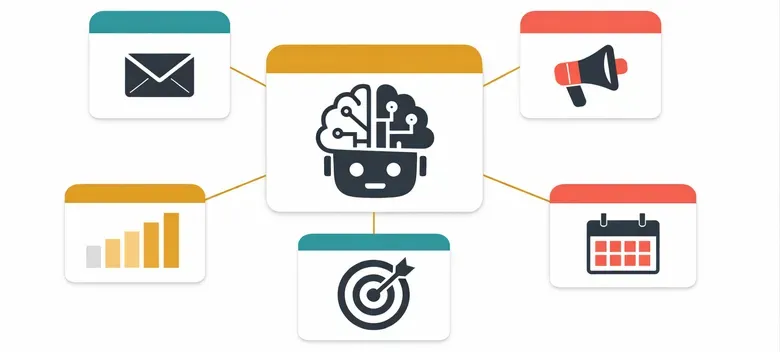
The distinction matters because it changes the marketer’s role. With generative AI, you’re still the project manager who decides what to do and when. With agentic AI, you set the goal and the guardrails, and the system handles execution. Think of the difference between asking a freelancer to write one blog post (generative AI) versus hiring a marketing manager who plans the content calendar, assigns tasks, publishes, and reports on results (agentic AI). Before a team hands goals to agents, the leadership team needs an AI-supported planning workflow that defines which goals are worth automating and where approval gates stay human. Archive’s Archie creator-search agent is a narrower version of that authority shift: it proposes creator-screening criteria and recommendations while the marketer retains approval and override. Optimizely’s Virtual Teammates release turns that analogy into a product design: the worker gets a persistent identity, memory, recurring jobs, and scoped permissions instead of waiting for the next prompt.
In practice, an agentic AI system in B2B marketing might:
- Monitor intent signals across your CRM and third-party data providers
- Identify accounts showing buying behavior and add them to a target list
- Create personalized outreach sequences for each account tier
- Deploy the sequences across email, LinkedIn, and paid channels
- Monitor engagement, adjust messaging, and route hot leads to sales
- Report on pipeline impact without anyone asking for a report
That end-to-end workflow, running autonomously with human oversight at key decision points, is what separates agentic AI from the chatbots and content generators most teams are using today. Wondrlab’s WondrAgents influencer-marketing workflow shows why those oversight points need to be explicit: the launch puts outreach, negotiation and contracting inside the agent layer without publishing the approval gates for those actions.
How Agentic AI Differs from Generative AI and Automation
These three technologies sit on a spectrum, and confusing them leads to wrong expectations.
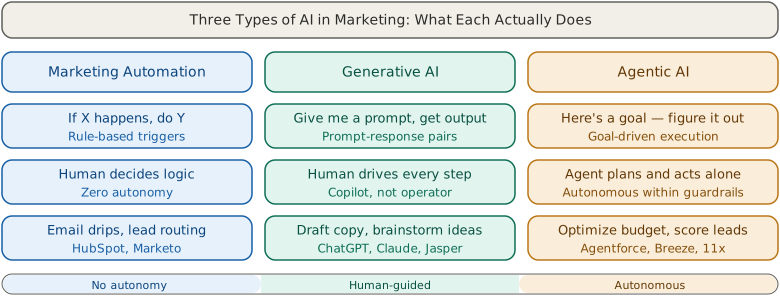
| Capability | Marketing Automation | Generative AI | Agentic AI |
|---|---|---|---|
| How it works | Follows pre-set rules (if X, then Y) | Responds to individual prompts | Plans and executes multi-step goals autonomously |
| Decision-making | None (follows rules) | Single-turn suggestions | Reasons across steps, adapts in real time |
| Human involvement | Sets up rules once, monitors | Prompts for every task | Sets goals and guardrails, reviews outcomes |
| Example | Send email when lead downloads whitepaper | Write a subject line for this email | Build, deploy, and optimize an entire lead-warming campaign |
| B2B tools | HubSpot workflows, Marketo | ChatGPT, Claude, Jasper | Salesforce Agentforce, HubSpot Breeze, Clay |
Traditional marketing automation is a train on fixed tracks. You set the rules, and it follows them exactly. Generative AI is a skilled writer who does what you ask, one task at a time. Agentic AI is a marketing coordinator who understands the objective, chooses the right approach, uses whatever tools are available, and adjusts the plan when things change.
The key technical difference: agentic AI systems use a reasoning loop. They observe results, evaluate progress against the goal, decide the next action, and execute it. This loop runs continuously, which means the system gets smarter with every iteration. Traditional automation has no feedback loop. Generative AI has no memory between prompts (unless you build one).
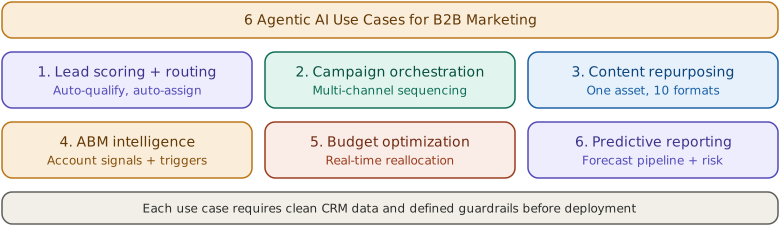
6 Use Cases Where Agentic AI Is Changing B2B Marketing
Not every marketing task needs an autonomous agent. The best use cases share three traits: they involve multiple steps, they require data from multiple systems, and they happen frequently enough for the agent to learn and improve. Here are the six use cases delivering the most measurable results for B2B teams in 2026.
1. Lead Scoring and Routing
Traditional lead scoring assigns static point values to actions (downloaded whitepaper = 10 points, visited pricing page = 20 points). Agentic AI scoring goes further. The agent continuously analyzes which lead attributes and behaviors actually predict closed deals in your specific pipeline, then adjusts scoring weights automatically.
When a lead crosses the threshold, the agent doesn’t just flag it. It evaluates which sales rep has the best close rate for that lead’s industry and company size, then routes the lead accordingly. The result: faster speed-to-lead, better rep matching, and scoring models that improve every month without manual recalibration.
2. Campaign Orchestration
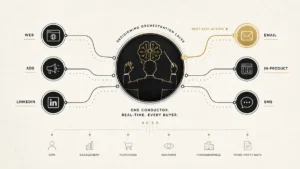
This is the flagship use case. An agentic system takes a campaign brief (“drive 50 enterprise SQLs for our new product feature in Q3”) and autonomously handles audience segmentation, channel selection, content creation, deployment timing, A/B testing, and budget reallocation based on real-time performance. TikTok’s AI Skills marketplace is a paid-social version of that pattern, packaging specific campaign jobs so agents can call them through approved workflows.
The agent monitors which channels and messages are performing, shifts budget from underperforming ads to high-converting ones, and adjusts send times based on engagement patterns. Human marketers review and approve major decisions (like budget shifts above a set threshold), but the day-to-day execution runs without manual intervention. Widen that same real-time decisioning from ad budget to the buyer’s whole path and you have customer journey orchestration handling the full journey across every channel.
3. Content Repurposing at Scale
A single webinar recording becomes a blog post, three LinkedIn posts, an email sequence, a sales one-pager, and five short video clips. An agentic content system handles this end-to-end: transcribing the webinar, identifying key insights, generating drafts for each format, adapting tone and length per channel, and scheduling publication. Sequel’s August 2026 launch pushes that pattern farther by tying repurposing to first-party webinar and website context, although its broader agent layer is still in early-access rollout.
The quality gap between AI-generated content and human-written content is narrowing, but it hasn’t closed. In our experience, agentic content systems produce about 70-80% of the final draft quality. A human editor still needs to review for brand voice, accuracy, and the kind of opinionated thinking that resonates with B2B buyers. The time savings come from eliminating the first-draft bottleneck, not from removing humans entirely. The content tools that close that first-draft gap, plus the rest of a B2B stack, are profiled in our roundup of the AI marketing tools that serve these use cases.
4. Account-Based Marketing Intelligence
For teams running ABM campaigns, agentic AI acts as an always-on account intelligence analyst. The agent continuously scans intent data signals, LinkedIn activity, CRM records, and website engagement to build and update buying committee maps for target accounts.
When a new stakeholder from a target account engages with your content, the agent automatically adds them to the buying committee profile, identifies their likely role (technical evaluator, budget holder, champion), and adjusts the account’s engagement score. This replaces the manual process of account research that eats 5-10 hours per week for most ABM managers. Wiring those agent capabilities into one coordinated play against a target list is what running the whole ABM motion on AI looks like end to end, from account selection through personalized follow-up.
5. Real-Time Budget Optimization
Most B2B teams review campaign budgets weekly or monthly. An agentic system reviews them continuously. The agent monitors cost-per-lead and cost-per-SQL across every channel and campaign in real time, then reallocates budget based on predefined rules.
For example: if LinkedIn Ads CPL drops below $80 on Tuesday, the agent increases that campaign’s daily budget by 15% and decreases the underperforming Google Display campaign by the same amount. The human marketer sets the rules and the maximum budget authority. The agent executes within those constraints, 24/7. X’s native Ads MCP write boundary shows why those limits now need to be explicit at the tooling layer: read-only access is separate from writes, but activation sits inside the write permission. Klaviyo Headless adds a CRM example: the listed ChatGPT app, custom MCP connections, and full tool catalog expose different effective action surfaces.
6. Predictive Pipeline Reporting
Instead of backward-looking dashboards that tell you what happened last month, agentic AI builds forward-looking pipeline forecasts. The agent analyzes current lead velocity, conversion rates by stage, historical seasonal patterns, and active campaign performance to predict next quarter’s pipeline with a confidence interval.
When the forecast dips below target, the agent doesn’t just alert you. It recommends specific actions: “Increase content syndication budget by $5K to close the gap” or “Reactivate the Q1 webinar attendee list with a new offer.” The marketer decides whether to act on the recommendation. The agent does the analysis that used to take a RevOps team half a day.
Agentic AI Tools for B2B Marketing Teams
The tool market is evolving fast. These are the platforms with genuine agentic capabilities (not just rebranded chatbots) as of 2026: ChatGPT Workspace Agents (April 2026) added a Codex-powered alternative to CRM-native agents like Agentforce and Breeze.
Salesforce Agentforce builds autonomous agents directly inside Salesforce CRM. Best for enterprise teams already on the Salesforce platform. Agents can handle lead qualification, opportunity management, and customer service autonomously within your existing data model.
HubSpot Breeze AI brings agentic capabilities to HubSpot’s marketing, sales, and service hubs. Breeze agents can draft and send emails, research prospects, create content, and manage social posting. Because it sits inside HubSpot’s CRM, it has native access to contact, deal, and campaign data. Best for mid-market B2B teams already using HubSpot.
Clay is a data enrichment and outreach platform with agentic workflow capabilities. It pulls data from 50+ providers, scores and segments leads, and can trigger personalized outreach sequences. Best for teams focused on outbound and ABM.
Writer takes an agentic approach to content operations. Its agents can plan content calendars, generate drafts across formats, ensure brand voice consistency, and optimize for SEO. Best for content-heavy B2B marketing teams. For B2B image generation specifically, OpenAI’s gpt-image-2 (April 2026) replaces DALL-E 3 with native reasoning and improved text rendering.
IMPORTANT
Verify vendor claims carefully. Ask for specific marketing workflows the agent has executed in production, not demo environments. If a vendor can’t show measurable results from real deployments, their product is likely generative AI with an “agentic” label. Supply-side dependency belongs in the same checklist — the Anthropic-Google $40B deal in late April 2026 reshaped which model providers any agent vendor safely depends on.
How to Implement Agentic AI in Your Marketing Team
Rolling out agentic AI isn’t like buying a new tool. It’s closer to hiring a new team member who needs training, guardrails, and gradually increasing responsibility. Here’s the approach that works.
Step 1: Pick One Workflow, Not a Platform
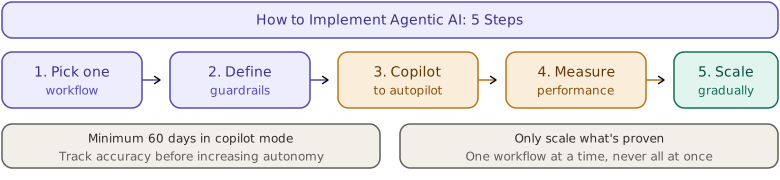
Don’t start by evaluating which agentic AI platform to buy. Start by identifying one workflow that’s painful, repeatable, and measurable. Lead routing, content repurposing, and weekly reporting are common starting points because they happen frequently and have clear success metrics.
Step 2: Define the Guardrails Before Deploying
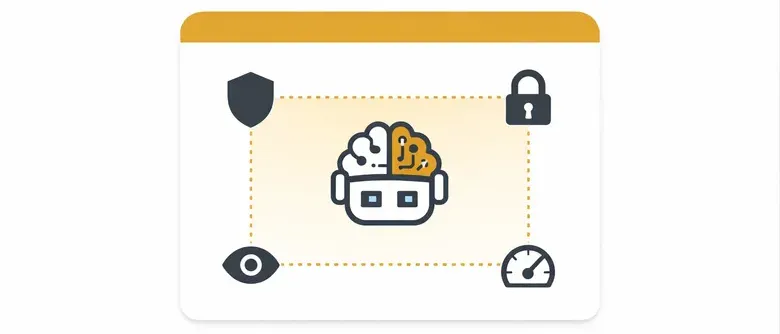
Before any agent takes action, document what it’s allowed to do without approval and what requires human sign-off. For example: the agent can adjust email send times without approval, but any budget change above $500 requires a human to confirm. These guardrails prevent expensive mistakes during the learning period.
Step 3: Use the Copilot-to-Autopilot Model
Start every agent in “copilot” mode where it recommends actions but a human executes them. Track the agent’s recommendation accuracy for 30-60 days. When accuracy exceeds 90%, promote the agent to “autopilot” mode where it executes within its approved guardrails. This progression builds trust with your team and catches errors before they reach customers.

We used this approach when implementing AI agents for RevOps workflows. The first month in copilot mode caught three scoring errors that would have routed enterprise leads to the wrong sales team. By month two, the agent’s routing accuracy exceeded what the manual process achieved.
Step 4: Measure Agent Performance Like You’d Measure a Team Member
Give the agent a KPI. If it’s a lead routing agent, measure speed-to-lead and lead-to-opportunity conversion rate. If it’s a campaign agent, measure cost-per-SQL and pipeline generated. Review these metrics weekly during the first quarter. An agent that doesn’t improve its KPI within 90 days either needs better data, different guardrails, or replacement.
Step 5: Scale Gradually
Once the first workflow succeeds, expand to the next highest-impact workflow. Most B2B teams that succeed with agentic AI run three to five agents after 12 months, each handling a distinct workflow. Teams that try to automate everything at once typically abandon the project within six months because the complexity overwhelms their ability to monitor quality.
5 Mistakes to Avoid with Agentic AI in Marketing
Deploying Without Clean Data
Agentic AI is only as good as the data it operates on. If your CRM has duplicate contacts, outdated lead scores, and missing field values, an autonomous agent will make autonomous mistakes. Clean your data before giving an agent permission to act on it.
Skipping the Copilot Phase
The temptation to go straight to full automation is strong. Resist it. Every agent needs a learning period where it observes your patterns, makes recommendations, and gets corrected when it’s wrong. Skipping this phase means your agent learns from its own mistakes instead of your expertise.
Treating It as a Cost-Cutting Tool
Agentic AI doesn’t replace marketers. It replaces the repetitive coordination work that prevents marketers from doing strategic work. Teams that implement it to cut headcount miss the point. The best outcomes come from teams that use agents to increase output per marketer, not reduce the number of marketers.
Ignoring Brand Safety
An autonomous agent creating and sending content on your behalf can go off-brand fast. Build brand guidelines, approved messaging frameworks, and content review checkpoints into your agent’s workflow. Autonomous doesn’t mean unsupervised.
Buying the Platform Before the Strategy
Agentic AI platforms are expensive. Salesforce Agentforce, HubSpot’s AI tier, and enterprise content agents all carry premium pricing. Define your use cases, run a pilot with lower-cost tools, and prove ROI before signing an annual contract. A well-planned campaign strategy should come before the technology that executes it.
PRO TIP
Start with tools you already own. HubSpot, Salesforce, and most major CRMs are adding agentic features to existing subscriptions. Check your current platform’s AI capabilities before buying a standalone agent tool.
What Marketers Still Do Better Than AI Agents
Agentic AI handles execution. Humans handle the work that actually differentiates a brand.
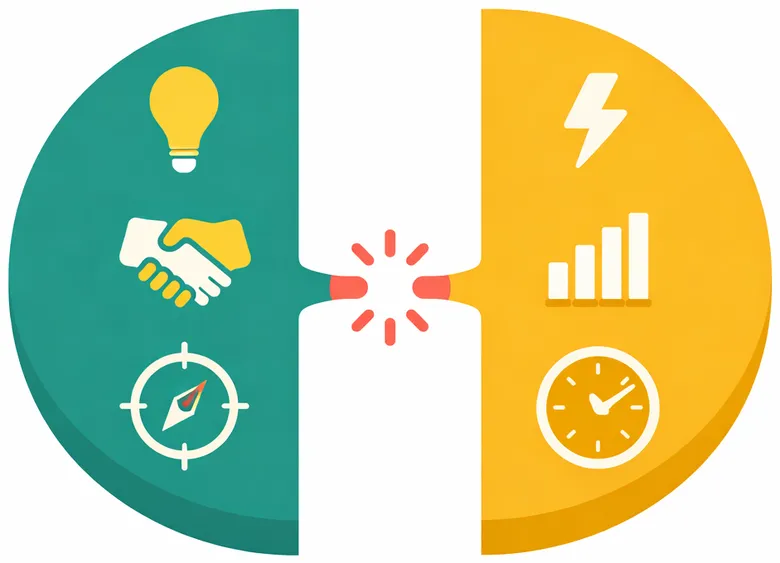
Strategy and positioning. An agent can optimize a campaign’s performance metrics. It can’t decide whether your company should position against a competitor or ignore them. Strategic bets require market intuition that comes from experience, not data patterns.
Relationship building. B2B deals close on trust between people. An agent can warm up an account with personalized content, but the relationship that closes a $200K deal is built by a human who understands the buyer’s politics, pressures, and priorities.
Creative judgment. Agents can generate content at scale. They can’t tell you when a campaign idea is bold enough to break through noise. The best B2B marketing is opinionated, and opinions come from humans who have a point of view worth defending.
Ethical guardrails. An agent optimizing for conversions might push boundaries on data privacy, targeting, or messaging honesty. Humans set and enforce the ethical standards that protect your brand long-term. Autonomous execution without ethical oversight is how brands damage trust they spent years building.
Frequently Asked Questions
A lead scoring agent that continuously analyzes which prospect behaviors predict closed deals, automatically adjusts scoring weights, and routes qualified leads to the best-matched sales rep without human intervention. The agent monitors results and refines its model monthly, improving accuracy over time.
Agentic AI shifts marketers from execution to strategy. Instead of manually running campaigns, building reports, and routing leads, marketers will set goals, define guardrails, and review outcomes while agents handle the multi-step execution. Teams will produce more output with the same headcount and respond to market changes in hours instead of weeks.
The 30% rule is a guideline suggesting that AI agents should handle no more than 30% of customer-facing decisions autonomously, with humans reviewing the remaining 70%. This ratio varies by risk level. Low-risk tasks like send-time optimization can be fully automated, while high-risk decisions like pricing changes or public messaging should always have human approval.
The main applications are lead scoring and routing, campaign orchestration across channels, content creation and repurposing at scale, ABM account intelligence and buying committee mapping, real-time budget optimization, predictive pipeline reporting, and customer journey personalization. Most B2B teams start with lead routing or content repurposing as their first agentic workflow.