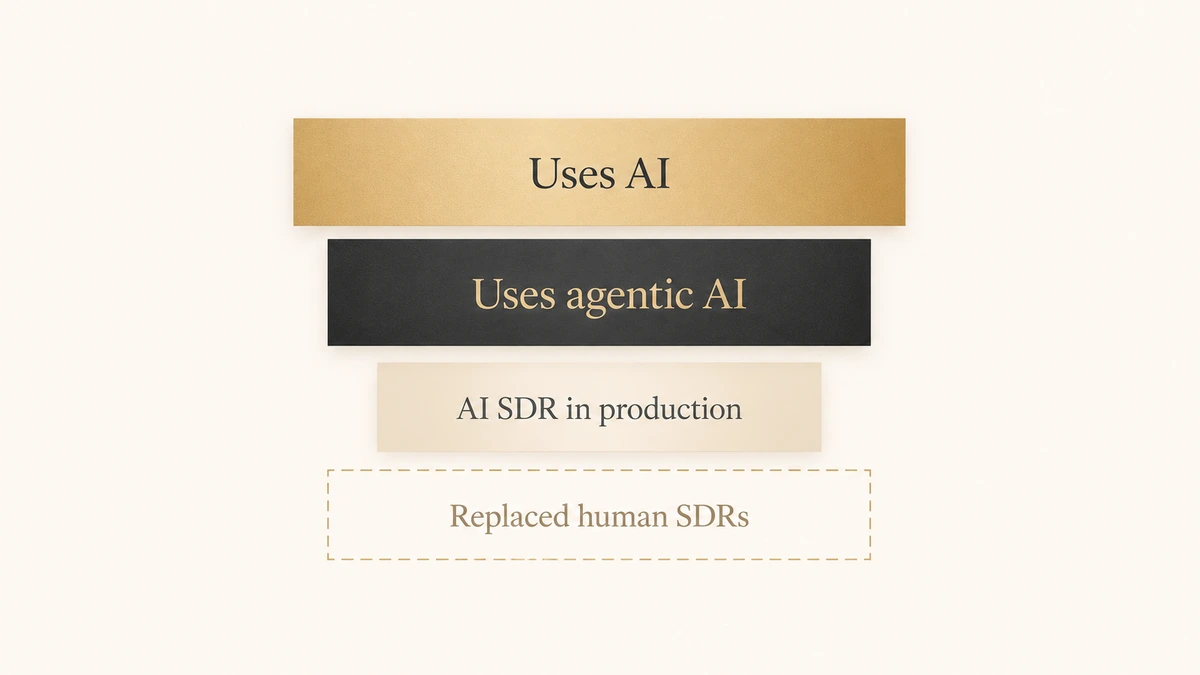
Four numbers turn up in almost every article written about AI in B2B sales. Eighty-one percent of sales teams use AI. Twenty-four percent use agentic AI. Forty-one percent of enterprise B2B teams have an AI SDR running in production. Twenty-two percent have replaced their human SDRs outright.
Stacked together, they read as one tidy story: a fast, orderly march from experimentation to full replacement. They are not one story. They are four separate measurements, taken from four different populations, by four organizations with different commercial incentives, in different years.
Two of them survive a source check, though not in the form they usually get quoted. Two of them do not trace to any primary research at all. Below is the working for every one of them, plus the figures you can actually put in a board deck without getting caught out.
Direct answer — What percentage of B2B sales teams use AI SDRs?
No independent survey supports a high figure. The Bridge Group’s 2025 study of 351 B2B companies recorded AI SDRs at 1% of respondents, the first year it tracked them as a category. Higher numbers measure different things: 87% of sales organizations use some form of AI (Salesforce, 2026), and 24% of US B2B suppliers use agentic AI in sales (Deloitte, 2026). Two widely quoted figures, 41% in production and 22% fully replaced, trace to no primary research.
Key Takeaways
- The four circulating AI SDR statistics measure four different populations and cannot be stacked into one adoption curve.
- “81% use AI” is really “81% are experimenting with or have fully implemented AI.” Full implementation in that same survey was 41%.
- The only independent SDR benchmark with a disclosed method puts AI SDRs at 1% of 351 B2B companies, not 41%.
- The widely quoted “41% in production” figure cites a Salesforce report that does not contain it and an Outreach report that does not exist under that name.
- The “22% have fully replaced human SDRs” figure is published by an AI SDR vendor and attributed to a market-sizing report that contains no adoption percentages.
- Adoption, agentic use, production deployment, and replacement are four separate tiers. Ask which one a number measures before you quote it.
What each AI SDR statistic actually counts
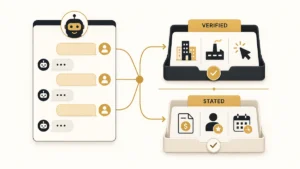
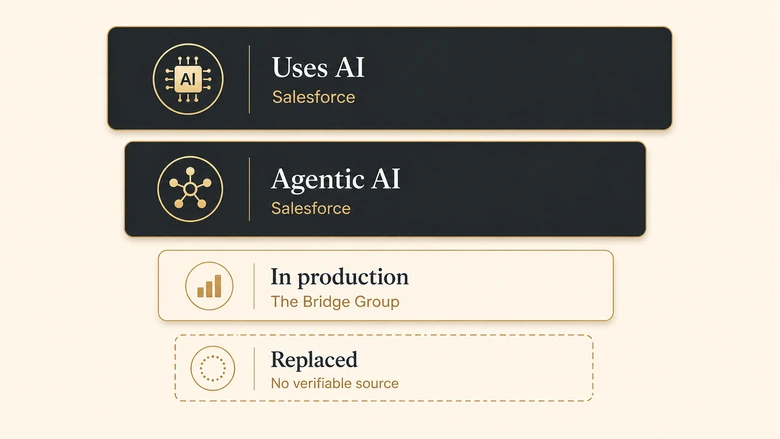
An AI SDR statistic is only meaningful once you know which of four populations it was measured against. Almost every disagreement in this category dissolves the moment you separate them.
The four tiers below are not stages that a single survey tracked over time. They come from unrelated studies with different sampling frames, and the gaps between them are mostly definitional rather than chronological.
| Tier | What it counts | Best-sourced figure | Who published it | Fieldwork |
|---|---|---|---|---|
| 1. Uses AI at all | Any AI anywhere in the sales cycle, including drafting and forecasting | 87% of sales organizations | Salesforce (vendor) | Aug–Sep 2025 |
| 2. Uses agentic AI | AI that takes actions, not just generates text | 24% of US B2B suppliers | Deloitte Digital (consultancy) | Aug–Sep 2025 |
| 3. AI SDR in production | An autonomous prospecting agent running live, not piloting | 1% of respondents | The Bridge Group (independent) | 2024–2025 |
| 4. Replaced human SDRs | Human SDR headcount eliminated and not backfilled | No sourced figure exists | None | None |
“Using AI” is not “using an AI SDR”
The broadest tier counts a rep who asked a model to rewrite a subject line. That is genuinely AI use, and it belongs in the 87%. It tells you nothing about whether an autonomous agent is prospecting on that team’s behalf.
This is where most of the inflation enters. A figure measured at tier 1 gets restated as though it described tier 3, and the restatement usually happens in a headline rather than in the body where a careful reader might check it.
Piloting is not production
Pilots are cheap, short, and easy to say yes to. Production means the agent is in the revenue motion with a budget line, an owner, and a rollback plan.
McKinsey’s 2025 global AI survey found the same split across every business function, not just sales: 88% of organizations reported regular AI use in at least one function, but only about a third had begun to scale, and just 39% could attribute any enterprise-level EBIT impact to it. Adoption ran far ahead of deployment everywhere.
Production is not replacement
An AI SDR running in production alongside a human team is the common configuration. Replacement means the human roles are gone and were not refilled, which is a headcount fact that shows up in payroll rather than in a survey about software.
IMPORTANT
If a statistic does not tell you which tier it measured, treat it as tier 1 until proven otherwise. Tier 1 figures are the easiest to collect and the most flattering to publish.
The 2026 AI SDR evidence ledger
Every figure below was traced to the organization that originally published it. Where a number could not be traced, that is recorded as the finding rather than quietly dropped.
| Claim | Source | What it counted | Sample and method | Fieldwork | Verdict |
|---|---|---|---|---|---|
| 81% of sales teams use AI | Salesforce, State of Sales 6th ed. | Experimenting with or fully implemented AI | n=5,500 sales professionals, 27 countries, survey | Mar–Apr 2024 | Real, routinely misquoted |
| 41% have fully implemented AI | Salesforce, State of Sales 6th ed. | Full implementation only | Same survey as above | Mar–Apr 2024 | Sound, rarely quoted |
| 87% of sales organizations use some form of AI | Salesforce, State of Sales 7th ed. | Any AI across the sales cycle | n=4,050 sales professionals, survey | Aug–Sep 2025 | Sound, vendor-published |
| 54% are deploying AI agents across the sales cycle | Salesforce, State of Sales 7th ed. | Agent deployment, self-reported | n=4,050, survey | Aug–Sep 2025 | Sound, vendor-published |
| 88% of organizations use AI in at least one function | McKinsey, State of AI | All business functions, not sales alone | n=1,993, 105 countries, survey | Mid-2025 | Sound, independent |
| 39% attribute any enterprise EBIT impact to AI | McKinsey, State of AI | Measured profit impact | n=1,993, survey | Mid-2025 | Sound, independent |
| 24% use agentic AI in the sales process | Deloitte Digital | US B2B supplier companies, not sales teams | n=530 suppliers, survey | Aug–Sep 2025 | Real, wrong denominator in circulation |
| 45% of suppliers use AI in sales | Deloitte Digital | US B2B supplier companies | n=530 suppliers, survey | Aug–Sep 2025 | Sound |
| 67% of non-adopting suppliers plan to adopt agents | Deloitte Digital | Stated intent, not deployment | n=530 suppliers, survey | Aug–Sep 2025 | Sound, intent only |
| 38% of B2B buyers use agentic AI in purchasing | Deloitte Digital | Buyer side, not seller side | n=530 buyers, survey | Aug–Sep 2025 | Sound |
| 26% of sales teams use AI agents | Zapier / Centiment | Sales specifically | n=500+ enterprise leaders, survey | Oct 2025 | Sound. The adjacent 24% is Finance, not Sales |
| AI SDRs = 1% of respondents | The Bridge Group, SDR Models, Motions & Metrics 2025 | AI SDR as a distinct org category | n=351 B2B companies, 83% B2B SaaS, $47M median revenue (as of Q3 2026), 78% North America, online survey | 2024–2025 | Sound, independent, fully disclosed |
| 41% of enterprise B2B teams have an AI SDR in production | Digital Applied (agency blog) | Undefined “production” | No sample size or sampling frame disclosed | Stated as Q1 2026 | Unsupported. Cited sources do not contain it |
| 22% have fully replaced human SDRs | 11x.ai (AI SDR vendor) | Replacement | Attributed to MarketsandMarkets via a third-party blog, no link | Not stated | Unsourceable. Named source has no such figure |
| AI SDR market $4.12B (2025) to $15.01B (2030), 29.5% CAGR (as of Q3 2026) | MarketsandMarkets | Market size, not adoption | Analyst estimate, sample not disclosed | Published Jul 2025 | Sound as sizing, not an adoption stat |
| AI saves sellers 4.8 hours per week | Gartner | Self-reported time saved | n=210 CSOs and senior sales leaders, survey | Jan–Feb 2026 | Sound |
| 72% of sales organizations do not reinvest that time | Gartner | Reinvestment into high-value activity | n=210, survey | Jan–Feb 2026 | Sound |
| 31% of CSOs cite difficulty proving AI tool ROI | Gartner | Top 2026 challenge, self-reported | CSO survey | 2026 | Sound |
| AI agents will outnumber sellers 10 to 1 by 2028 | Gartner | Prediction, not measurement | Analyst forecast | Published 2025–2026 | Forecast. Do not quote as current state |
| SDR ramp time 3.0 months | The Bridge Group 2025 | Human SDR ramp | n=351, survey | 2024–2025 | Sound |
| 60% of SDRs at quota | The Bridge Group 2025 | Human SDR attainment | n=351, survey | 2024–2025 | Sound |
| $3.78M pipeline sourced per SDR per year (as of Q3 2026) | The Bridge Group 2025 | Human SDR output | n=351, survey | 2024–2025 | Sound |
| $80K median SDR OTE (as of Q3 2026) | The Bridge Group 2025 | Human SDR cost | n=351, survey | 2024–2025 | Sound |
| 1.9 years average SDR tenure | The Bridge Group 2025 | Human SDR retention | n=351, survey | 2024–2025 | Sound |
| “75+ teams running AI SDR in production” | AiSDR (vendor) | Their own customer and research base | No sampling frame, no field dates | Not stated | First-party, method undisclosed |
| 81% of sales teams experiment with AI SDRs | AiSDR (vendor) | Restates a general-AI figure as AI-SDR-specific | Traces to the Salesforce 81% | Mar–Apr 2024 originally | Misquote of tier 1 as tier 3 |
How the verdicts are assigned
Each claim was checked against the organization named as its source, not against an article repeating it. Four verdicts are possible.
- Sound: the publisher states the figure, discloses a sample and a method, and the number is quoted the way it was measured.
- Real but misquoted: the underlying research is solid, but the figure in circulation has lost a qualifier or swapped its denominator.
- Unsupported: the figure is published with named sources, and those sources do not contain it.
- Unsourceable: no primary publication of the figure can be found at all.
This is the same test applied to a different question in our audit of the B2B AI citation figures that turned out to have no method behind them, where three of thirteen widely repeated claims failed on the same grounds.
How many B2B sales teams actually use AI?
Between 87% and 88% of organizations report using AI somewhere, which is the highest-confidence number in this entire category and also the least useful one.
Salesforce’s seventh State of Sales edition, fielded across 4,050 sales professionals in August and September 2025, puts sales organizations using some form of AI at 87%. McKinsey’s independent global survey of 1,993 respondents across 105 countries reached 88% for regular AI use in at least one business function, up from 78% a year earlier.
Two independent instruments landing within a point of each other is about as much corroboration as this field offers. The catch is what the number contains.
The widely quoted 81% comes from Salesforce’s sixth edition, fielded in March and April 2024, and the full sentence is that 81% of sales teams are “either experimenting with or have fully implemented AI.” Split it and the picture changes: 41% had fully implemented, 40% were experimenting. Quoting 81% as deployment roughly doubles the real figure, and the survey population spans B2C and B2B2C teams as well as B2B.
How many run agentic AI?
Agentic adoption sits somewhere between 24% and 54%, and the spread is entirely explained by who was counted.
Deloitte Digital surveyed 530 US B2B suppliers in late 2025 and found 24% using agents in the sales process, against 45% using AI in sales generally. That 24% describes supplier companies. It does not describe sales teams, and it does not describe anything outside the United States.
Salesforce, asking sales professionals rather than companies, reports 54% already deploying AI agents across the sales cycle. Neither figure is wrong. They count different units, and a company-level count will almost always run below a professional-level count because one enthusiastic team can put a whole company in the numerator only under the second method.
PRO TIP
Check the department before you quote an agentic adoption number. Zapier’s 2025 survey is frequently cited at 24% for sales. In the original, 24% is Finance and 26% is Sales.
The definitional problem underneath all of this is that “agentic” has no agreed boundary. A tool that drafts an email on request and a tool that decides who to email, writes to them, and handles the reply are both marketed as agents. The distinction that actually matters is whether the system acts without a human approving each step, which is the copilot-versus-autopilot line that separates assistive AI from genuinely autonomous agents. Surveys rarely draw it, so respondents answer using whatever definition their vendor gave them.
Use-case detail helps more than headline percentages here. The agentic patterns that have actually held up in B2B go-to-market work are narrower than the category label suggests, which is part of why company-level counts stay low.
How many have an AI SDR in production?
One percent, according to the only independent SDR benchmark that discloses its method. The widely circulated 41% does not survive a source check.
The Bridge Group has run its SDR benchmark for over a decade. The 2025 edition covers 351 B2B companies, 83% of them B2B SaaS, at a $47M median revenue (as of Q3 2026), 78% North America, with responses from VPs of Sales, CROs, RevOps leaders and sales development managers. On AI SDRs it says: “2025 marks the first year ‘AI SDRs’ appeared as a distinct category (1% of respondents).”
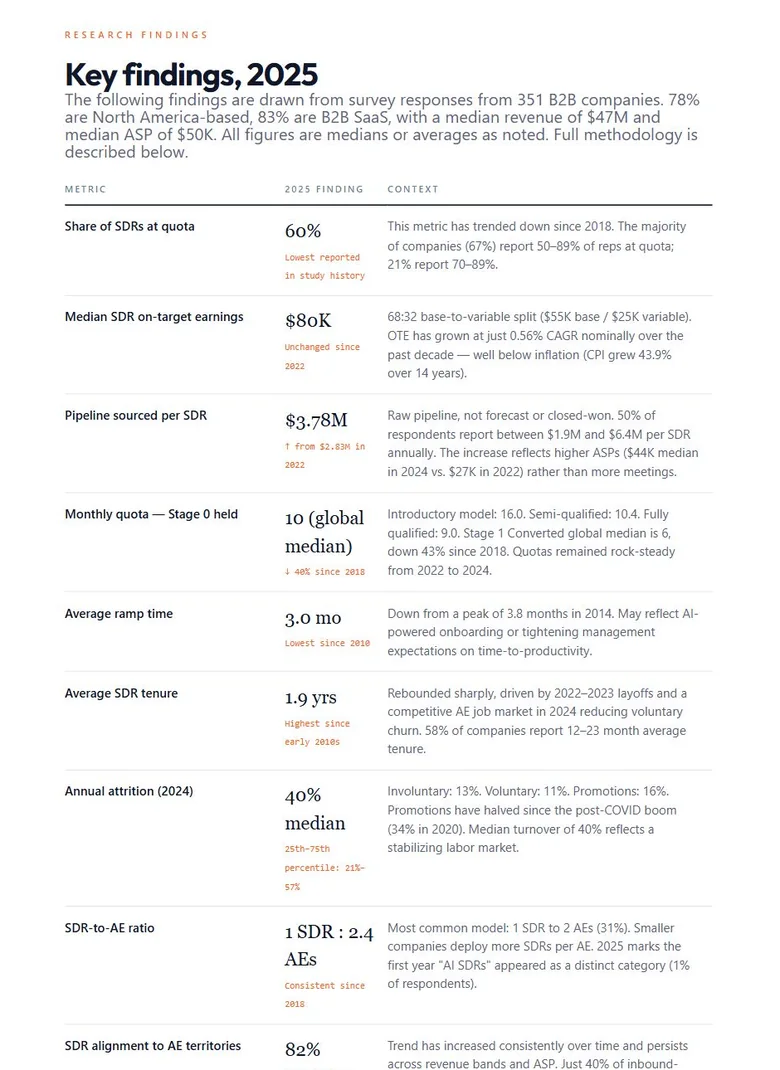
One percent of 351 B2B companies, from an independent survey that publishes its firmographics, against 41% from a blog post whose two cited sources do not contain the number.
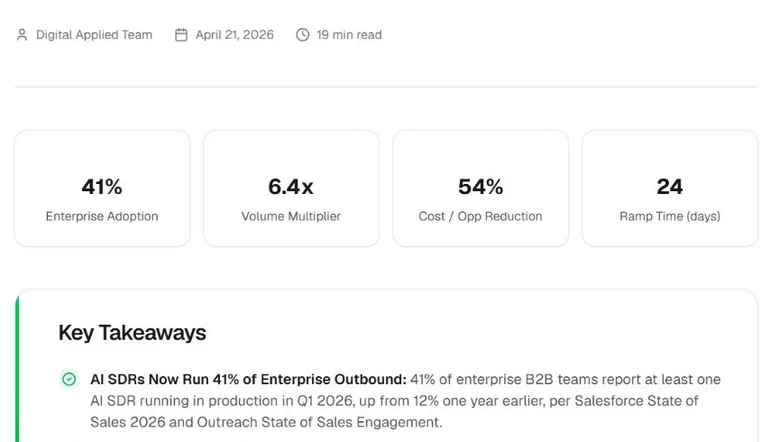
The 41% figure originates on a single agency blog, which states: “41% of enterprise B2B teams report at least one AI SDR running in production in Q1 2026, up from 12% one year earlier, per Salesforce State of Sales 2026 and Outreach State of Sales Engagement.”
Both citations fail. Salesforce’s 2026 State of Sales contains figures for general AI use and agent deployment, but no AI SDR measure and no 41%. And there is no Outreach report called “State of Sales Engagement.” Outreach publishes “Sales 2024” and “Sales 2025: A revenue data analysis.” The State of Sales Engagement is a Gong title. The citation names a report that does not exist in the form given.
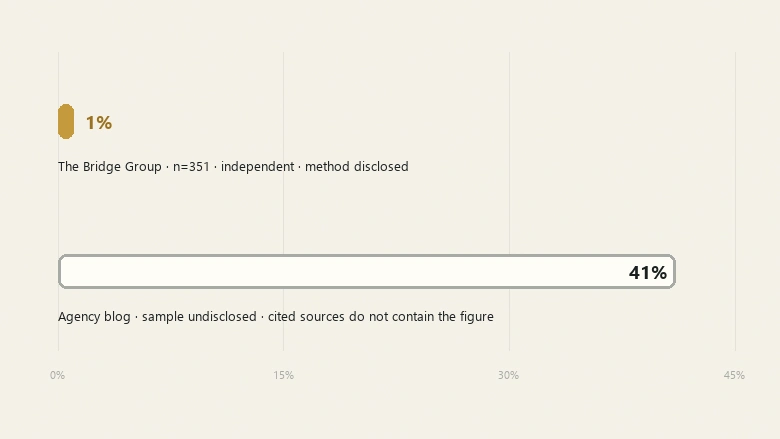
Allow generously for growth since the Bridge Group fieldwork, and for a narrower enterprise-only cut, and a forty-point gap is still not a rounding difference. One of these numbers is measuring something the other is not, and only one of them says what it measured.
What production actually looks like, when it exists, is narrower than the category implies. Agents run reliably on well-defined, high-volume, low-judgment steps, which is why the account-based programs that put agents into live scoring and follow-up tend to scope them to a specific motion rather than to the whole SDR role.
How many have replaced their human SDRs?
No primary source publishes a replacement rate. The 22% figure in circulation cannot be traced to any research.
It appears on 11x.ai, a company that sells AI SDR software, as “22% of teams have fully replaced human SDRs with AI,” attributed to “MarketsandMarkets research” by way of a third-party aggregator, with no direct link. MarketsandMarkets does publish an AI SDR report. It is a market-sizing study, projecting the category from $4.12B in 2025 to $15.01B by 2030 at a 29.5% CAGR (as of Q3 2026), and it contains no adoption percentages of any kind, let alone a replacement rate.
A conflicted publisher and a source that does not contain the claim is enough to set the figure aside. Treat any replacement percentage you encounter as unsourced until someone shows the instrument.
The measurable side of this question is the human baseline, and there the Bridge Group data is unambiguous: SDR ramp is down to 3.0 months, tenure is up at 1.9 years, median OTE is $80K, and each SDR sources $3.78M in pipeline annually (as of Q3 2026). Those are the numbers a replacement decision would have to beat. Quota attainment and rep productivity benchmarks are their own subject and are handled separately in our SDR quota attainment audit rather than restated here.
Why these numbers disagree, and how fast they expire
Three structural forces produce most of the contradiction in this category, and none of them are accidents.
Almost every source sells something
Of the figures above, Salesforce sells AI sales software, 11x and AiSDR sell AI SDRs, Deloitte sells AI implementation, and MarketsandMarkets sells the report. That does not make their data worthless. Salesforce’s sample sizes are large and its instrument is consistent year over year, which is more than most independent sources manage.
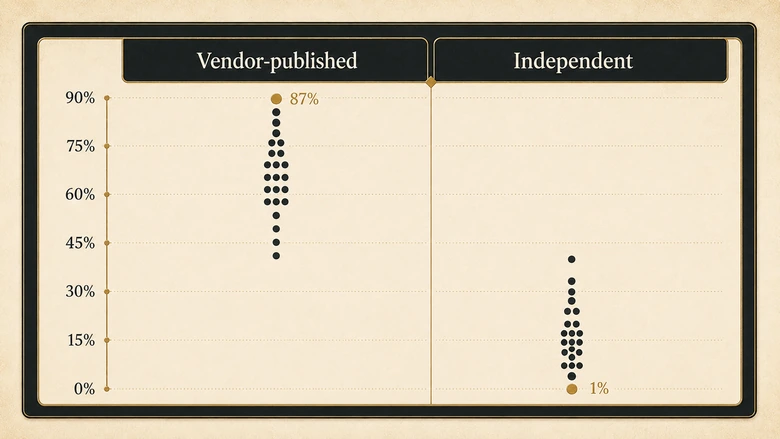
It does mean the direction of error is predictable. Vendor-published research tends to ask questions whose flattering answers are commercially useful, and “are you experimenting with AI?” is a question almost everyone now answers yes to. The Bridge Group and McKinsey are the two sources here with no product in the category, and both report markedly lower deployment figures than the vendors do.
The citation loop
The pages ranking for these keywords increasingly cite each other rather than the underlying research. One page that promises in its own headline that every number is verified to its source cites two of its direct competitors, one of which publishes no methodology at all. Another attributes a figure to a named research firm while linking to a content-marketing blog.
Once a number enters that loop it becomes very hard to dislodge, because each restatement adds an apparent citation without adding any evidence. Checking two links back instead of one catches most of it.
Shelf life
Several figures published under a 2026 label rest on 2024 fieldwork. The Salesforce 81% is the clearest case: fielded in spring 2024, still circulating in 2026 articles as a current-state number, and superseded by the same publisher’s own 87%.
For a category moving this fast, the field date matters more than the publication date. A statistic with no field date should be treated as undated rather than as current.
What you can safely say about AI SDR adoption in 2026
Five statements are defensible on the evidence above, and each one names its tier.
- Around 87% of sales organizations use some form of AI somewhere in the sales cycle (Salesforce, fielded Aug–Sep 2025).
- Roughly a quarter of US B2B supplier companies use agentic AI in the sales process, rising to about half when the question is asked of sales professionals rather than companies (Deloitte and Salesforce, both fielded Aug–Sep 2025).
- AI SDRs first appeared as a distinct category in independent SDR benchmarking in 2025, at 1% of 351 B2B companies (The Bridge Group).
- Measured time savings are real and modest at 4.8 hours per seller per week, and 72% of organizations do not reinvest them (Gartner, fielded Jan–Feb 2026).
- No credible source publishes a rate at which human SDRs have been replaced.
The honest summary is that AI use in sales is close to universal, agentic use is a minority practice, autonomous AI SDRs in production are rare in any survey that discloses its method, and replacement is undocumented.
Methodology and inclusion rules
Every claim was traced to the organization named as its publisher. Where a figure was attributed to a named report, that report was checked for the figure. Numbers that could not be located in their cited source are recorded as unsupported rather than omitted, because the absence is itself the finding.
Sample size, respondent population, method and fieldwork date are recorded wherever the publisher disclosed them, and marked as undisclosed where they did not. Vendor-published research is included and labeled rather than excluded, since excluding it would remove most of the available data in this category.
Two dates attach to every currency figure on this page, and they are not the same thing. The fieldwork date in the ledger says when the underlying research was collected. The “(as of Q3 2026)” label says when we last confirmed the figure was still the published value, which is what puts it on our refresh schedule.
Limitations
Salesforce and Gartner both restrict automated access to their primary documents, so figures attributed to them here were confirmed through their public press releases, announcement pages and published summaries rather than by reading the full reports end to end. Sample sizes for two of the Gartner figures are reported as published and were not independently confirmed.
This page makes no claim about why the unsupported figures were published. A citation that does not resolve is a documented fact; intent is not, and none is alleged. It is also possible that private data exists behind the 41% and 22% claims. If it does, neither publisher has disclosed it, and an undisclosed method is not a citable one.
Revision history and citation
First published August 2026. This page is on a 60-day refresh cycle because the underlying category moves quickly and several sources are expected to publish new editions within the year. To cite it, reference IVRIS Tech, “AI SDR Statistics: Which 2026 Numbers Actually Check Out,” and the field dates listed against each individual figure rather than the page’s publication date.
Frequently Asked Questions
On narrow, high-volume, low-judgment steps, yes. Gartner measured 4.8 hours saved per seller per week. What no independent survey supports is AI SDRs running a full sales development motion at scale: the Bridge Group recorded them at 1% of 351 B2B companies in 2025, its first year tracking the category.
There is no credible measurement of replacement. The circulating “22% have fully replaced human SDRs” figure is published by an AI SDR vendor and attributed to a market-sizing report that contains no adoption percentages. Human SDR ramp time and tenure both improved in the most recent independent benchmark, which is not what displacement looks like.
About 87%, per Salesforce’s seventh State of Sales edition of 4,050 sales professionals fielded in August and September 2025. McKinsey independently found 88% of organizations using AI in at least one function. Both count any AI use, including drafting and forecasting, not autonomous prospecting agents.
A single agency blog post, which attributes it to Salesforce’s State of Sales 2026 and an “Outreach State of Sales Engagement” report. The Salesforce report contains no AI SDR figure, and Outreach publishes no report under that name. The figure should not be quoted until a primary source is produced.
MarketsandMarkets sizes it at $4.12 billion in 2025, growing to $15.01 billion by 2030 at a 29.5% compound annual rate (as of Q3 2026). Market size measures spending and vendor revenue, not how many teams have deployed anything, so it should never be used as an adoption statistic.