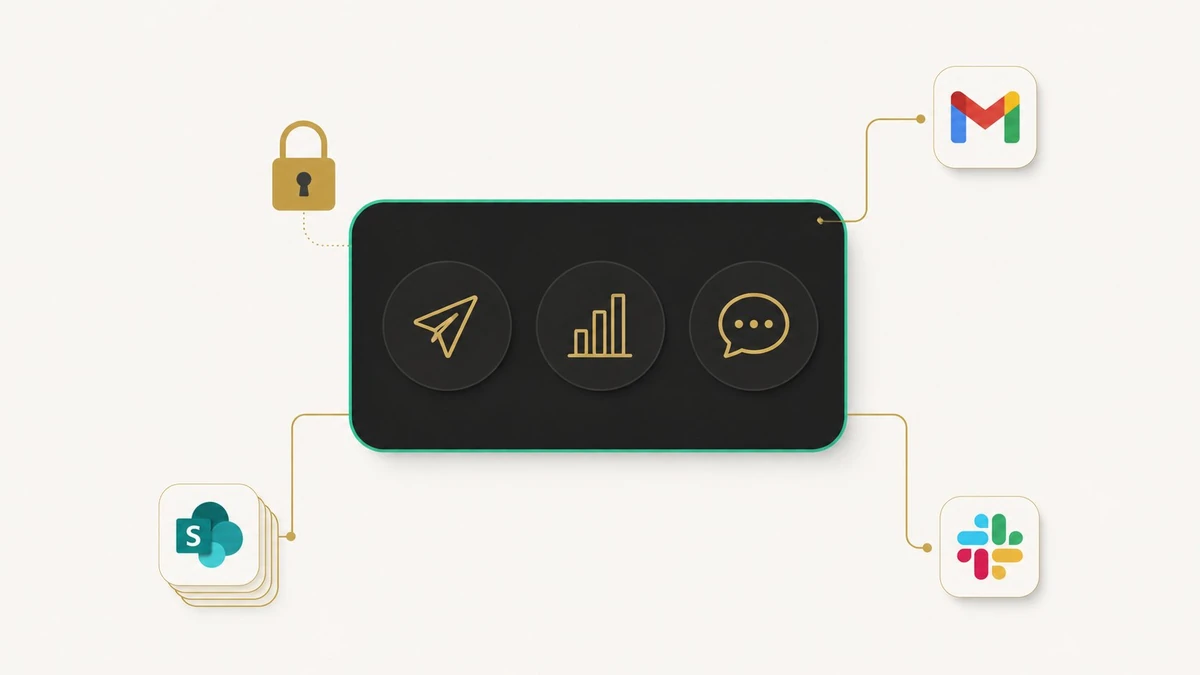
OpenAI shipped Workspace Agents in ChatGPT on April 22, the day before the GPT-5.5 launch absorbed most of the coverage. Workspace Agents are Codex-powered, always-on agents that run in the cloud, integrate with apps like Gmail, Slack, and SharePoint, and execute multi-step workflows on a schedule rather than waiting for a prompt. They are designed for teams to share, not individuals to call.
The feature is in research preview. It is available only on ChatGPT Business and Enterprise plans. ChatGPT Pro users do not get it, which surprised the Reddit community. ChatGPT Enterprise workspaces with Enterprise Key Management (EKM) cannot enable it at launch. And it is off by default, requiring an admin to flip it on per workspace.
Our read: this is a meaningful B2B agent shipment, but the recap coverage missed the parts that matter to ops teams. Most write-ups treat Workspace Agents as a productivity announcement. The real story is governance: an admin-toggled, Business-and-Enterprise-only, EKM-excluded layer that sits inside ChatGPT and can act on company data across third-party apps. RevOps, IT, and martech teams need to decide what to enable, what to restrict, and how to log it before users start asking why.
Key Takeaways
- OpenAI launched Workspace Agents in ChatGPT on April 22, 2026 — Codex-powered agents that run scheduled, multi-step workflows across integrated apps like Gmail, Slack, and SharePoint.
- Available only on ChatGPT Business, Enterprise, Edu, and Teachers plans. Pro users are excluded. Off by default.
- Enterprise workspaces with Enterprise Key Management (EKM) cannot enable Workspace Agents at launch — a governance carve-out for the most security-sensitive customers.
- OpenAI’s Spark agent demo (lead research and outreach) signals a direct play at workflows previously requiring Salesloft, Outreach, or custom Python.
- B2B ops teams should decide enablement scope, integration whitelist, and audit-log destination before users start enabling agents on their own.
What OpenAI Actually Shipped on April 22
Workspace Agents differ from ChatGPT Agent in three ways that matter operationally. They run on a schedule or on triggers rather than only when called. They are designed to be shared across a team workspace, with custom agents built once and used by many. And they integrate natively with Gmail, SharePoint, and Slack without separate connector setup per user.
OpenAI’s launch demo featured an agent called Spark for lead research and outreach. Spark monitors inbound leads, grades them against criteria, drafts personalized emails, and schedules reminders. The same demo set showed customer-support feedback aggregation and data-analysis agents that run code against spreadsheets. The pattern is clear: workflows that today live in Salesloft, Outreach, Gong, or hand-rolled Python scripts are now first-class objects inside ChatGPT. OpenAI’s September Data agent for business analysis turns that data-analysis preview into a dedicated workflow and makes metric definitions, semantic context, and inherited data permissions part of the operating design.
The Catches Most Coverage Skipped
Three operational catches deserve attention before any team enables Workspace Agents.
Pro plan exclusion. ChatGPT Pro at $200/month does not include Workspace Agents. The feature requires Business ($25/user/month minimum) or Enterprise. Individual contributors who upgraded to Pro for personal productivity will not be able to use what their colleagues on Business seats can. The Reddit r/ChatGPTPro thread on this exclusion is the most-upvoted of launch week, signaling how widely the gap is felt.
EKM customers locked out. Enterprise workspaces using Enterprise Key Management cannot enable Workspace Agents at launch. For regulated industries that bought Enterprise specifically for EKM, the most-trumpeted Q2 ChatGPT feature is unavailable. The security tier and the agent tier are not yet compatible.
Admin-controlled enablement is good, but the audit trail is unclear. Workspace Agents are off by default and require admin enablement per workspace. That is the right governance default. What OpenAI has not yet documented well is what gets logged when an agent acts: which integrations it touched, which records it modified, which users initiated which runs. For teams subject to SOC 2, ISO 27001, or HIPAA review, agents touching the CRM without a clean audit trail is a finding waiting to happen. The gap is now wider than product logging: the voluntary U.S. tests for AI hacking capabilities address what advanced models can do, but their metrics and reporting rules are still undisclosed.
What B2B Ops Teams Should Do in the Next 30 Days
Three moves before users start asking to enable agents:
Decide your enablement scope before anyone asks. If you are on Business or Enterprise without EKM, the question is not whether to enable Workspace Agents, but which integrations to allow first. Email and calendar are highest-value and highest-risk. CRM is highest-stakes. Default to a narrow integration whitelist (Gmail read-only, Slack read-only, no CRM write) and expand based on documented use cases, not user requests.
Map Workspace Agents against your existing AI agent stack. Salesforce Headless 360 exposed Agentforce skills via MCP. Adobe shipped MCP for Marketo. HubSpot Breeze runs agents directly in the CRM. The lead-research-and-outreach use case Spark demonstrates is the same workflow Salesloft, Outreach, and Gong already automate. Decide where ChatGPT agents complement existing tools and where they create overlapping spend. The AI subscription pricing reset already happening this quarter makes this audit timely. The document-side parallel arrived May 6: Adobe’s Acrobat Productivity Agent and PDF Spaces primitive is the agentic layer for the sales-proposal, RFP-response, and contract-review workflows ChatGPT Workspace Agents don’t natively touch.
Set up an audit trail before agents touch live data. Until OpenAI publishes complete logging documentation, treat any Workspace Agent connecting to CRM, billing, or customer data as a third-party integration: pipe action logs to your SIEM, require human approval for write actions in the first 90 days, tag agent-initiated CRM updates so they can be traced and rolled back. Building this layer now is cheaper than retrofitting it after an incident. The Obsidian Security control-layer test extends that checklist beyond logging to continuous agent, MCP, and model inventory plus controls that can stop an unsafe action before it lands.
The broader pattern matches the Adobe and Salesforce moves: every major platform touching B2B revenue data is shipping an agent layer in Q2 2026. Whether Workspace Agents become the default execution layer for cross-app workflows or CRM-native agents win because they sit closer to the data, the governance question is independent of who wins. Agents are coming, the toggles are live, and the audit trail is the work. OpenAI’s B2B Signals dataset now puts a number on how fast the frontier is pulling ahead: enterprises in the top 5% by intelligence-per-worker now use 3.5x more AI than typical firms, up from 2x a year ago, with the gap driven by agent-delegated work rather than raw message volume.
Frequently Asked Questions
Workspace Agents are Codex-powered agents launched April 22, 2026, that run on a schedule, integrate with apps like Gmail, Slack, and SharePoint, and are shared across a team workspace. Unlike ChatGPT Agent (single-user, called on demand), Workspace Agents run autonomously, persist across sessions, and are built once for the whole team to use.
OpenAI restricted Workspace Agents to Business, Enterprise, Edu, and Teachers plans at launch, excluding the $200/month Pro plan that targets individual power users. The pricing logic: Workspace Agents require team-shared infrastructure and admin governance, which Pro does not provide. OpenAI has not committed to bringing the feature to Pro.
Enterprise Key Management (EKM) lets ChatGPT Enterprise customers manage their own encryption keys, used most often by financial services, healthcare, and defense contractors. Workspace Agents are not yet compatible with EKM. OpenAI has flagged this as temporary, but no resolution timeline has been published. EKM customers can use ChatGPT Agent features but not Workspace Agents.
The functional overlap is significant. Salesforce Agentforce and HubSpot Breeze run inside the CRM and act on customer data with native context. ChatGPT Workspace Agents run inside ChatGPT and act across multiple apps via integrations. For CRM-centric workflows, native agents have a context advantage. For cross-app workflows spanning email, documents, and CRM, Workspace Agents may be more flexible. Most B2B teams will run both.