On April 15, 2026, Salesforce used its TDX developer conference to announce Headless 360, which the company is calling the most ambitious architectural change in its 27-year history. In plain English: every capability in Salesforce is now available as an API, an MCP tool, or a CLI command, so AI agents can operate the entire platform without opening a browser.
The launch ships with more than 100 new tools and skills, including 60-plus MCP tools and 30-plus preconfigured coding skills. Claude Code, Cursor, Codex, and Windsurf can now work directly against a live Salesforce org. Agentforce Vibes 2.0, Agent Fabric for multi-agent governance, and a move to consumption-based pricing round out the announcement. VentureBeat’s coverage of the TDX keynote has the full detail.
Most coverage so far has framed this as a developer story. It is bigger than that. For RevOps, marketing ops, and CRM admins, Headless 360 changes what an administrator’s job looks like, what agent permissions need to cover, and what “licensed seats” mean when a growing share of actions in your org no longer come from humans.
Key Takeaways
- Salesforce announced Headless 360 on April 15, 2026 at the TDX developer conference, shipping 100+ new tools and skills immediately.
- 60+ MCP tools and 30+ preconfigured coding skills give external coding agents (Claude Code, Cursor, Codex, Windsurf) live access to Salesforce data, workflows, and business logic.
- Agent Fabric brings multi-agent, multi-vendor governance under one control plane, aimed at enterprises running agents across multiple platforms.
- Agentforce is moving to consumption-based pricing, continuing the outcome-based shift HubSpot announced earlier in April.
- For RevOps and marketing ops teams, the immediate decisions are agent permissions, data access scoping, and how attribution changes when agents, not humans, are the primary operators.
What Actually Shipped
Salesforce’s announcement rests on three pillars the company keeps repeating: build any way you want, deploy on any surface, build agents you can trust at scale.
The build pillar delivers 60+ MCP (Model Context Protocol) tools and 30+ preconfigured coding skills that expose Salesforce’s data, workflows, and business logic to external coding agents. In practical terms, a developer using Claude Code or Cursor can now query and modify a live Salesforce org without touching the Salesforce UI. Agentforce Vibes 2.0, Salesforce’s native vibe-coding tool, adds multi-model support (Claude Sonnet and GPT-5) and an open agent harness.
The deploy pillar lets the same agent logic run across Slack, Microsoft Teams, Voice, and other surfaces. The governance pillar introduces Agent Fabric, which gives enterprises a single plane to manage agents, tools, and LLMs across vendors. Cordial’s headless marketing-execution launch extends the same architectural pattern beyond CRM and makes the cross-vendor permission boundary the immediate buyer test.
Co-founder Parker Harris asked the question that frames the whole initiative: why should you ever log into Salesforce again? For better or worse, Salesforce’s answer is that you should not have to. Five days later, Adobe confirmed the same pattern with Marketo MCP at Summit 2026, making this a multi-vendor shift rather than a Salesforce-only bet. Adobe’s AJO B2B Prime tier reframes the same play on the Marketo side, dropping the Real-Time CDP B2B prerequisite so mid-market customers can adopt the AI orchestration layer first and the data layer later. The Salesforce Agentforce Marketing release turns that same headless architecture into a campaign-operations question: a prompt can now move from brief to journey object only if marketing ops has scoped the permissions first.
Why This Matters for RevOps and Marketing Ops
For RevOps teams, the immediate question is not “will agents replace reps” but “who is responsible when an agent updates 400 opportunity records overnight.” The Pipefy Process-as-Tool launch frames the answer as governed authority: define which processes, write actions, approvals, and rollbacks an assistant receives before it acts. Salesforce’s 37 prebuilt sales skills in Claude now make that governance question concrete at the skill level, because read-only analysis, recommendations, and CRM writes should not share one approval policy.
Three practical changes land this quarter.
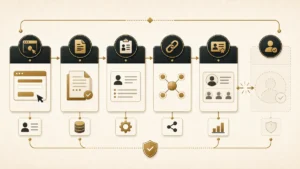
First, agent permission models become the new security perimeter. In a traditional Salesforce org, permission sets and role hierarchies govern what users can see and edit. In a Headless 360 org, the same permission logic has to govern what agents can do, from which surfaces, with what credentials. If your current permission audit cycle is annual, it is going to need to be monthly. OpenAI’s April 2026 Workspace Agents launch raised the same governance questions on the platform-agent side. Permission boundaries constrain access; the U.S. model-hacking test framework addresses a separate question: what an advanced model can do if those boundaries fail, although the public scoring and reporting rules are still missing. OpenAI’s Workspace Agents launch in April raised the same governance questions on the platform-agent side. OpenAI’s Workspace Agents launch in April raised the same governance questions on the platform-agent side. OpenAI’s Workspace Agents launch in April raised the same governance questions on the platform-agent side. OpenAI’s Workspace Agents launch in April raised the same governance questions on the platform-agent side. OpenAI’s Workspace Agents launch in April raised the same governance questions on the platform-agent side.
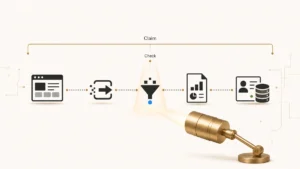
Second, data lineage matters more. When an agent updates a lead status, a human needs to be able to reconstruct why. Salesforce is positioning Data 360 as the context layer that gives agents enterprise-specific information: open escalations, renewal dates, SLA breaches, relationship owners. That context lives in Salesforce today. It stays there, but it now exits through APIs instead of staying behind the UI.
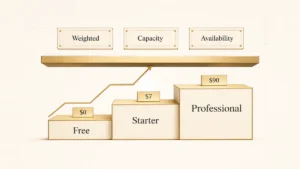
Third, the pricing model is shifting. Agentforce is moving to consumption-based pricing, following HubSpot’s outcome-based Breeze pricing announced earlier this month. If your current CRM budget is built around seat licenses, it needs a second line item for agent consumption. Finance teams will want this modeled before the first agent deploys. The Anthropic-Google $40B investment that closed in late April reinforces the supply-side story behind these protocol shifts — major model providers are locking in compute commitments that the consumption-based pricing layer is built to pass through. For RevOps, the more consequential pattern is agent-on-agent: HubSpot’s rebuilt Prospecting Agent now consumes customers’ existing Apollo and ZoomInfo seats as raw enrichment input, which makes seat-stack rationalisation a question about which vendor’s bot eats which other vendor’s seat.
Where the Admin Role Goes Next
Salesforce has not said what happens to the traditional admin role under Headless 360. The honest answer is that nobody knows yet. Our read is that the job splits.
The “click-heavy” half of admin work (building flows, editing page layouts, configuring validation rules) gets absorbed by coding agents using the new MCP tools. A developer with Claude Code and a prompt can now do in minutes what used to take an admin a week.
The “governance-heavy” half — deciding what agents are allowed to do, auditing what they did, reconciling discrepancies between agent behavior and stated business rules — grows substantially. This is the half that rewards deep Salesforce knowledge plus systems thinking. In 12 months, the valuable admin is the one who understands agent governance, not the one who knows where the Process Builder button is.
For teams evaluating HubSpot vs Salesforce, this changes the comparison too. Salesforce is betting that the agent-first CRM is the one enterprises choose. HubSpot is betting on outcome-based pricing and a simpler adoption curve. Both bets are defensible. The CRMs that try to split the difference over the next 18 months are the ones that struggle. The Fin acquisition gives Salesforce another adoption argument: service teams can start with a packaged support agent before they commit to the full headless-agent architecture.
What To Do in the Next 30 Days
Three moves, regardless of where you are with Agentforce.
- Audit your current Salesforce permission model with agents in mind. Assume every MCP-connected agent inherits the permissions of the user whose credentials it carries. If that user is a sysadmin, the agent has sysadmin rights. Review and scope accordingly before the first integration goes live.
- Build a “why did the agent do that” log. Even before you deploy Headless 360 agents, stand up the observability layer: agent ID, tool invoked, records touched, business reason. Do this now. Retrofitting is harder than building it in from the start.
- Get finance in the room early. Consumption pricing changes which budget line items move. If RevOps sits under marketing and agent consumption sits under IT, you will have the same argument every quarter. For more structural context on this trend, see our analysis of AI agents for RevOps.
Salesforce built this for the next ten years, not the next quarter. The teams that win are the ones treating Headless 360 like a governance project now, not a developer tool later. Two weeks later, Salesforce extended the same agent-first thesis into the back office with Agentforce Operations, which puts the same governance question on inventory, vendor onboarding, and approval workflows that RevOps already had on front-office agents.
Frequently Asked Questions
Headless 360 is Salesforce’s April 15, 2026 architectural initiative that exposes every capability in the Salesforce platform as an API, MCP tool, or CLI command. The goal is to let AI agents (from Salesforce’s Agentforce or third-party coding agents like Claude Code) operate the entire platform without using the browser-based UI. It shipped with 100+ new tools and skills.
No. Agentforce is Salesforce’s managed agent product. Headless 360 is the underlying architecture that makes Agentforce (and any third-party agent) able to operate against Salesforce without the browser UI. Agentforce itself is also changing, moving to consumption-based pricing and adding Agentforce Vibes 2.0 with multi-model support.
Audit your Salesforce permission model with agents in mind. Every MCP-connected agent inherits the permissions of the credentials it uses, so scoping matters more than before. Next, stand up an agent observability log (who invoked what tool, which records were touched, why). Third, get finance involved in consumption pricing planning before any production agent deploys.
The two companies are making different bets. Salesforce is betting on an agent-first architecture that assumes most work moves out of the UI. HubSpot is betting on outcome-based pricing and an easier adoption path, visible in the Breeze pricing change. Both bets are coherent. The mid-market decision between them will turn on how much agent governance each team wants to own.