Search “best performance marketing agencies” and almost every result is a ranking published by an agency that put itself at number one. Directive, The Keenfolks, and the big-city lists all open with their own name in the top slot, which tells you how much of this category is a sales pitch wearing the costume of research. For a B2B team about to hand a stranger control of a six-figure ad budget, that is precisely the wrong place to start.
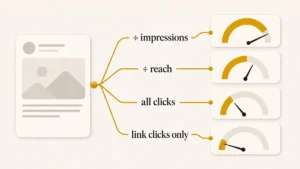
The stakes are not small. Global ad spend passes one trillion dollars for the first time in 2026, and most of that money now buys itself through algorithms that reward whoever feeds them the cleanest conversion data. A performance marketing agency that understands B2B pipeline can make that machine compound; one that optimizes to cheap leads will quietly burn your quarter and show you a great cost-per-lead chart while doing it.
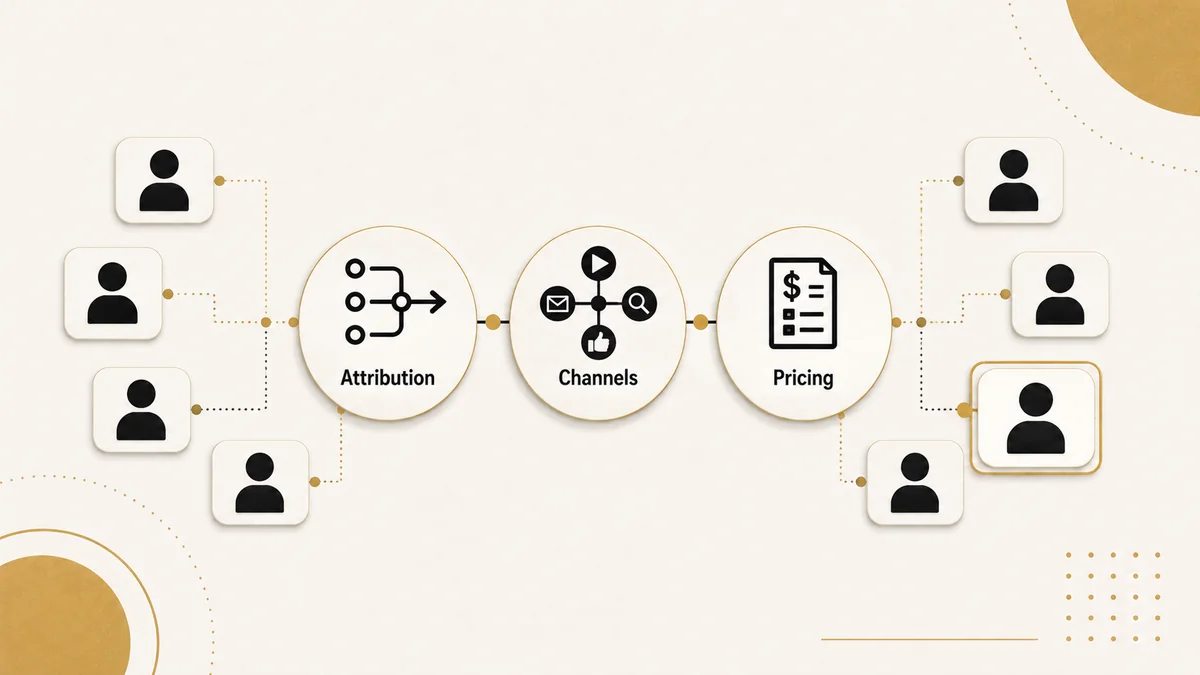
This guide is written by a publisher that sells no media service, so nobody here ranks first for buying a slot. It covers ten agencies with a genuine B2B paid-media practice, judged on the three things that actually separate them: attribution rigor, channel depth, and how honestly they price. First, the short version.
Direct answer — What is a performance marketing agency?
A performance marketing agency plans and runs paid advertising that is bought and optimized against measurable outcomes, such as leads, pipeline, or revenue, rather than reach or impressions. It works across paid search, paid social, programmatic, and retail media, and is usually paid through a retainer or a percentage of managed ad spend. For B2B, the strongest agencies optimize to qualified pipeline and closed revenue, not raw lead volume, because a cheap lead that never becomes a deal is the most expensive number in the account.
Key Takeaways
- A performance marketing agency buys and optimizes paid media against outcomes (leads, pipeline, revenue), not impressions, usually for a retainer or a share of ad spend.
- For B2B, judge agencies on attribution rigor, channel depth, and pricing transparency, not on the client logos they open the pitch with.
- Most public “best agency” lists are written by an agency that ranks itself first; read them as pitches, not research.
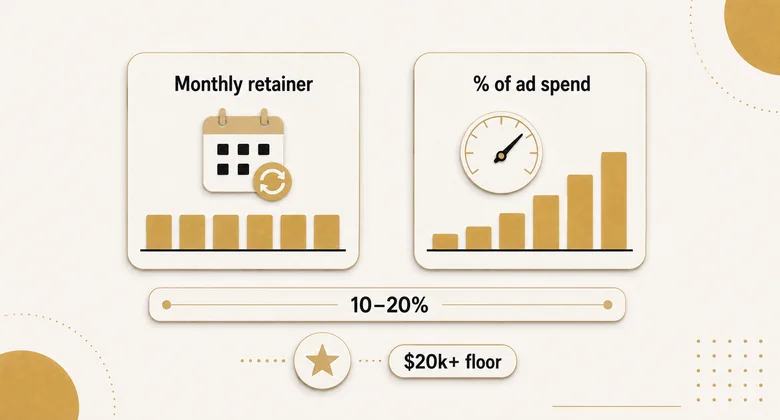
- Expect custom pricing. Published rates are rare, but management fees typically run 10% to 20% of ad spend, and one agency here states a $20,000-a-month floor.
- A DTC-native agency and a B2B pipeline agency are not interchangeable; the channels overlap but the definition of a good outcome does not.
What a performance marketing agency actually does for B2B
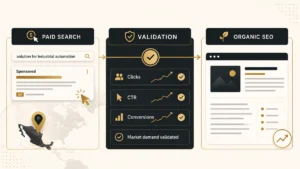
A performance marketing agency runs the paid channels where demand gets captured and created, then optimizes every dollar against a business outcome instead of a vanity metric. In B2B that usually means paid search, paid social with a heavy LinkedIn weighting, programmatic display, and increasingly connected TV and retail media, all pointed at pipeline rather than clicks. Each channel does a distinct job: the split between paid search and display alone decides whether a dollar captures demand that already exists or helps create demand that does not.
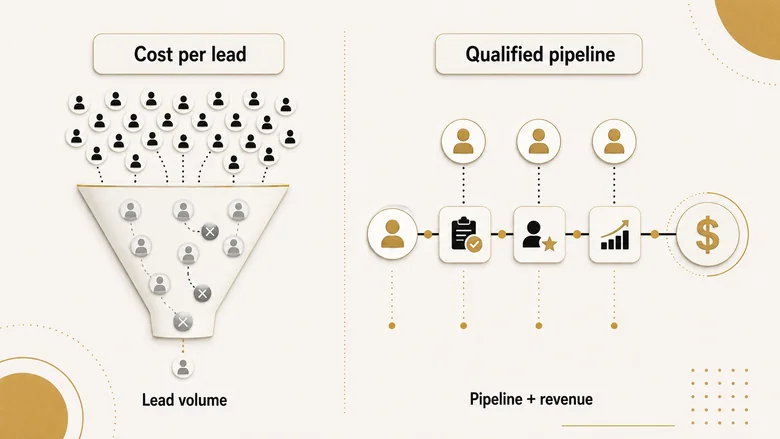
The channel mix is the easy part. What counts as success is the hard part. A consumer agency can optimize to a purchase that happens in one session; a B2B agency is optimizing toward a deal that closes months later through a buying committee, so it has to work from pipeline and revenue signals, not the form-fill the ad platform happens to see. The best shops wire conversions back to the CRM and bid to qualified pipeline, which is why running B2B Google Ads to pipeline instead of leads is a genuinely different discipline from consumer search.
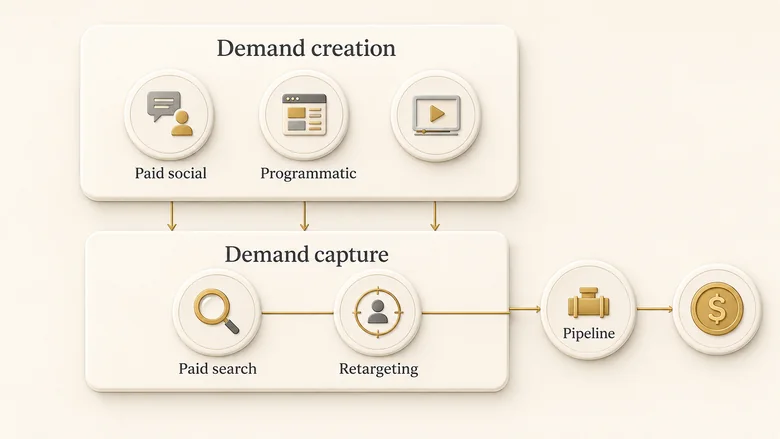
This is also why the word “performance” can mislead. Only about 5% of B2B buyers are in-market at any given moment, so an agency that spends the whole budget capturing that 5% starves the 95% who will buy later. The agencies worth hiring run capture and creation together, treating demand generation as the engine that feeds paid capture rather than as a separate line item to cut first.
Performance agency vs. brand, SEO, and in-house
A performance marketing agency is not the only way to grow, and the honest first question is whether you need one at all. The four realistic options for a B2B team trade off speed, control, and where the work actually lives.
| Option | What it is | Best when | Trade-off |
|---|---|---|---|
| Performance / paid-media agency | Outside team that plans and runs paid channels against pipeline | You need to scale paid fast and lack senior in-house media talent | Custom fees; you must supply clean revenue data to steer it |
| Brand / creative agency | Positioning, creative, and demand creation, less hands-on-keys media | Your bottleneck is a weak story, not weak execution | Rarely owns the bidding and measurement day to day |
| SEO / organic agency | Earns rankings and AI-search visibility, with no paid budget | You want compounding organic pipeline, not paid velocity | Slower to show results; a different job from paid |
| In-house team | Your own media buyers and analysts | Paid is a permanent core competency and volume justifies headcount | Hiring lag; harder to staff every channel deeply |
The line that matters most is the one between paid and organic. A performance agency buys attention now; a B2B SEO agency earns it over quarters, and the two belong in one plan rather than in competition for the same budget.
There is now a third discipline worth separating out. If your buyers increasingly open ChatGPT or Perplexity before Google, getting cited inside those answers is its own craft, which is why we keep a separate ranked list of answer-engine optimization agencies. This guide stays on paid media, where the money moves fastest and the mistakes cost the most.
How we chose these performance marketing agencies
We evaluated agencies on five criteria, and we have nothing to sell against them: IVRIS runs no media service, so this list is editorial rather than a self-ranking. That independence is the whole point, because nearly every competing roundup is published by an agency that conveniently rates itself first.
- Attribution rigor. Does the agency optimize to pipeline and revenue, or stop at leads and cost-per-lead? B2B lives or dies here.
- Channel depth. Real capability across paid search, paid social, and programmatic, not one channel with the rest quietly outsourced.
- Genuine B2B fit. Experience with long, multi-stakeholder sales cycles, not a DTC playbook relabeled for B2B.
- Pricing transparency. A clear account of how they charge, even when the final number is custom.
- Proof over logos. Named results and case studies, not just a wall of famous brands they once touched.
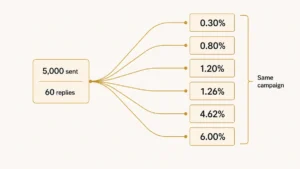
The first criterion does the heaviest filtering. An agency that reports cost-per-lead and stops there can look brilliant while your sales team drowns in junk, because B2B SaaS paid leads average around $310 each and only a fraction ever become real pipeline. That gap is the entire difference between demand generation and lead generation, and every agency below was chosen because it optimizes past the lead toward revenue.
IMPORTANT
A famous client logo is not proof of your outcome. Before you sign, ask for one B2B account where the agency moved pipeline or revenue, not leads, and the attribution method behind the claim. If the answer is a cost-per-lead chart, keep interviewing.
The 10 best performance marketing agencies for B2B
Each agency below runs a real B2B paid-media practice, and each profile names the channels it runs, who it fits, notable clients, and pricing where the agency actually publishes it. The at-a-glance table comes first, and “custom” below means exactly that: most of these scope a quote to your account rather than post a rate.
| Agency | B2B fit | Core paid channels | Best for | Pricing |
|---|---|---|---|---|
| Directive | Pure B2B | Paid search, paid social, programmatic | SaaS tying spend to SQLs and pipeline | Custom |
| Refine Labs | Pure B2B | Paid social (LinkedIn), paid search | Demand creation and dark social | Custom |
| New North | Pure B2B | PPC, paid social, display | Smaller B2B tech and SaaS | Custom |
| Single Grain | B2B-leaning | Google, Meta, LinkedIn, YouTube | Integrated paid plus content | Custom |
| NoGood | B2B + consumer | Paid search, paid social | VC-backed SaaS scaleups | ~$20k/mo+ retainer |
| Wpromote | B2B + consumer | Full-funnel paid, programmatic, CTV | Midmarket to enterprise | Custom |
| Croud | B2B + consumer | Paid search, paid social, programmatic | Global, multi-market scale | Custom |
| Amsive | B2B + regulated | Paid search, programmatic, direct | Healthcare, finance, insurance | Custom |
| Ignite Visibility | B2B + consumer | PPC, paid social, programmatic | Integrated SEO plus paid | Custom, no lock-in |
| DEPT | Enterprise B2B + consumer | Performance media plus tech | Enterprise and AI-grade media | Custom |

1. Directive
Best for: B2B SaaS and tech teams that measure everything against pipeline and SQLs. Channels: paid search, paid social, programmatic, and shopping, run under a self-described “Customer Generation” model in place since 2013. Notable clients: ZoomInfo, Cisco, and Betterment. Pricing: custom, with no public rate card (as of Q3 2026). Directive is the closest thing here to a default B2B pick, because pipeline-first measurement is the house philosophy rather than a bolt-on.
2. Refine Labs
Best for: B2B SaaS brands that want demand creation and paid social measured on pipeline, not lead volume. Channels: paid social with a heavy LinkedIn focus, plus paid search, built around dark social and self-reported attribution. Notable clients: Clari, Cognism, BeyondTrust, and Algolia. Pricing: custom (as of Q3 2026). Refine Labs popularized the “demand gen, not lead gen” stance, so it fits teams ready to be graded on sourced pipeline instead of MQL counts.
3. New North
Best for: smaller B2B technology and SaaS companies that want paid media inside a full-funnel program. Channels: PPC, paid social and LinkedIn, and display, alongside SEO and analytics. Notable clients: Kolbe Corp and Ricoh. Pricing: custom (as of Q3 2026). Founded in 2008 and based in Frederick, Maryland, New North is the fit when you want one accountable partner for the whole funnel rather than a single-channel specialist.
4. Single Grain
Best for: SaaS and tech teams that want paid, SEO, and content run as one revenue program. Channels: Google Ads, Meta, LinkedIn, YouTube, and Amazon Ads. Notable clients: Amazon Alexa, Nextiva, Lever, and SmartRent. Pricing: custom (as of Q3 2026). Led by founder Eric Siu, Single Grain suits brands that would rather buy an integrated growth team than stitch paid and organic together across two vendors.
5. NoGood
Best for: venture-backed SaaS and tech scaleups that want an embedded growth pod. Channels: paid search and paid social across Google, Meta, LinkedIn, and TikTok. Notable clients: MongoDB, Intuit, Citi, and Spring Health. Pricing: the rare public number here, with a stated average retainer above $20,000 a month (as of Q3 2026). NoGood works across B2B and consumer, so confirm your pod is staffed by people who have run B2B pipeline, not only DTC growth.
6. Wpromote
Best for: midmarket to enterprise brands that want brand and performance under one full-funnel roof. Channels: full-funnel paid across search, social, programmatic, and connected TV. Notable clients: TransUnion and Intuit QuickBooks on the B2B side, alongside consumer names like Samsung. Pricing: custom (as of Q3 2026). Wpromote runs a dedicated B2B practice, which matters because its consumer roster is large enough that you want the B2B specialists staffed on your account.
7. Croud
Best for: global B2B brands running paid media across many markets and languages. Channels: paid search, paid social, programmatic, and retail media, delivered through a flexible network of vetted specialists. Notable clients: IWG, plus consumer brands like Timberland and MPB. Pricing: custom (as of Q3 2026). Croud’s network model is built for coverage, so it fits when your constraint is running one rigorous program across a dozen countries at once.
8. Amsive
Best for: B2B and regulated-industry brands that want audience-data-led performance across digital and direct. Channels: paid search, programmatic and display, paid social, and direct channels like mail and email. Notable clients: Commerce Bank and the University of Tennessee. Pricing: custom (as of Q3 2026). Amsive leans on audience intelligence, a real edge in healthcare, finance, and insurance where targeting precision and compliance both matter.
9. Ignite Visibility
Best for: midmarket B2B teams that want paid and SEO integrated without a long lock-in. Channels: PPC, paid social, programmatic, retargeting, and affiliate. Notable clients: Dun & Bradstreet and Experian on the B2B side. Pricing: custom, and the agency markets no long-term contracts or hidden fees (as of Q3 2026). Ignite serves both B2B and consumer, so scope your account around the people who have run your kind of sales cycle.
10. DEPT
Best for: enterprise brands that want engineering-grade media paired with technology and AI builds. Channels: performance media integrated with data and product engineering, across every major paid platform. Notable clients: NVIDIA, eBay, Arm, and Adobe. Pricing: custom (as of Q3 2026). DEPT is a roughly 4,000-person global agency, so it fits enterprise programs that need media and technical build under one roof, and it is heavier than a smaller B2B team requires.
Two names you will see on other lists are missing here on purpose. Tinuiti is arguably the strongest independent performance agency in the market, but its center of gravity is retail, Amazon, and DTC, not B2B pipeline; Power Digital is similar, with a mostly consumer roster. Both are excellent at what they do. Neither is where a B2B software team should start, and a ranking that pretends otherwise is optimizing for name recognition over fit.
What performance marketing agencies cost
Performance marketing agencies almost never post a rate card, and the vagueness is honest rather than evasive, because the number scales with your ad budget, your market, and how much creative and measurement you need built. The ranges are still knowable.
Most agencies charge for management in one of two ways: a flat monthly retainer or a percentage of the ad spend they manage. Industry guides put that management fee at 10% to 20% of ad spend for paid search, with retainers from $500 to $10,000 a month (as of Q3 2026), and disclosed all-in digital advertising budgets commonly land between $301 and $5,000 a month for most businesses. At the specialist end, NoGood’s stated floor above $20,000 a month shows where premium B2B pods actually sit.
The more useful way to think about cost is efficiency, not fee. If paid B2B leads already average around $310 and most never reach pipeline, a slightly pricier agency that reports on sourced revenue is cheaper than a bargain one that reports on lead count. Pair whoever you hire with your own PPC reporting and bid-management stack so you can see the same numbers they do, rather than taking a monthly slide deck on faith.
How to choose a performance marketing agency
Choosing well is mostly about matching the agency’s real strength to your actual constraint, then pressure-testing how they measure. Use a simple rule before you shortlist.
- Hire a B2B performance specialist (Directive, Refine Labs, New North) when pipeline attribution is the hard part and you want a team fluent in long sales cycles.
- Hire a full-funnel or enterprise agency (Wpromote, DEPT, Croud) when you need many channels and markets run under one roof.
- Hire an integrated paid-plus-organic shop (Single Grain, Ignite Visibility) when you would rather not manage separate paid and SEO vendors.
- Keep it in-house when paid is a permanent core competency and your volume justifies senior headcount.

Whichever you pick, the paid-social question deserves its own answer. LinkedIn is where most B2B budgets now concentrate, and it rewards specialists, so our guide to LinkedIn Ads tools and agencies goes deeper on that channel than a generalist roundup can.
Then insist the agency work inside your revenue data. An agency that lives in a siloed ad dashboard cannot optimize to pipeline, which is a different question entirely from choosing the CRM an agency runs its own book of business on. The best partners plug into your CRM and report on sourced revenue, because that is the number your board actually asks about.
PRO TIP
The single most useful question in a pitch: “Show me a B2B account where you moved pipeline or revenue, and the exact attribution method behind the number.” Real operators answer with a baseline and a trend line. Pretenders show you a cost-per-lead chart and change the subject.
Mistakes B2B teams make hiring a performance agency
The most expensive mistake is hiring for lead volume. An agency optimized to cost-per-lead will happily flood your funnel with cheap, unqualified contacts that look like progress and convert like noise, because the algorithm gives you exactly what you told it to buy.
The second is hiring a DTC-native shop for a B2B motion. The channels look familiar, but a team that has only optimized to same-session purchases will misread a six-month buying cycle, under-invest in the buyers who are not in-market yet, and treat a demo request like a checkout. Even the basic choice between search and display in B2B trips up agencies that have only run one paid motion.
The third is signing before you have an attribution baseline. If you cannot measure sourced pipeline today, you will not be able to tell whether the agency worked, and month three becomes an argument about whose numbers are real. Fix measurement first, even roughly, so the engagement starts with a shared definition of success.
The fourth is cutting demand creation to fund capture. When budgets tighten, teams pour everything into the in-market minority and starve the pipeline that fills next quarter. Capture and creation are not rivals for the same dollar, and the agencies worth hiring will defend that split even when chasing the click is the easier sell.
Frequently Asked Questions
A performance marketing agency is one paid to drive measurable outcomes, such as leads, pipeline, or revenue, through channels like paid search, paid social, and programmatic, rather than to build awareness alone. Compensation is usually tied to a retainer or a share of managed ad spend, and success is judged on results, not impressions.
Most quote custom pricing. As a benchmark, management fees commonly run 10% to 20% of ad spend, monthly retainers range from a few hundred dollars to $10,000 or more, and premium B2B agencies can start near $20,000 a month. What you pay scales with budget size, channel count, and how much creative and measurement the agency builds.
They are when you lack senior in-house media talent and need to scale paid quickly without a hiring cycle. The catch is measurement: a B2B agency only pays off if it optimizes to qualified pipeline and revenue, not cheap leads. Give it clean CRM data to steer by, or even a strong agency will underperform.
“Digital marketing agency” is the broad category, covering SEO, content, email, and paid. A performance marketing agency is the paid-media specialist within it, focused on channels bought and optimized against a measurable outcome. In practice, a performance agency owns the ad budget and the bidding, while a full-service digital agency may lightly staff or subcontract that work.
There is no single winner, because the best fit depends on your motion. Directive suits SaaS teams optimizing to pipeline, Refine Labs fits demand creation on paid social, and enterprise programs lean toward Wpromote or DEPT. Match the agency’s proven B2B strength to your constraint rather than chasing the biggest logo on the page.