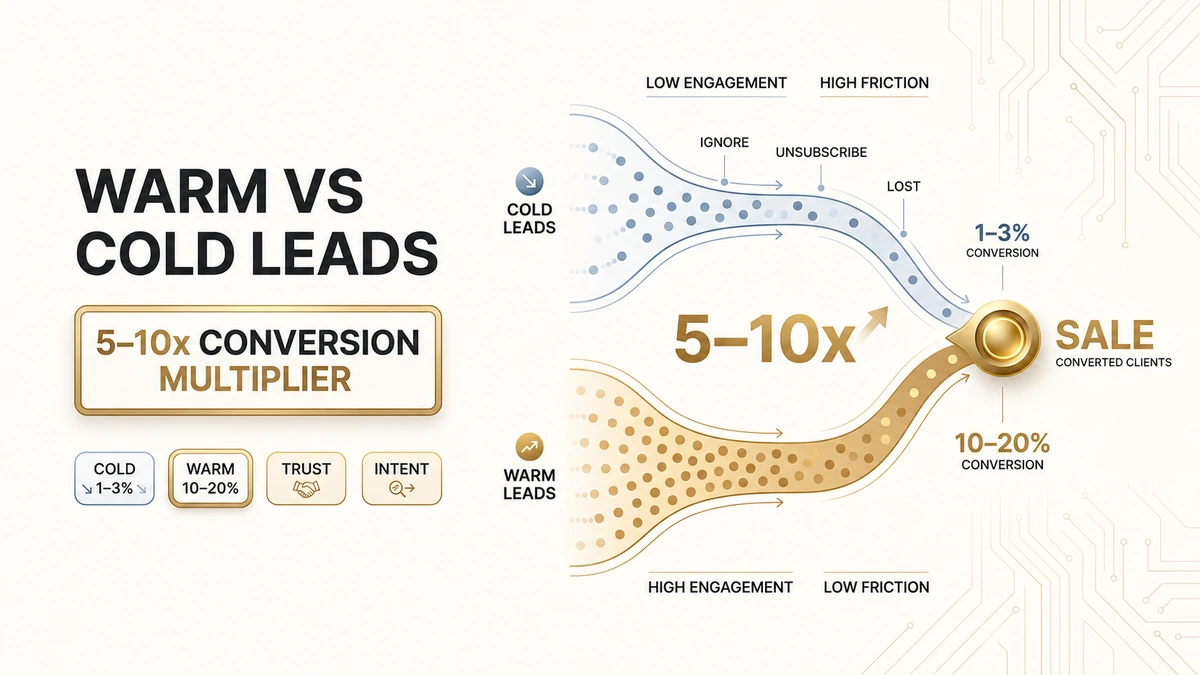
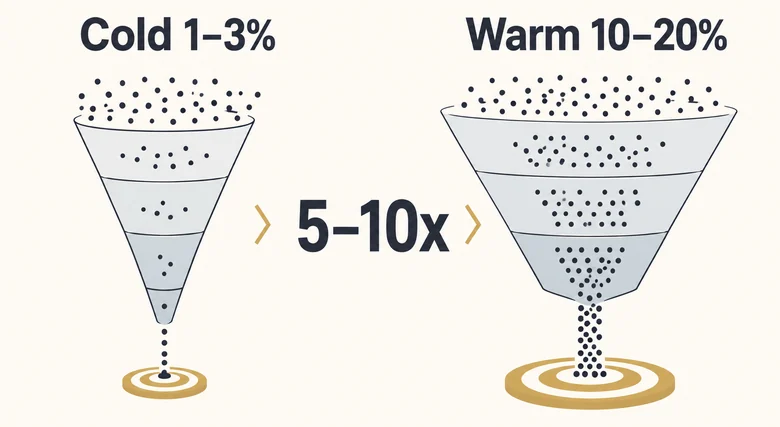
A cold lead converts at 1% to 3%. A warm lead converts at 10% to 20%. Put those two ranges side by side and a number falls out that most B2B teams never actually calculate: warm leads convert roughly 5 to 10 times better than cold ones. That ratio is the warm leads vs cold leads conversion rate multiplier, and it’s the most useful number you have for deciding where the next marketing dollar should go.
Most articles on this topic stop at “warm leads convert better.” That’s true, and it’s almost useless. The multiplier is the part that changes decisions, because it tells you how much a unit of trust is worth in closed revenue. This guide quantifies the multiplier with sourced benchmarks, shows the three forces that create it, and walks through how to calculate your own number in about five minutes.
Key Takeaways
- The conversion multiplier is your warm-lead conversion rate divided by your cold-lead rate. For most B2B teams it lands between 5x and 10x.
- Cold leads convert at 1-3% (cold calls average about 2.35%). Warm and inbound leads convert at 10-20%, with one widely cited comparison putting warm close rates at 14.6% against 1.7% for cold.
- Three forces create the gap: existing trust, proven buying intent, and a shorter sales cycle. None of the three exists in a purchased cold list.
- Lead source predicts the multiplier. Client referrals convert to MQL at 56% and SEO at 41%, against single digits for cold channels (First Page Sage, 2025).
- You can move a cold lead up the curve, but response delay matters: a 2007 six-company study reported 21 times higher qualification odds at five minutes than at 30 for web-generated leads contacted by phone.
What Is the Warm-to-Cold Lead Conversion Multiplier?
The warm-to-cold lead conversion multiplier is the ratio between the rate at which warm leads convert and the rate at which cold leads convert. If warm leads close at 12% and cold leads close at 2%, your multiplier is 6x. It answers one question precisely: how many times more efficiently does a warm lead turn into revenue than a cold one?
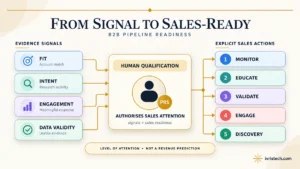
Conversion Multiplier = Warm Lead Conversion Rate ÷ Cold Lead Conversion RateTo use the formula you first have to agree on what “warm” and “cold” mean. Lead temperature is a measure of how close a prospect is to buying, based on what they already know about you and what they’ve already done.
- Cold lead: No prior relationship and no expressed interest. You found them, they didn’t find you. Think purchased lists, cold calls, and unsolicited cold email.
- Warm lead: Has engaged with you on their own terms. They downloaded a guide, attended a webinar, replied to a sequence, or were referred by someone they trust.
- Hot lead: Actively evaluating and signalling intent to buy now. They requested a demo, asked about pricing, or started a trial.
The multiplier matters because the two halves of the formula are usually owned by different budgets. Cold outreach is a sales-development cost. Warm leads are mostly a marketing output. When you can state the multiplier as a single number, the argument about where to invest stops being a turf war and starts being arithmetic. The same clarity that fixes the MQL-to-SQL handoff applies here: a shared number ends the finger-pointing.
Warm vs Cold Lead Conversion Rates: The Benchmark Table
Warm leads convert at 5 to 10 times the rate of cold leads across most B2B benchmarks. The exact numbers move with industry, deal size, and how you define a conversion, but the shape holds everywhere. The table below sets the published ranges next to each other so the multiplier is visible at a glance.
| Lead type | Typical source | Conversion rate (lead to deal) | Multiplier vs cold |
|---|---|---|---|
| Cold | Cold calls, purchased lists, unsolicited cold email | 1-3% (cold calls ~2.35%) | 1x (baseline) |
| Warm | Inbound content, webinar, opted-in email, repeat visitor | 10-20% | ~5-10x |
| Hot | Demo request, pricing inquiry, free trial | 20-40% | ~10-15x |
| Referral | Customer or partner referral | Highest of any source | Highest |
One widely cited comparison frames the gap cleanly: inbound (warm) leads close at about 14.6% on average versus 1.7% for cold outbound, which works out to a multiplier near 8.6x. On the cold side, cold calls convert at about 2.35%, or roughly one sale per 43 dials. Those two figures alone bracket the range most teams will see.
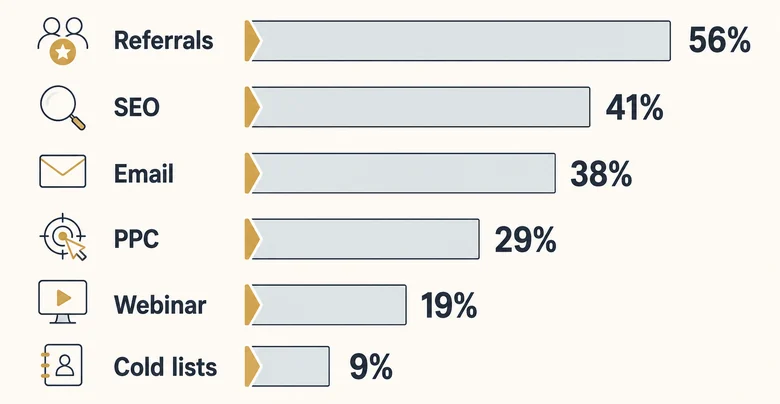
Source is the strongest predictor of where a lead sits, because source is really a proxy for whether you created the demand or interrupted it. First Page Sage’s 2025 channel data shows the warmth gradient in hard numbers: client referrals convert to MQL at 56% and SEO at 41%, while colder channels sit far lower. That split is the practical core of the difference between demand generation and lead generation, and it’s why a pipeline fed by referrals posts very different math than one fed by cold lists. The same gap compounds at every stage of a six-stage B2B sales funnel, where each warmer entry point lifts the rate of the stage that follows.
| Lead source | Lead-to-MQL conversion rate | Temperature |
|---|---|---|
| Client referrals | 56% | Warmest |
| Executive events | 54% | Warm |
| SEO / organic | 41% | Warm |
| Email marketing (opted-in) | 38% | Warm |
| Paid search (PPC) | 29% | Mid |
| Webinar | 19% | Mid |
| Outbound / cold lists | Single digits | Cold |
Figures from First Page Sage’s lead-to-MQL benchmarks by channel, updated August 2025 from a client base that is roughly 70% B2B. Read it as a relative ranking rather than an absolute promise: your own rates will differ, but referrals beating cold outreach by a wide margin is close to a law. Response-time benchmarks reward checking the sample and the denominator first, since most of the widely quoted ones average only the companies that bothered to reply.
How the Multiplier Varies by Industry and Deal Size
The 5-10x range is an average, and the two variables that move it most are sales-cycle length and deal complexity. The longer and more complex the purchase, the bigger the multiplier, because cold outreach barely functions where buyers need months of trust before they commit.
In complex enterprise sales, cold conversion often sits below 1%, while warm and referral-sourced deals close in the 8-12% range. That pushes the multiplier past 10x, and it’s why enterprise teams lean so heavily on referrals, events, and account-based motions instead of cold volume. The trust deficit is simply too expensive to overcome at the cold end. It is also why qualification has to be strict before any senior cold touch, since a weighted scorecard that decides which accounts justify warming a cold executive is cheaper than burning a rep on one that never will.
In transactional or self-serve SMB sales, the multiplier compresses. Cold outreach can work at 3-5% because the decision is faster and lower-risk, while warm leads convert at 12-15%, so the ratio narrows to roughly 3-4x. Cold is still worse, but not catastrophically so, which is why high-velocity SMB teams can run cold channels profitably where an enterprise team can’t. Running those cold channels profitably also means running them safely, and a dedicated sending domain keeps cold outreach from harming your main domain while you chase those lower-but-workable conversion rates.
Deal size compounds the effect. A larger contract value justifies the higher cost of generating warm leads, so the more you sell per deal, the more the multiplier should pull your budget toward warm sources. The rule of thumb: the longer your sales cycle and the larger your average contract, the more a single point of warm-lead conversion is worth, and the harder you should work to raise it. The cheapest way to defend that spend is protecting that warmth with a fast first touch, because a slow response throws away the very advantage you paid to create.
Why Warm Leads Convert 5 to 10 Times More: The Three Forces
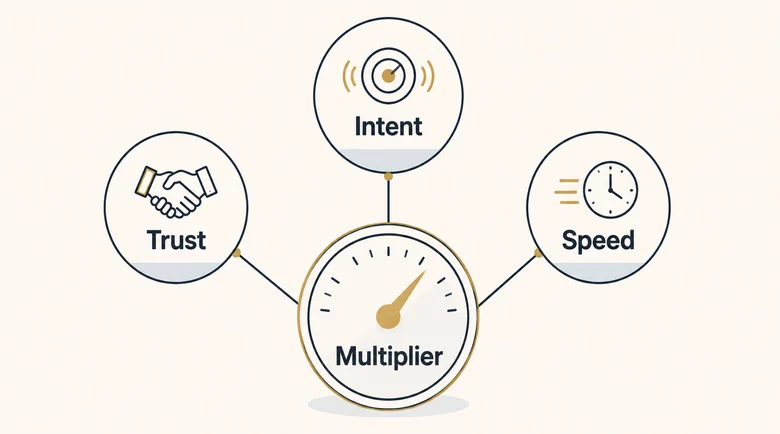
Warm leads convert at a higher rate because of three forces that compound: existing trust, proven intent, and a shorter sales cycle. A cold lead has none of the three, which is why the gap is a multiple rather than a few percentage points.
Force 1: Trust and Familiarity
A warm lead already recognises your brand, which removes most of the friction a sales rep normally spends a first call dismantling. They’ve read your content, seen your name in a feed, or heard about you from a peer. That recognition does the early credibility work for you, so the conversation starts at “is this the right fit” instead of “who are you and why should I listen.” Building that recognition before the buying window is the entire point of strong inbound lead generation, where the prospect arrives already half-sold.
Force 2: Proven Buying Intent
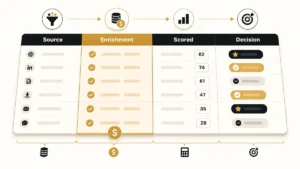
Warm leads have done something that signals an active problem. Downloading a pricing comparison, attending a product webinar, or returning to a feature page three times are not idle actions. They mark a buyer who is researching a purchase, not a name on a list who may have zero need for what you sell. Scoring those signals correctly is how you separate the genuinely warm from the merely curious, which is the job of well-built lead scoring criteria that weight intent over vanity engagement.
Force 3: A Shorter Sales Cycle
Because the education and qualification work is already partly done, warm leads move through the pipeline faster. Reps skip the long discovery phase and get to proposals and negotiation sooner. A faster cycle means fewer chances for the deal to stall, for a champion to leave, or for budget to evaporate, and every one of those avoided risks shows up as a higher close rate at the end. Velocity, not just volume, is what the multiplier is really measuring. You can engineer those avoided stalls deliberately instead of hoping warmth delivers them, which is what a disciplined journey-optimization program does by finding where deals stall and removing the specific obstacle.
How to Calculate Your Own Conversion Multiplier
To calculate your conversion multiplier, divide your warm-lead conversion rate by your cold-lead conversion rate using the same definition of “conversion” for both. That instruction carries more weight than it looks: in one publisher’s demo data the same booked meetings read as 44.3% or 64.0% depending only on the denominator, so a mismatched pair of definitions can manufacture a multiplier out of nothing. The benchmark ranges are a starting point, but your own number is what should drive budget. That single-definition rule is the one most cross-source comparisons quietly break, and the same trap sits inside published lead-to-meeting rates. Here’s the five-minute version.
Workflow · 5 min
How to calculate your warm-to-cold conversion multiplier
Turn your own CRM data into a single ratio that tells you how much more efficiently warm leads convert than cold ones.
Pull your cold-source conversion rate
In your CRM, filter to leads sourced from cold channels (cold calls, purchased lists, unsolicited cold email) over the last 6-12 months. Divide closed-won deals by total leads from those sources.
Pull your warm-source conversion rate
Repeat for warm sources (inbound content, referrals, opted-in email, repeat visitors) over the same window and the same closed-won definition. Keep the time period identical so the comparison is fair.
Divide warm by cold
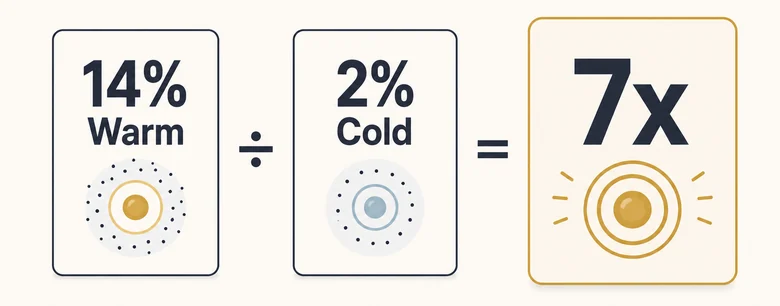
Warm rate divided by cold rate is your multiplier. A warm rate of 14% over a cold rate of 2% gives a 7x multiplier.
Compare to the 5-10x benchmark and act on the gap
If your multiplier is below 5x, your warm leads are underperforming and the fix is conversion, not more traffic. If it’s above 10x, your cold motion is the weak link and may be worth pausing or rebuilding.
A worked example makes the budget logic obvious. Say cold outreach converts at 2% and inbound converts at 14%, a 7x multiplier. If a cold lead costs $40 to generate and a warm lead costs $120, the warm lead is three times more expensive but seven times more likely to close, so its cost per closed deal is still less than half that of the cold lead. The multiplier is what surfaces that, and it belongs in your core set of B2B marketing metrics rather than in a one-off slide.
What Moves the Multiplier Up or Down
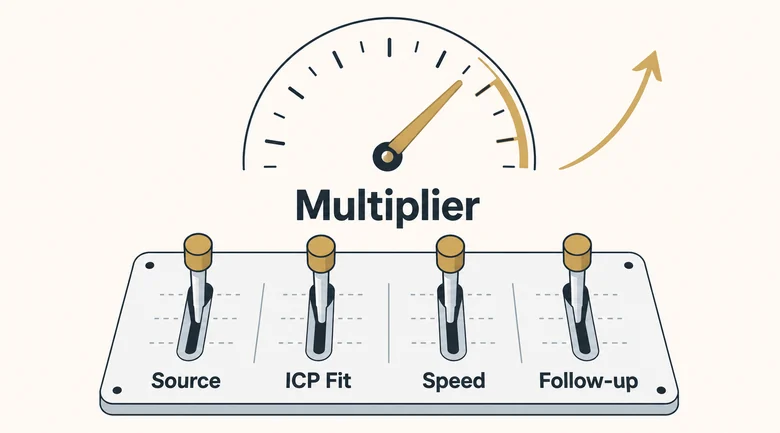
Your multiplier is not a fixed law of nature; it’s the output of choices you control. Four variables move it more than anything else, and most teams can shift at least two of them within a quarter.
- Lead source mix. The single biggest lever. A funnel weighted toward referrals and inbound posts a higher warm rate than one fed by cold lists, which raises the whole ratio.
- ICP fit. A “warm” lead outside your ideal profile still converts poorly. Tight targeting keeps the warm side of the ratio genuinely warm rather than just engaged.
- Speed to lead. Response delay can cool a warm lead. The 2007 Lead Response Management study reported 21 times higher qualification odds for web-generated leads called at five minutes rather than 30 across six companies. Treat the number as a dated, phone-based result, not a guaranteed multiplier for every channel.
- Follow-up discipline. A warm lead with no structured follow-up cools back to cold. The sequence that keeps it warm is where the multiplier is won or lost.
The tooling that helps you spot and score warm leads before a rep wastes a call sits in three categories: scoring, enrichment, and intent data.
None of these tools raise the multiplier on their own. They make warm leads visible earlier, which helps a rep work inside the response-time target your team has chosen and measured.
How to Warm Up a Cold Lead
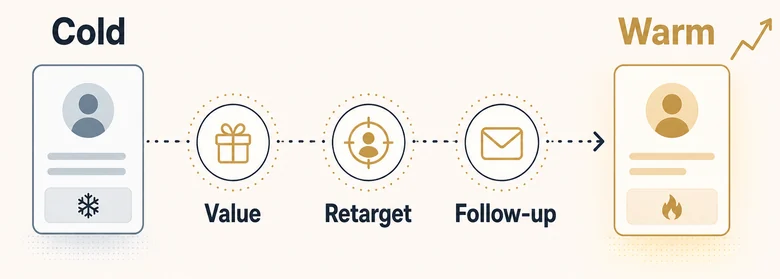
Warming up a cold lead means giving it the trust, intent, and context it lacks before a rep tries to close it. You can’t fake the three forces, but you can manufacture the conditions that create them. The goal is to move a name from the 1-3% column toward the 10-20% column over weeks, not minutes.
Lead With Value Before the Ask
The fastest way to warm a cold contact is to be useful before you sell. A relevant guide, a benchmark they can’t find elsewhere, or a genuinely tailored insight earns the early trust that recognition normally provides. This is where a deliberate content marketing lead generation system pays off, because each asset is mapped to a stage and moves the contact one step warmer rather than asking for the meeting cold.
Use Retargeting and Re-Engagement
A prospect who visited and left is warmer than a name you’ve never touched. Retargeting ads and behaviour-triggered email sequences keep you in front of that half-interested visitor until intent shows up. The point is presence at the moment the problem becomes urgent, not volume for its own sake.
Fix the Cold Channel Before You Scale It
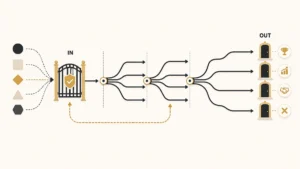
Cold outreach can warm a lead, but only if it actually lands and reads as relevant. A cold email that hits spam warms no one, and a generic blast trains the recipient to ignore you. Getting the technical and targeting fundamentals right first is what separates cold outreach that opens a door from cold outreach that burns one; the cold email setup gates are the precondition every reply-rate benchmark quietly assumes.
When Cold Outreach Still Wins
Cold outreach still wins when you need volume, speed, or access to buyers who will never find you on their own. A high multiplier proves warm leads are more efficient per lead, but efficiency is not the only thing a pipeline needs, and writing off cold entirely is its own mistake.
Three situations favour cold. New market entry, where nobody is searching for you yet and there is no warm demand to capture. Tight, high-value account lists, where ten named accounts matter more than a thousand inbound forms. And immediate pipeline needs, where inbound takes 3-6 months to compound and you need meetings this quarter. In those cases the right move is to run cold deliberately, accept the lower rate, and account for it honestly. The build-versus-outsource math behind that motion is laid out in the outsourced lead generation breakdown.
The trap is comparing cold and warm on conversion rate alone. Cold leads are cheaper and far more scalable on demand, so a 2% rate on a channel you can turn up tenfold next week is sometimes worth more than a 15% rate on a channel that takes two quarters to grow. The multiplier tells you the efficiency gap. It does not tell you the volume ceiling, and good pipeline planning needs both numbers.
Frequently Asked Questions
A good warm-lead conversion rate in B2B is 10-20% from lead to closed deal, with inbound close rates often cited around 14.6%. Hot leads who request a demo or trial convert higher, at 20-40%. If your warm leads convert below 10%, the problem is usually follow-up speed or weak qualification, not lead volume.
The 3-3-3 rule is a prospecting discipline: spend 3 seconds earning attention (the subject line or opening line), 3 minutes researching 3 useful facts about a prospect before reaching out, and follow up within 3 days of the first touch. It forces a targeted “sniper” approach over generic mass outreach, which matters most when you are trying to warm a cold contact.
The 30/30/50 rule is a structure for cold email effort: roughly 30% on personalization and the opening, 30% on a value proposition relevant to the prospect, and 50% on a clear call to action plus a disciplined follow-up sequence. The takeaway is that the follow-up, not the first send, carries most of the result.
The 80/20 rule in cold calling has two meanings. As the Pareto principle, it means about 80% of results come from 20% of prospects, so you prioritize the highest-fit accounts. As a conversation rule, it means the rep should listen 80% of the time and talk 20%, letting the prospect surface their own pain points. Both push toward fewer, better-targeted calls.
Divide your warm-lead conversion rate by your cold-lead conversion rate, using the same closed-won definition and time period for both. If warm leads close at 14% and cold leads close at 2%, your multiplier is 7x. Most B2B teams land between 5x and 10x; below 5x points to a warm-lead conversion problem, above 10x points to a weak cold motion.