Direct answer – what is Bluefish Agentic Campaigns?
Bluefish Agentic Campaigns is a June 18, 2026 product launch that turns AEO work into an AI-assisted campaign workflow. Bluefish says marketers can set AI performance targets, choose AI channels, review historical answer performance, and receive targeted actions for improving brand visibility across systems such as ChatGPT, Google AI Overviews, Claude, Perplexity, and Amazon Rufus.
Bluefish announced Agentic Campaigns on June 18, 2026, positioning the launch as a way for large marketing teams to run Answer Engine Optimization work with the same campaign discipline used in paid, search, and lifecycle programs.
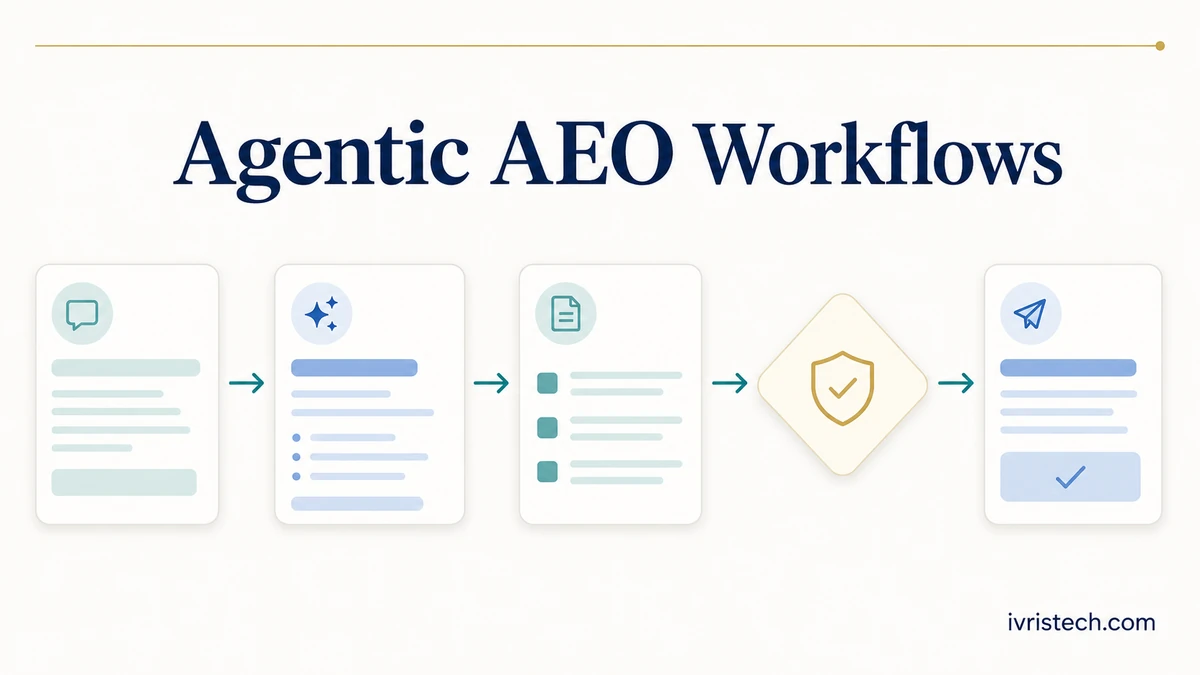
The company says users can set AI performance targets, choose AI channels, analyze historical AI performance, diagnose drivers, and receive targeted content and data tactics. The pitch is clear: AEO is moving from one-off visibility audits to repeatable campaign operations.
That matters because the SERP for “Bluefish Agentic Campaigns” is already crowded with the press release, Bluefish’s own site, LinkedIn, syndication, and an AI Overview. The ranking gap is not another launch recap. The gap is what B2B teams must prove before handing AEO workflows to agents.
Key Takeaways
- Bluefish launched Agentic Campaigns on June 18, 2026.
- The product brings campaign workflow logic to AEO and AI-search visibility work.
- Bluefish says the system supports channels such as ChatGPT, Google AI Overviews, Claude, Perplexity, and Amazon Rufus.
- The launch sits inside a wider shift from AI visibility reporting to AI-assisted action systems.
- B2B teams should test prompt ownership, approval controls, and measurable answer changes before scaling agentic AEO work.
What Bluefish Actually Launched
Bluefish describes itself as an enterprise marketing suite for the generative internet. The company sells visibility and control for how major brands appear across AI and discovery tools.
Agentic Campaigns adds a workflow layer to that positioning. Instead of only showing where a brand appears or disappears, Bluefish says the tool can identify gaps, recommend specific content or data actions, and track whether those actions improve brand representation in AI answers.
The launch is aimed at Fortune 500 teams, which matters. Large companies already have media planning, campaign operations, legal review, content governance, and analytics. Bluefish is trying to fit AEO into that operating rhythm instead of leaving it as a side project owned by SEO.
Why Agentic AEO Workflows Are Emerging
The category is moving because AI answers have made visibility harder to inspect and harder to control. Classic SEO teams can track ranks and clicks. AI-search teams need to track prompts, mentions, citations, answer language, source mix, and changes across multiple engines. Profound’s AI-search paid visibility metrics put sponsored placements into that same measurement model, so organic and paid answer presence can be tested side by side.
Conductor’s agentic AEO guide frames the same shift: agents can monitor, decide, and execute parts of the AEO process. That does not remove the marketer. It moves the marketer into setting boundaries, approving actions, and judging whether the work changed buyer-facing answers.
McKinsey has also argued that agentic AI may affect a large share of marketing activities, including campaign creation and execution. Bluefish is applying that idea to the part of marketing where many teams still have the least control: what AI systems say before a buyer reaches the site.
The Governance Catch
The danger is that “agentic campaign” sounds cleaner than the actual work. AEO actions can touch claims, product positioning, third-party sources, review strategy, documentation, comparison language, and PR. Each of those has different owners.
That is why Bluefish’s launch belongs beside the recent closed-loop GEO category. Jasper GEO Agent tries to move from visibility finding to content action. Adobe Brand Visibility connects prompt data with the Adobe content stack. Optimizely’s AEO platform joins answer visibility with on-site agent behavior. Bluefish adds a campaign framing to the same problem.
The shared risk is weak automation around high-stakes language. A prompt gap might be real, but the recommended fix can still be wrong for legal, regulatory, product, partner, or sales reasons. AEO agents need a permission model, not just a task list.
What B2B Teams Should Test First
The first Bluefish pilot should not ask for “better AI visibility.” It should use a fixed prompt set, a single product line, named competitors, and a short list of permitted actions. The goal is to prove that one workflow can move one answer surface without creating a governance mess. Ansira’s channel-specific AI search checklist shows why that scope matters: a partner network can multiply the sources that need correction before an answer improves.
- Prompt ownership: Decide whether SEO, brand, product marketing, PR, or revenue teams own each prompt cluster.
- Action limits: Separate changes the agent can recommend from changes it can publish. Claims, pricing, security, and regulated language need review.
- Source strategy: Track whether the answer depends on owned content, third-party reviews, public documentation, analyst pages, or media coverage.
- Measurement: Compare answer language, citation frequency, AI referrals, assisted conversions, and sales feedback before and after the campaign.
- Rollback path: Keep a change log so the team can reverse a page edit or outreach action if the answer gets worse.
The current SERP is a good fit for this angle because vendor and syndication pages already explain the launch. What they do not answer is how a marketing operations team should decide whether an agentic AEO campaign is safe, measurable, and worth scaling.
Frequently Asked Questions
Bluefish Agentic Campaigns is a product launched on June 18, 2026 that helps marketing teams run AEO and AI-search optimization as campaign workflows. It analyzes AI performance, finds visibility gaps, recommends actions, and tracks whether changes affect how brands appear in AI answers.
Bluefish says its platform helps brands optimize across AI and discovery systems including ChatGPT, Google AI Overviews, Claude, Perplexity, and Amazon Rufus. The exact channel mix depends on the campaign and customer setup.
Classic SEO often measures rankings, pages, links, and clicks. Agentic AEO measures prompts, answer language, citations, source mix, and brand representation across AI engines, then uses agents to recommend or coordinate actions that may change those answers.
Start with one product line, one prompt set, named owners, and a clear approval path. Measure answer changes, citation changes, AI referral sessions, assisted conversions, and sales feedback before expanding the agentic workflow into more channels or product categories.