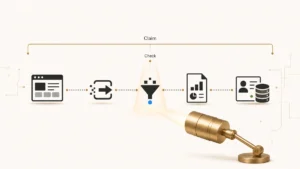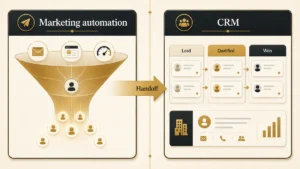

Direct answer – what are beehiiv Community and Copilot?
beehiiv Community lets publishers run branded discussion spaces connected to their newsletters, memberships, podcasts, and subscriber data. Copilot is an AI assistant that analyzes content, audience, subscriber, and performance context to recommend growth, campaign, and monetization actions. Together they extend beehiiv beyond email, but teams still need to verify access, moderation, migration, and outcome measurement before consolidating tools.
beehiiv launched its Summer Release on July 16, 2026, adding a native Community product and an AI assistant called Copilot to its newsletter platform.
Community gives publishers discussion channels and free or paid member spaces tied to the same audience used for newsletters, podcasts, websites, and subscriptions. Copilot reads publication context, subscriber behavior, and performance data to analyze results, draft outreach, suggest growth moves, and surface monetization opportunities.
For newsletter and B2B content teams, the useful question is not whether one dashboard is more convenient than five. It is whether consolidating community, publishing, AI assistance, and revenue workflows improves audience ownership without creating new limits in moderation, integrations, access, or measurement.
Key Takeaways
- beehiiv launched Community and Copilot on July 16 as part of its Summer Release 2026.
- Community brings branded discussion spaces and free or paid membership activity into beehiiv.
- Copilot can analyze newsletters and podcasts, draft outreach, and suggest audience-growth or revenue actions.
- The release also includes programmatic advertising, a redesigned visual editor, and updates across websites, podcasts, and digital products.
- Teams should verify plan access, moderation controls, integrations, exports, and attribution before replacing existing tools.
What beehiiv Launched in Summer Release 2026
The release is beehiiv’s clearest move from newsletter software toward a connected publishing operating system. TheWrap reported that the package includes Community, Copilot, programmatic ads, a redesigned editor, and new capabilities for podcasts, websites, and digital products.
Community is the central addition. Publishers can create branded discussion spaces instead of sending paying members to a separate Slack, Discord, or Facebook group. The spaces can connect to newsletters, podcasts, websites, and subscriptions, which gives the publisher one subscriber record across content and discussion.
Copilot is the decision layer. It can use content history, audience segments, subscriber activity, and performance data to explain what is working and suggest what to do next. The assistant can also draft campaign outreach and look for audience-growth or monetization opportunities.
The pitch depends on connection, not one feature. A visual editor reduces the gap between drafting and preview. Programmatic advertising extends monetization beyond direct sponsorships. Podcast and website updates give Community more than an email list to organize around.
How Community and Copilot Work Together
Community creates a new first-party behavior stream. A publisher can see which subscribers join a channel, discuss a topic, attend an event, or engage with a member space. Copilot can then interpret that activity beside newsletter opens, clicks, subscriptions, and podcast performance.
That connection is more useful than adding a chat box to an email platform. It can reveal which topics produce conversation, which members are ready for a paid offer, and where a publisher should invest editorial time. The result could be a tighter loop between content, audience research, and revenue.
We saw the analytics version of this idea when Mailchimp added a conversational analytics agent. The difference is that beehiiv is adding a new behavior surface at the same time as the assistant. That gives Copilot more context, but it also makes data definitions and permissions more important.
TechCrunch’s launch report says Copilot can analyze newsletter and podcast performance, draft outreach campaigns, and identify revenue opportunities. Those are broad jobs. The product will need to show which source data supported each recommendation and whether an action produced a measurable audience or revenue change.
What the One-Platform Pitch Does Not Prove
The consolidation case is easy to understand. One subscriber profile, one billing relationship, and fewer integrations can reduce manual work. It does not automatically prove that every included function is strong enough to replace a specialist tool. Futuri’s newsroom automation claims create the same buying test: fewer production steps matter only if review quality, correction rates, and total cost stay visible.
Community needs moderation roles, reporting, notification controls, member exports, search, channel permissions, and a clear response process for abuse. Copilot needs source visibility, permission boundaries, and a record of what it recommended. Programmatic ads need fill, quality, brand-safety, and revenue reporting that publishers can reconcile.
The same distinction appears in SpotsNow’s attempt to connect podcast discovery with ad inventory. Combining jobs shortens a workflow, but the ranking or recommendation still needs independent proof. beehiiv should be judged on whether the connected workflow produces better decisions, not simply fewer browser tabs.
Migration is the other hidden cost. A team may need to move subscriber history, paid-member status, community threads, podcast feeds, automations, forms, domains, analytics tags, and revenue records. Our earlier Mailchimp migration analysis found that list export is usually the easy part. Rebuilding integrations and preserving historical context create most of the risk.
beehiiv’s public release materials also do not fully answer every plan-level availability, moderation, or historical-data question. Teams should verify those details in their own account and contract before canceling another platform.
What Newsletter Teams Should Test Before Switching
Run a controlled publication test before treating the Summer Release as a stack-replacement decision.
- Map the subscriber record: Confirm how newsletter, community, podcast, event, and payment activity appear for one person.
- Test moderation: Create roles, private channels, reporting paths, and removal workflows before inviting a large audience.
- Challenge Copilot: Ask for a recommendation, inspect the supporting data, take one action, and measure the result against a holdout or prior baseline.
- Export everything: Verify subscriber, post, payment, community, and analytics exports before making the platform the only system of record.
- Measure audience value: Connect the pilot to a defined content-to-lead path, not only opens, messages, or member counts.
Our read: Community is the strategic release, and Copilot is the multiplier. If beehiiv can turn discussion signals into explainable editorial and revenue decisions, the combined product is more than feature bundling. If the data cannot be exported, audited, or tied to outcomes, consolidation only moves the complexity behind one login.
Frequently Asked Questions
beehiiv Community is a native discussion and membership product for publishers. It lets a publication create branded channels and free or paid member spaces connected to its newsletters, podcasts, websites, subscriptions, and subscriber data instead of running discussion on a separate platform.
Copilot is beehiiv’s AI assistant for publication operations. It can interpret content, audience, subscriber, and performance context, analyze newsletters and podcasts, draft outreach, and recommend growth or monetization actions. Teams should still inspect the source data and measure each recommendation.
It may replace a separate tool for publishers that need channels tied closely to newsletter and membership data. Teams with advanced moderation, enterprise identity, deep integrations, or a large historical community should compare those requirements with beehiiv’s available controls before migrating.
Verify plan access, member permissions, moderation, exports, historical-data migration, integrations, analytics definitions, AI source visibility, and revenue attribution. Run a limited pilot and compare audience growth, qualified leads, retention, and revenue with the current workflow before removing specialist tools.