Direct answer – what does GetWhys do for AI GTM content?
GetWhys checks AI-generated GTM content, messaging, positioning, and strategy against buyer intelligence from thousands of moderated B2B interviews. Its launch adds validation inside content workflows through a scratchpad, MCP, Slack, and Gong data. The promise is evidence-backed output instead of synthetic personas, but public pricing and independent accuracy or revenue benchmarks are not yet available.
GetWhys launched its buyer-validation platform on July 15, 2026, positioning real buyer evidence as a control layer for AI-generated go-to-market content.
The platform checks messaging, positioning, campaigns, proposals, and sales content against a proprietary database of thousands of B2B buyer interviews. The release adds a Content Scratchpad, Model Context Protocol integration, Slack access, a Gong call-recorder connection, unlimited research requests, and citation-backed outputs.
For product marketing and GTM teams, the important part is not another writing assistant. It is the attempt to make buyer evidence a gate inside the workflow where AI content is created. The hidden catch is whether that evidence is current, representative, and strong enough to improve decisions at scale.
Key Takeaways
- GetWhys launched the platform on July 15 for product marketing and GTM teams.
- The system validates content against thousands of moderated B2B buyer interviews.
- New access points include Content Scratchpad, MCP, Slack, and a Gong integration.
- GetWhys says every recommendation is linked to buyer evidence and research requests have no caps or overage fees.
- The company does not publish standard pricing or independent accuracy, conversion, or revenue benchmarks.
What the GetWhys Platform Actually Adds
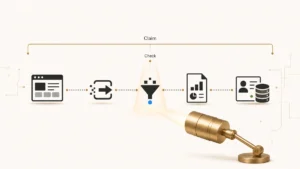
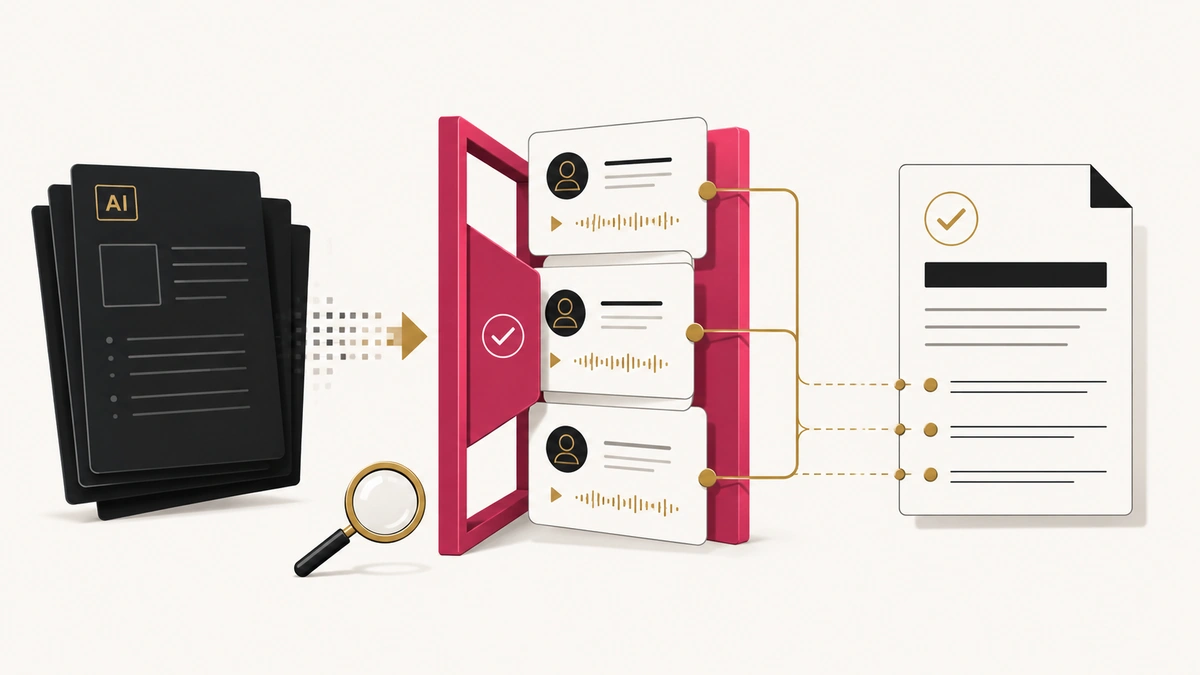
GetWhys is designed to sit between AI generation and market release. A marketer can draft a campaign brief, homepage, positioning statement, or sales asset, then compare the language and claims with evidence from buyer interviews before the content ships.
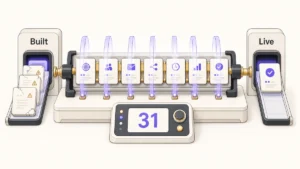
The new Content Scratchpad provides a place to draft and validate work directly. MCP extends the validation layer to compatible AI tools and agents. Slack brings buyer questions and cited answers into team conversations. The Gong connection adds customer and prospect language from recorded sales calls to the wider research base.
A usage dashboard shows where buyer intelligence is applied. It should connect the evidence used, the edit made, the asset shipped, and the downstream result.
The launch names Intel, Verizon, and CDW as users. That establishes enterprise use, not proof that a validated asset outperforms an unvalidated one.
How Buyer Evidence Differs From Synthetic Research
GetWhys says its proprietary dataset is built from thousands of interviews with niche B2B buyers and users that are sourced, screened, and moderated by people. It explicitly contrasts that data with scraped reviews, survey panels, and synthetic personas.
That difference matters because synthetic personas generate plausible language from a model’s prior knowledge and supplied context. They do not become new evidence simply because the output sounds specific. A moderated interview can capture objections, decision criteria, tradeoffs, and buyer language tied to an identifiable research source.
When we covered Cashew’s finding that 65% of marketers feel differentiation anxiety, the practical answer was better inputs, not more output. GetWhys productizes that idea by placing research evidence beside the draft rather than delivering a report weeks before or after the content decision.
The citation-backed output is the key control. A product marketer should inspect which interviews support a recommendation, how recent they are, which segment they represent, and whether contradictory evidence exists. A citation improves traceability. It does not prove that the sample represents the market.
The Catch: Evidence Quality Still Needs Proof
GetWhys makes several strong product claims, but the public launch does not disclose an independent accuracy test, conversion lift, win-rate change, or revenue benchmark for content validated by the platform. It also does not publish standard pricing. The website directs buyers to request pricing.
The company says new interview requests can be delivered in 10 business days. That is useful when the existing database has a gap, but buyers still need to ask how participants are recruited, how segments are defined, how incentives are handled, and how evidence ages.
The need for verification is growing because 73% of B2B buyers now use AI during purchase research. Faster content reaches a faster research loop. If the underlying evidence is narrow or stale, an automated validation layer can repeat the wrong lesson more consistently.
Our earlier coverage of the B2B buyer trust gap reached the same operating conclusion: more information does not create more confidence. GetWhys will be valuable if it helps teams show the exact buyer evidence behind a claim and retire weak claims before buyers see them.
GetWhys raised $5.2 million in April 2026. The company reported more than 10-fold revenue growth and more than 20-fold customer growth over the prior year. Those figures show momentum, but they come from the company and should be treated separately from product-effectiveness evidence.
What B2B Teams Should Verify Before Buying
Test GetWhys on one high-stakes message where the team already has a baseline and access to buyers.
- Inspect the evidence: Review the number, recency, role, company type, and segment fit of interviews supporting each recommendation.
- Compare sources: Separate proprietary interviews, internal calls, analyst material, and internet research so the team knows which source changed the answer.
- Run a blind review: Ask marketers or sellers to score validated and unvalidated versions without knowing which is which.
- Measure a business result: Track reply quality, message comprehension, qualified conversion, sales adoption, or win-loss feedback rather than output volume.
- Set the operating gate: Decide where buyer validation belongs inside the wider GTM decision system and which claims still require legal, product, or customer approval.
Our read: GetWhys is making a useful distinction between generating a message and earning confidence in it. The platform’s strongest feature is not the AI layer. It is the source trail back to real buyers. The buying decision should turn on whether that trail is representative, inspectable, and connected to better market outcomes.
Frequently Asked Questions
GetWhys is a buyer-intelligence platform for B2B product marketing and GTM teams. It uses proprietary buyer interviews, company data, and selected external research to validate messaging, positioning, campaigns, proposals, and sales content before those assets reach the market.
The company says its core dataset contains thousands of screened and moderated interviews with B2B buyers and users. Teams can also connect organizational material and sales-call data, while new research requests can add interviews when the existing evidence does not cover a required segment.
Yes. The July 2026 release includes Slack access, a call-recorder connection beginning with Gong, and MCP integration for compatible AI tools and agents. Teams should verify permissions, data retention, source visibility, and supported actions for their own setup.
GetWhys does not publish standard pricing on its website as of July 2026. Prospective customers are directed to request pricing or book a demo. Buyers should ask about seats, integrations, research-request terms, data sources, onboarding, usage limits, and contract-level data controls.