
Futuri launched Content Automation on July 28, 2026, saying stations in its early-access program cut production time by 80%, increased digital content output by 300%, and reduced annual news and digital-content production costs by more than 15%.
The platform turns press conferences, newscasts, press releases, raw footage, interviews, and live streams into draft articles, video clips, captions, social posts, podcasts, teases, graphics, and metadata. Futuri says it connects with ENPS, iNews, WordPress VIP, and other newsroom systems.
Our read: Futuri has packaged a real production bottleneck into a coherent workflow, but the headline percentages are vendor-reported early-access results, not public newsroom benchmarks. The launch materials do not disclose the sample size, measurement period, average result, correction rate, or human review burden behind them.
Direct answer – what did Futuri Content Automation launch?
Futuri Content Automation is an AI production platform that converts newsroom source material into multi-platform articles, clips, social posts, podcasts, graphics, and metadata. Futuri says early-access stations reduced production time by 80%, increased digital output by 300%, and saved more than 15% annually. Those figures are useful pilot claims, but the public launch does not provide enough methodology to treat them as industry benchmarks.
Key Takeaways
- Futuri announced Content Automation on July 28, 2026.
- Early-access stations reportedly cut production time by 80%, raised digital output by 300%, and saved more than 15% annually.
- Futuri says a 45-minute press conference can become three clips and a web article in six minutes.
- The platform supports ENPS, iNews, WordPress VIP, and role-based review and approval.
- Futuri has not publicly disclosed the pilot sample, average result, correction rate, review time, or pricing.
What Futuri Content Automation Actually Automates
Content Automation targets the repackaging work that follows reporting. A newsroom can upload or connect source material, then generate draft news packages, short-form video, web articles, social copy, podcasts, captions, branded overlays, teases, and SEO metadata. The platform also reformats video into 16:9, 9:16, and 1:1 versions.
On its Content Automation product page, Futuri says a 45-minute press conference can produce three clips and an article in six minutes, while a press release can become an article with metadata and social teasers in about two minutes. A 30-minute newscast can also be split into platform-specific clips and a chaptered podcast.
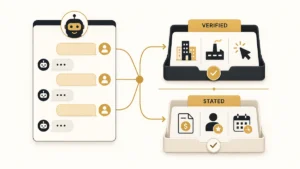
The integration layer is important. Futuri says the product plugs into newsroom editorial and publishing systems and includes role-based review and approval. That keeps a human gate in the workflow, although the company has not published data on how often editors revise, reject, or delay generated assets.
The 80%, 300% and 15% Claims Need a Baseline
An 80% production-time reduction means little without the full clock. Buyers need to know when timing started, when it stopped, which story types were included, and whether editorial review, corrections, approvals, publishing, and rollback work counted. A fast first draft can still create a slow final publication.
The output language also needs clarification. Futuri’s announcement says the platform can triple digital output, while its early-access results report a 300% increase. Tripling a baseline is a 200% increase; a 300% increase means four times the baseline. Newsrooms should ask which calculation the reported result uses and how many generated assets were actually approved and published.
The 15%+ cost-saving claim needs the same treatment. A useful comparison includes software fees, implementation, training, integration work, human review, corrections, and any new distribution costs. Futuri’s public product page uses a demo-request flow rather than displaying a list price, so buyers cannot reproduce the economics from public information alone.
In our earlier reporting on Mediaocean NIVO AI’s 90% setup claim, the same rule applied: measure the whole governed workflow, not the fastest automated step. Futuri’s percentages become decision-grade only when a newsroom can reproduce them against its own baseline.
More Output Is Not the Same as More Newsroom Value
Content volume is the easiest metric for an automation platform to raise. Editorial value is harder. A newsroom still has to measure whether generated clips select the right moments, whether articles preserve context, whether captions are accurate, and whether each asset reaches a useful audience.
Role-based approval is a sensible control, but it can move work rather than remove it. If editors spend the saved production time fixing framing, facts, tone, branding, or metadata, the output count may rise while total labor falls much less than the headline suggests.
This is also the operating test behind Gradial’s system-of-work bet: automation is valuable when it coordinates creation, governance, approval, and publishing as one measurable path. A newsroom pilot should separate generated assets from approved assets, published assets, and assets that produce audience or revenue value.
What Newsrooms Should Test Before Rollout
A controlled pilot should compare representative stories with the current process. Use the same source material, editorial standards, staff roles, and publishing destinations.
- Baseline the full cycle: Measure elapsed and hands-on time from source arrival to approved publication.
- Track usable output: Count generated, approved, published, corrected, and rejected assets separately.
- Measure quality: Record factual, contextual, caption, branding, metadata, and formatting defects.
- Test outcomes: Compare watch time, completion, referrals, subscriptions, revenue, or another channel-specific result.
- Model total cost: Include licensing, setup, integrations, training, review, corrections, and staff time.
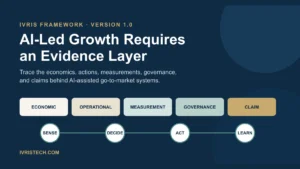
The practical approach matches baseline-led business process automation: automate a defined step, measure every handoff, and expand only when quality holds. Futuri’s launch makes a credible case for testing newsroom repurposing. It does not yet make the 80%, 300%, and 15% figures universal planning assumptions.
Frequently Asked Questions
Futuri Content Automation is an AI production platform for broadcasters and digital publishers. It can turn press conferences, newscasts, press releases, field footage, and interviews into draft articles, short video clips, captions, social posts, podcasts, teases, graphics, and metadata, with editor review before publication.
No independent benchmark is disclosed in the launch materials. Futuri says early-access stations reduced production time by 80%, but it does not publicly identify the sample size, test period, baseline workflow, average result, correction rate, or human review time. Newsrooms should reproduce the figure in a controlled pilot.
Futuri reports a 300% increase in digital content output, while the announcement also says the product can triple output. Those descriptions are not mathematically identical. Buyers should ask Futuri to define the starting asset count, the exact calculation, and how many generated items were approved and published.
Measure total elapsed time from source arrival to approved publication, plus hands-on review time, corrections, rejected outputs, usable assets, channel performance, and fully loaded cost. Compare representative stories with the current process. Faster production and higher volume should not reduce accuracy, editorial judgment, or audience value.