The global B2B ecommerce market hit $32.11 trillion in 2025 and is projected to reach $36 trillion in 2026 at a 14.5% CAGR. Behind that number is a quieter statistic that should worry every buying committee: 40% of B2B organizations are actively considering a replatform. Most of those replatforms are happening because the first platform decision was wrong.
For real platform patterns before you shortlist vendors, compare these criteria with B2B ecommerce examples by marketplace, distributor, and vertical model.
The B2B Ecommerce Association puts it bluntly. Selecting a platform “isn’t just an IT project, it’s a decision that touches revenue, operations, customer experience, and internal adoption.” Get it wrong and the system becomes shelfware, bypassed by sales reps and customers alike. Get it right and digital becomes the easiest way to buy.
The frustrating part is that the failure pattern is predictable. Demos look clean. RFP scores look balanced. Then integration breaks, the sales team won’t use the new portal, and the executive sponsor starts asking why this was a six-figure decision.
This guide gives you the framework to avoid that. Eight selection criteria with priority weights, a six-step selection process, a decision tree matching buyer profiles to platforms, and the cost categories most TCO calculations miss.
Key Takeaways
- Most B2B platform decisions fail at integration, not features. Audit your ERP, CRM, and CPQ connection requirements before evaluating any vendor.
- Weight your selection criteria. ERP integration depth and native B2B functionality should each carry roughly 20% of the score; AI readiness sits around 7%.
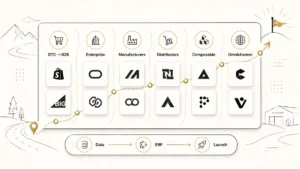
- Match the platform to your buyer profile, not the other way around. Shopify Plus and BigCommerce serve simple wholesale models; Commercetools and OroCommerce serve complex enterprise B2B.
- True three-year TCO is typically 2.5x to 4x the annual license fee. Implementation, integration, and ongoing operations are where most underestimates happen.
- Demo on your data, not the vendor’s. The single biggest predictor of post-launch success is whether the proof of concept used real catalogs, real customer hierarchies, and real ERP feeds.
What Makes a B2B Ecommerce Platform Different from B2C?
A B2B ecommerce platform is software designed for businesses selling to other businesses online, with native support for account hierarchies, contract pricing, bulk ordering, RFQ workflows, approval routing, and deep ERP integration. Unlike B2C platforms built around single-buyer transactions, B2B platforms manage organizations as customers, with multiple users, granular permissions, and pricing that varies by contract.
The complexity gap is real. Commercetools research shows 64% of B2B buyers expect suppliers to provide tailored digital products. That means customer-specific catalogs, pricing tiers, and entitlements rendered correctly the moment they log in. A B2C platform can fake this with apps and workarounds. A native B2B platform handles it as table stakes.
Three structural differences shape every other decision in this guide:
Buyer organizations, not buyer individuals. A single customer might have 50 employees with different roles, approval limits, and product entitlements. The platform needs hierarchical accounts, role-based permissions, and approval workflows. This is the feature set that makes our B2B ecommerce best practices guide read so differently from a typical Shopify how-to.
Pricing as a system, not a tag. Contract pricing, volume tiers, customer-specific catalogs, and negotiated agreements all need to render in real time. B2B pricing strategy in production means the platform pulls from contracts, applies the right rules per customer, and stays in sync with the ERP.
Integration as the product. ERP, CRM, CPQ, OMS, PIM. The platform’s job is orchestrating these systems, not replacing them. The single biggest reason for B2B ecommerce delays, per the B2B Ecommerce Association, is integration surprises. Plan for it early, budget for it upfront.
The 8 Selection Criteria That Actually Matter
Most “criteria” lists treat every factor as equally important. They aren’t. After working with several mid-market B2B clients on platform decisions, the criteria that predict post-launch success cluster around four high-weight items and four mid-to-low-weight ones. Here’s the scorecard we run with prospects.
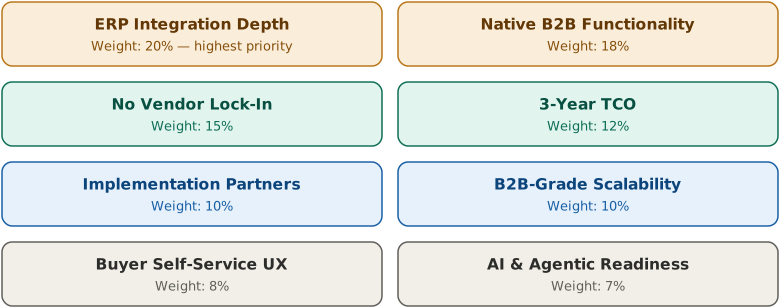
1. ERP and Backend Integration Depth (Weight: 20%)
This is where most decisions silently fail. The platform needs real-time sync with your ERP for inventory, pricing, customer data, orders, and invoices. If your ERP is SAP or Oracle, ask for named reference customers running that exact integration. “We support REST APIs” is not the same answer as “we have a certified SAP connector with 47 production deployments.”
2. Native B2B Functionality (Weight: 18%)
Custom catalogs, account hierarchies, contract pricing, bulk reordering, RFQ workflows, multi-step approval routing, punchout/OCI integration, and shared cart functionality. Native means built-in, not added via third-party app. Apps fail in different ways than core features. They fail at the worst times, like during a buying-team review.
3. Customization Without Vendor Lock-In (Weight: 15%)
How easy is it to extend the platform’s behavior without becoming dependent on the vendor’s professional services? API-first architectures (commercetools, Sitecore OrderCloud) score highest here. Closed SaaS platforms with proprietary scripting languages (Shopify Liquid, Salesforce Apex) score lowest. That same openness decides your search ceiling, since the platforms that let you rewrite anything also let you control URLs, canonicals, and rendering, which is why the most SEO-friendly platforms tend to be the most open ones.
4. Total Cost of Ownership Over 3 Years (Weight: 12%)
License fees are the visible cost. Implementation, integration, ongoing development, agency retainers, and operational headcount usually add up to 2-3x the license over three years. Section below breaks this down. Once you have scored your options against these criteria, the platform shortlist that maps to each profile in this framework shows which named vendors fit each buyer profile.
5. Implementation Partner Ecosystem (Weight: 10%)
The B2B Ecommerce Association tells the story of a national supplier who picked a partner over a platform. They chose the one with deeper B2B distribution experience, and shaved three months off the timeline. Implementation partner quality often matters more than the marginal feature differences between top platforms.
6. Scalability Beyond Traffic Peaks (Weight: 10%)
True B2B scalability isn’t Black Friday throughput. It’s handling 50,000 SKUs with attribute variants, 200 contract pricing rules, real-time inventory across 14 warehouses, and 12,000 logged-in users running approval workflows simultaneously without performance degradation.
7. Buyer Self-Service and UX (Weight: 8%)
Per Gartner, 75% of B2B buyers prefer a rep-free experience. The platform needs intuitive search, saved carts, reorder workflows, order tracking, and self-service account management. Sales reps should be able to focus on the deals where they actually add value, not on serving as glorified order-takers.
8. AI and Agentic Commerce Readiness (Weight: 7%)
Forrester predicts five major US or European brands will unify agentic commerce experiences in 2026, with AI handling everything from quote generation to order fulfillment with humans overseeing strategy. Look for platforms with first-class AI search, generative product description capabilities, and emerging support for agent-driven purchasing. Shopware’s 100% MCP coverage claim turns that emerging-support criterion into a testable question about which commerce actions an agent can call and how the merchant controls them.
How to Choose a B2B Ecommerce Platform: A 6-Step Process
The criteria above tell you what to look for. The process below tells you how to actually run the selection. Skip steps 1 and 2 and you’ll end up evaluating platforms against requirements you haven’t defined.
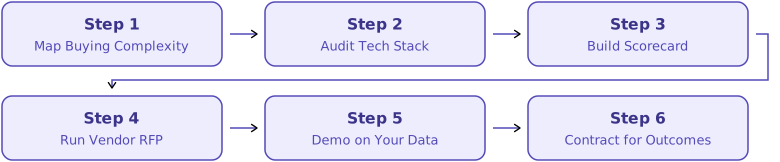
Step 1: Map Your Buying Complexity
Document the messy parts. How many SKUs? How many account types? How deep do account hierarchies go? Do you have contract pricing, volume pricing, both? RFQ workflows? Approval routing? Multi-warehouse inventory? Multi-currency? Multi-language? Punchout integration with customer procurement systems? The platform shortlist comes from this list, not from analyst reports.
Step 2: Audit Your Existing Tech Stack
List every system the platform will need to integrate with: ERP, CRM, CPQ, PIM, OMS, DAM, WMS, payment processors, shipping carriers, tax engines, fraud tools. For each, note the version, deployment model (cloud vs on-prem), and whether the vendor offers a certified connector or you’ll be building custom integrations. This audit prevents the most expensive mistake: discovering integration limitations after signing the contract.
Step 3: Build Your Weighted Scorecard
Use the 8 criteria above as a starting point. Adjust the weights to reflect your business. Heavy ERP dependency? Push criterion 1 to 25%. Limited engineering team? Push criterion 5 (partner ecosystem) higher. The scorecard becomes your evaluation rubric for steps 4 through 6.
Step 4: Run an RFP With 4-5 Shortlisted Vendors
Five is the sweet spot. Fewer than four limits comparison; more than six dilutes attention. Use the scorecard from step 3 as your evaluation framework. RFPs tend to be 80% identical across vendors. But B2B success lies in the 20% specific to your model. Your RFP should heavily emphasize that 20%.
Step 5: Demo on Your Data, Not Theirs
Vendor demos always show clean data, happy paths, and flawless workflows. That’s not your reality. Insist on a proof of concept using a sample of your actual catalog, your actual customer hierarchy, and a test ERP integration. Pay for the POC if needed. It’s far cheaper than a failed implementation. The 90% of vendors who balk at this should drop off your shortlist.
Step 6: Contract for Outcomes, Not Features
Negotiate SLAs around what matters: integration uptime, page load performance under your peak load, support response times, and roadmap commitments for the features you’ll need in years 2-3. Get implementation timelines in writing with milestone-based payments. The contract is your insurance policy for everything the demo didn’t reveal.
Decision Tree: Match Your Profile to a Platform
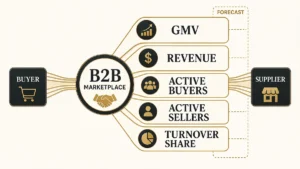
Most “best B2B platform” lists don’t help because they don’t account for fit. A 50-person wholesale distributor and a 5,000-employee manufacturer have nothing in common in terms of platform requirements, yet both keep ending up on the same listicle. Here’s a sharper way to think about it. And both of those profiles assume you sell your own catalog through your own store; if your model is operating a marketplace where other companies sell, you need dedicated B2B marketplace software instead, which is a separate category from the single-store platforms here.
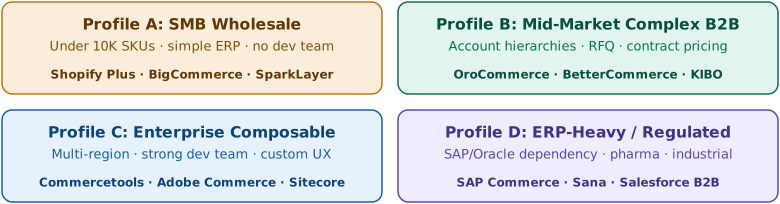
Profile A: SMB or Mid-Market Wholesale
Catalog under 10,000 SKUs, simple account model, basic ERP (or QuickBooks/NetSuite), small or no in-house dev team. Strongest fits: Shopify Plus B2B, BigCommerce B2B Edition, or SparkLayer (which layers wholesale onto an existing Shopify D2C store at $49/month, as of Q2 2026). These platforms ship fast, integrate with mainstream ERPs out-of-the-box, and don’t require an engineering team to operate. That shortcut works only if the builder can separate configuration from custom development, so use a Shopify developer vetting checklist before assuming a fast platform also means a low-risk build. The quarter adds evidence of uptake, not a shortcut around this profile test: Shopify’s Q2 2026 B2B growth reached 76%, while the absolute B2B GMV and merchant economics remained undisclosed.
If catalog normalization is already the bottleneck, the new agentic catalog exports model is worth watching before locking the platform roadmap.
Profile B: Mid-Market with Complex B2B Requirements
Multi-tier account hierarchies, customer-specific catalogs, RFQ workflows, multiple sales channels, growing internationally. Strongest fits: OroCommerce, BetterCommerce, or KIBO Commerce. These platforms were designed for B2B from the ground up — account hierarchies, contract pricing, and approval workflows are core, not bolted on. OroCommerce in particular bundles CRM, CPQ, and pre-built ERP connectors under a single license.
Profile C: Enterprise with Strong Engineering Resources
Multi-region, multi-channel, complex business rules, internal dev team capable of building custom storefronts and integrations. Strongest fits: Commercetools, Adobe Commerce, or Sitecore OrderCloud. Composable and headless architectures give your team full control — at the cost of needing engineers to operate them. Commercetools earned 16 gold medals in the 2025 Paradigm B2B Combine Enterprise edition, validating its position for engineering-heavy enterprises.
Profile D: ERP-Heavy, Regulated Industries
Manufacturing, pharma, industrial distribution, with deep SAP, Oracle, or Microsoft Dynamics dependencies. Strongest fits: SAP Commerce Cloud, Sana Commerce, or Salesforce B2B Commerce. These platforms either run inside the ERP ecosystem (Sana sits on top of SAP and Microsoft Dynamics) or share data models with adjacent CRM systems (Salesforce). Integration risk drops dramatically when the platform and ERP share a vendor or a deeply certified connector.
PRO TIP
If you straddle two profiles, optimize for the one where the consequences of a wrong choice are worse. Underspending on a platform you’ll outgrow in 18 months is more painful than overspending on one you’ll grow into. Replatforming costs typically run $250K-$2M for mid-market.
True TCO: What Most Buyers Underestimate
Vendor pricing pages tell you the visible cost. The invisible costs are usually 2-3x larger. Here’s the realistic three-year TCO breakdown for a mid-market B2B implementation.
| Cost Category | Typical Range (3 Years) | What Drives the Number |
|---|---|---|
| License or subscription | $60K-$500K | SaaS tier, transaction volume, user seats |
| Initial implementation | $80K-$600K | Catalog complexity, theme build, configuration depth |
| System integration | $50K-$400K | ERP/CRM/CPQ connectors, custom middleware, data migration |
| Ongoing operations | $120K-$800K | Internal devs, agency retainers, content/catalog management |
| 3-Year Total | $310K-$2.3M | Roughly 2.5-4x the annual license |
The most-missed line item is ongoing operations. Most teams budget for build, then discover that B2B ecommerce platforms need continuous catalog work, integration maintenance, content updates, and sales-team enablement. Budget for at least one full-time digital commerce manager and a fractional development resource (in-house or agency) from day one.
For SaaS comparison, Shopify’s published TCO research claims their five-year TCO runs roughly 35% lower than Salesforce Commerce Cloud on average. Your mileage will vary based on customization needs, but the gap is real for SMB-to-mid-market profiles.
IMPORTANT
Watch for “platform pricing” that excludes payment processing, transaction fees, premium app subscriptions, and per-user seat charges. The headline subscription number can be 30-50% of true platform cost on lower tiers.
5 Costly Selection Mistakes to Avoid
The mistakes below come from post-mortems on B2B platform implementations that struggled or failed. Each one is preventable with the right process.
1. Buying based on demo polish instead of your data. Vendor demos are sales theater. They’re built on clean data with no edge cases. Your data has edge cases everywhere — products with 47 attributes, customers with negotiated agreements that contradict the standard pricing model, ERP records with 20-year-old field conventions. The platform that survives YOUR data is the one to buy.
2. Skipping the integration RFI. The single biggest cause of B2B ecommerce delays is integration surprises. Before the RFP goes out, send a separate RFI to your top 8-10 vendors asking specifically about ERP connector certification, data sync mechanics, error-handling behavior, and named reference customers running your exact ERP version. The answers will reshape your shortlist.
3. Ignoring internal adoption. If your sales reps don’t trust the new portal, they’ll route customers around it. Involve sales, customer service, and operations stakeholders during evaluation, not after launch. Run the demo for them. Get their buy-in on the workflows. Internal adoption is not a launch task — it’s an ongoing discipline.
4. Overweighting one stakeholder’s pet feature. Every selection process develops a single feature that becomes the deal-breaker for someone senior. Sometimes it’s justified. Often it isn’t. Run the scorecard exercise (step 3 above) with multiple stakeholders independently, then compare. The features that matter to everyone will rise to the top.
5. Choosing a platform without vetting the implementation partner. A great platform with a weak partner produces worse outcomes than a mediocre platform with an expert partner. Get partner references for projects that match your size and complexity. Ask specifically about integration challenges and how they were resolved.
Frequently Asked Questions
The best platforms depend on company size and complexity. For SMB and mid-market wholesale: Shopify Plus B2B, BigCommerce B2B Edition. For mid-market with complex B2B requirements: OroCommerce, BetterCommerce, KIBO Commerce. For enterprise with engineering teams: Commercetools, Adobe Commerce, Sitecore OrderCloud. For ERP-heavy industries: SAP Commerce Cloud, Sana Commerce, Salesforce B2B Commerce.
The four primary ecommerce models are B2C (business to consumer), B2B (business to business), C2C (consumer to consumer, like eBay), and C2B (consumer to business, like freelance marketplaces). B2B is roughly six times the size of B2C globally and includes manufacturers, distributors, wholesalers, and B2B marketplaces, each with different platform needs.
Three-year TCO for mid-market B2B platforms typically runs $310K to $2.3M, including license, implementation, integration, and ongoing operations. Annual license fees alone range from $20K (lower-tier SaaS) to $300K+ (enterprise composable platforms). Plan for total cost to be 2.5-4x the annual license fee over three years.
SaaS platforms like Shopify Plus or BigCommerce typically launch in 3-6 months for a standard B2B configuration. Mid-market B2B-native platforms (OroCommerce, BetterCommerce) take 4-9 months. Composable enterprise platforms (Commercetools, Adobe Commerce) take 9-18 months depending on integration scope and customization. Most overruns come from underestimating ERP integration complexity.
Composable suits enterprises with strong engineering teams, complex multi-region requirements, or unique business processes that demand custom workflows. Monolithic SaaS platforms (Shopify Plus, BigCommerce) suit businesses that prioritize speed to market, predictable costs, and minimal engineering overhead. The wrong choice is composable for a team without engineers — that’s how you end up paying for flexibility you can’t use.
The platform decision feels intimidating because the cost of getting it wrong is high. But the framework above turns it into a structured process: criteria you can score, profiles you can match, and a TCO model that includes the costs vendors don’t lead with. Start with step 1 — map your buying complexity — and work through. The platform you should pick will reveal itself before you ever sit through your first demo.
If your selection is tied to a broader market entry or expansion, layer this work on top of your B2B go-to-market strategy. The platform serves the strategy, not the reverse.