
Google says its Search Console generative-AI reporting and website control finished rolling out worldwide on August 31, 2026. The company added the global-status note to its website-owner announcement, changing a launch that began in June with only a subset of sites.
The rollout does not make the underlying measurement complete. Google’s dedicated Search report remains centered on impressions, while parts of its Help documentation still carry older staged-rollout wording. One Discover help page now says the insights are worldwide and, lower on the same page, still says not all properties have access.
For B2B search teams, that distinction matters more than the launch headline. Our earlier AI search visibility measurement analysis showed 542,615 impressions producing seven clicks across two pages. A globally available impression report is useful, but it is still a visibility diagnostic rather than an outcome dashboard.
Direct answer — What changed in Google Search Console on August 31, 2026?
Google updated its rollout status to say Search Console’s generative-AI reporting and Search generative AI control had reached all websites worldwide. The reports separate impressions from AI Overviews, AI Mode and generative-AI Discover features, while the control lets owners include or exclude their content from those experiences. Global rollout does not guarantee a populated report: Google says properties may still lack one when they have not generated enough qualifying impressions.
Key Takeaways
- Google’s August 31 update says its generative-AI Search Console features have rolled out to all websites worldwide.
- The Search report measures impressions for AI Overviews and AI Mode by page, country, date and device; Google does not provide click data in that dedicated view.
- The Search generative AI control defaults to inclusion and can exclude a site’s links and content from supported AI Search features.
- The control does not govern AI training, and Google’s Help pages still contain conflicting staged-rollout language that site owners should not mistake for the current global-status announcement.
Google’s August 31 Update Ends the Limited Rollout
Google launched the dedicated generative AI performance reports on June 3 for a subset of websites. The August 31 update to Google’s broader website-owner announcement now says the features have rolled out to all websites worldwide.
The documentation has not caught up cleanly. The Discover report page carries the worldwide note but also retains an older “not all properties have access” explanation. The Search report help page and control documentation still open with subset-rollout language.
Our read: the date-stamped August 31 update is the clearest statement of current rollout status. But “rolled out worldwide” should not be rewritten as “every property will show data.” Google’s own troubleshooting guidance says a property may not show the report if it has not received enough impressions from the relevant generative-AI features.
The Reports Are Global, but They Are Still Impression-Only
The Search report covers AI Overviews and AI Mode. Google lists four dimensions: pages, countries, dates and devices. The chart reports total impressions, and Search Labs experiments are excluded. Google also says this generative-AI data remains included in the overall Web performance report, with the dedicated report acting as a separate visibility view.
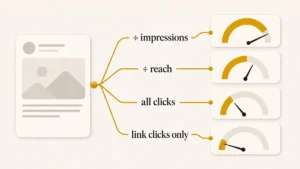
The dedicated report has no click metric, so teams cannot calculate an AI-specific click-through rate from it. Google also does not list a query dimension. B2B teams get a stronger answer to “where are we appearing?” but not “what outcome did those appearances produce?”
The AI Search Control Is a Distribution Decision
Under Settings > Search generative AI, Google gives property owners three states: include the site’s links and content, exclude them, or inherit the setting from a parent property. Inclusion is the default.
Excluding a site prevents its content from appearing as links or helping ground responses in AI Overviews, AI Mode and supported generative-AI Discover features. Google says excluded sites will not receive traffic or impressions from those features. The setting is not used as a ranking or inclusion signal for other parts of Search.
The hidden catch is scope. This is not an AI-training opt-out. Google directs publishers to Google-Extended for model-training controls, and says the setting does not override separate choices for Merchant Center or Google Ads. Changes generally take a few days, with caching potentially extending the transition.
What B2B Search Teams Should Do Now
- Capture a baseline before changing the control. Export the generative-AI report by page, country, date and device so any later loss of visibility has a before-and-after reference.
- Keep AI impressions separate from outcomes. Do not turn the new report into an AI CTR dashboard; the dedicated view does not provide the click side of that calculation.
- Avoid double-counting. Google says the same generative-AI data is included in the overall Web performance report, so a separate AI-impressions line should be treated as a subset, not added on top of total Search impressions.
- Use exclusion only for a defined distribution reason. If the concern is model training rather than Search appearance and grounding, this is the wrong control.
- Watch the documentation. Google’s current Help pages are internally inconsistent on rollout wording. That is a reason to preserve screenshots and dated exports when reporting the change internally.
The August 31 milestone is global availability, not end-to-end AI attribution. B2B teams now have a first-party visibility view and a distribution control, while the remaining outcome gaps stay explicit.
Frequently Asked Questions
Google’s August 31, 2026 rollout note says the features reached all websites worldwide. That describes availability, not guaranteed data. Google’s troubleshooting documentation says a property may still lack a visible report when it has not generated enough impressions in the supported generative-AI features.
The Search report measures impressions from AI Overviews and AI Mode. It can group data by page, country, date and device. Google does not provide click data in this dedicated report, and Search Labs experiments are excluded, so it should be treated as a visibility report rather than a complete traffic report.
Yes. Google’s Search generative AI control can exclude a site’s links and content from supported generative-AI Search features. Google says that choice is not used as a ranking or inclusion signal for other parts of Search. Separate controls still govern products such as Merchant Center and Google Ads.
No. Google explicitly separates Search appearance from AI training. The Search Console control manages whether content can appear as links or help ground responses in supported generative-AI Search features. Google says publishers that want to limit model training should use Google-Extended instead.