Direct answer – what is Profound FactCheck?
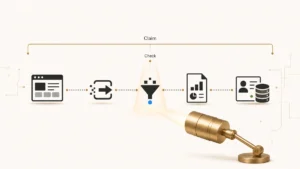
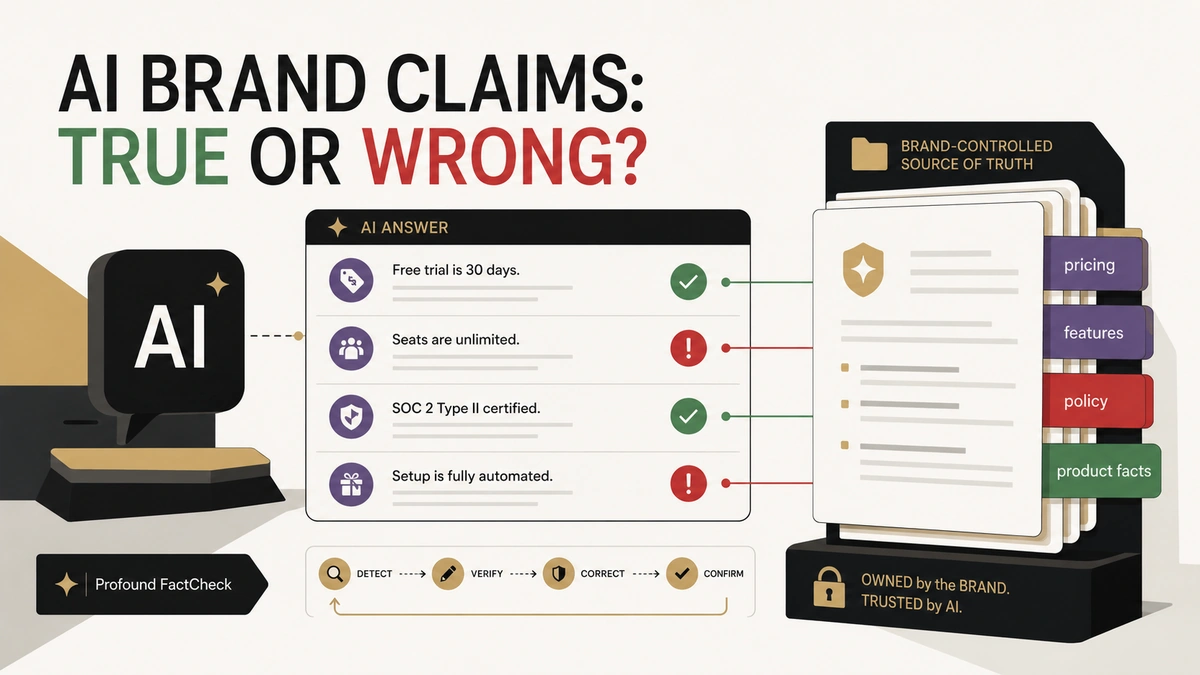
Profound FactCheck is an AI-search accuracy product that compares factual claims about a brand with a customer-maintained Knowledge Base. It shows which claims are accurate, which are wrong, and which cited pages may be feeding the error. The useful B2B workflow is not only detection. It is tracing a wrong answer to its source, correcting that source, and measuring whether AI answers improve.
Profound launched FactCheck on July 14, 2026, adding a brand-accuracy layer to its AI-search visibility and sentiment products.
The company says research across 50,000 LLM responses found that 47% of the response content was unsolicited. In other words, AI systems often added claims or commentary beyond the question they were asked. Profound built FactCheck to isolate factual statements about pricing, features, policies, specifications, and availability, then compare them with a brand’s own source material.
For B2B marketers, the launch turns AI misinformation from an anecdote into a correction queue. The hard part is that the queue is only as trustworthy as the Knowledge Base used to judge it. A stale product page can make the checker accept an old claim or reject a correct new one.
Key Takeaways
- Profound FactCheck launched on July 14, 2026.
- It compares AI-generated brand claims with a customer Knowledge Base.
- Profound says 47% of content in a 50,000-response study was not directly requested.
- Source attribution points teams to pages associated with inaccurate claims.
- The biggest control is Knowledge Base ownership, freshness, and approval.
What Profound FactCheck Actually Does
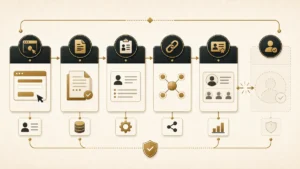
FactCheck runs against prompts already tracked in Profound. Marketers tag fact-based prompts, such as questions about price, product capabilities, service terms, or policies. Profound then queries major answer engines, extracts individual factual claims, and checks each claim against a connected Knowledge Base.
The Knowledge Base can include crawled website pages, uploaded documents, FAQs, product pages, Google Drive files, and Notion content. Profound’s FactCheck documentation says subjective statements are routed to sentiment analysis, while factual, actionable, single-issue claims are classified as accurate, inaccurate, or not relevant.
The output is more specific than a general accuracy score. Teams can review inaccurate claims by theme, see the AI wording beside the Knowledge Base wording, and inspect the citation URLs associated with the answer. That source view is what can turn a vague brand complaint into a page update or publisher correction request.
The launch also connects with Profound Ads Studio. Ads Studio measures paid presence in AI-search conversations; FactCheck asks whether the underlying claims are true. A brand can now have strong paid visibility and still discover that the surrounding answer contains an outdated product description.
Why the 47% Finding Changes Brand Risk
The 47% figure does not mean 47% of AI claims are false. It means nearly half of the measured response content went beyond the user’s explicit request. That extra material creates more places for an answer engine to introduce an old price, discontinued feature, regional mismatch, or unsupported comparison.
Profound says one early fitness-wearable customer found AI systems misrepresented the brand 11% of the time during its first week of FactCheck monitoring. The company traced errors to source pages, corrected them, and watched the accuracy score. The example is vendor-reported, so marketers should treat it as a workflow illustration rather than a universal error benchmark.
The risk is especially sharp in B2B categories with complex packages, integrations, compliance statements, or frequent releases. Buyers may ask an assistant whether a product supports a specific data source or security control. A confident but stale answer can remove a vendor from a shortlist before sales receives a form fill.
That is why Skyword’s brand-information trust research matters here. When brand and AI claims conflict, buyers often look for outside evidence. FactCheck can find the conflict, but the correction still needs credible public documentation that both people and answer engines can verify.
The Knowledge Base Is the Control and the Catch
Profound describes the Knowledge Base as ground truth. Operationally, that label needs governance. A marketing team may have one price on a product page, another in a sales deck, and an older figure in a partner PDF. FactCheck can compare claims with the connected material, but it cannot decide which internal owner had final authority unless the team resolves the conflict first.
This creates a false-confidence risk. A high accuracy score may only show that AI answers agree with the Knowledge Base. It does not prove that the Knowledge Base is current, legally approved, regionally correct, or aligned with the product system of record.
Adobe Brand Visibility raises the same action-layer question from another direction: a visibility system can recommend a content change, but teams still need an approved source and change log before publishing it. FactCheck makes the source-of-truth dependency more explicit because every verdict begins there.
What B2B Teams Should Test First
Start with 25 to 50 prompts tied to decisions buyers can verify: current pricing model, core integrations, security certifications, availability, implementation scope, cancellation policy, and named product features. Avoid broad opinion prompts such as whether a vendor is “best.”
- Name a Knowledge Base owner: Give product marketing responsibility for freshness, with legal, product, and sales approval where needed.
- Record effective dates: Keep launch dates, retired claims, regional differences, and policy changes visible in the source material.
- Review false positives: Sample claims marked accurate and inaccurate before trusting the headline score.
- Verify source attribution: Reproduce the wrong answer and inspect the cited page before requesting a correction.
- Measure the correction: Track whether the claim changes across engines and whether buyer questions or sales objections decline.
Profound says FactCheck is available to enterprise customers at no additional cost. The strongest deployment will treat it as a monitored correction process, not an automatic judge.
Frequently Asked Questions
Teams tag fact-based prompts and connect a Knowledge Base. Profound queries answer engines, extracts factual claims, compares them with the Knowledge Base, and shows inaccurate claims with associated citation sources.
No. Profound says 47% of content across 50,000 responses was unsolicited, meaning it went beyond the question asked. That additional content can contain accurate or inaccurate claims, but it expands the surface where brand errors can appear.
Start with pricing, product features, integrations, security and compliance statements, availability, service policies, and implementation claims. These are objective facts that can affect a shortlist or create sales friction when an AI answer is stale.
The main risk is treating a customer-maintained Knowledge Base as automatically correct. Teams still need clear content ownership, effective dates, approvals, regional rules, and spot checks before using the accuracy score to change public content.