HubSpot opened the public beta of its rebuilt Smart CRM Index on May 27, the first ground-up redesign of the screen where reps manage Contacts, Companies, Deals, Tickets, and custom objects. Teams can opt in now from the Product Updates page, and per HubSpot’s resource center for the change, every portal that has not opted in will be migrated to the new experience by the end of July.
This is not a cosmetic refresh. The index is the most-trafficked surface in the product; HubSpot’s own team puts daily opens north of a million. The rebuild adds inline filtering, an on-page report view, flexible layouts including Gantt and calendar arrangements, conditional highlighting, and inline property management, so view settings, filters, reports, and AI insights sit on one screen instead of behind tab-switches.
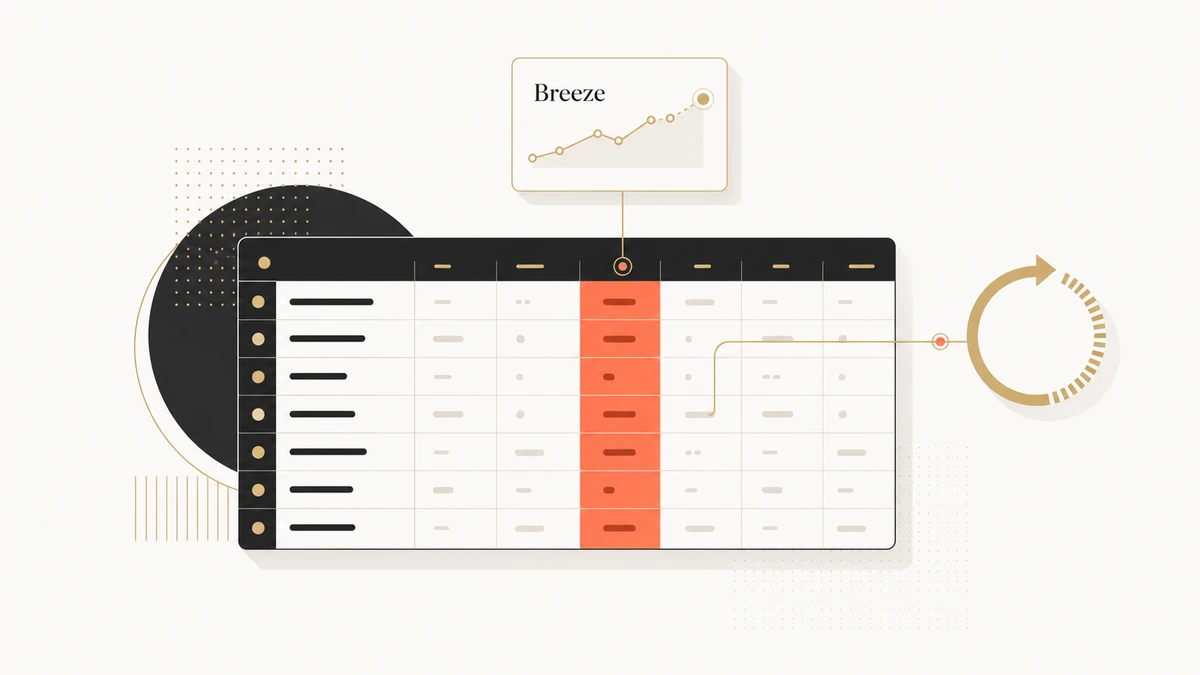
Our read: the headline is not the faster grid, it is where Breeze landed. Breeze column insights now run an AI read on any column straight from the record table, which puts the AI inside the daily workflow rather than in a separate assistant pane. For RevOps teams, two things matter at once: a new AI surface to pilot, and a roughly nine-week clock before the late-July migration makes the new index the only index.
Key Takeaways
- HubSpot opened the rebuilt Smart CRM Index in public beta on May 27, 2026 (opt-in via Product Updates); portals that do not opt in are migrated to the new experience by the end of July.
- The index is HubSpot’s most-trafficked screen — the company’s own team puts daily opens above one million — covering Contacts, Companies, Deals, Tickets, and custom objects.
- The rebuild adds inline filtering, an on-page report view, flexible layouts (Gantt, calendar), conditional highlighting, and inline property management, all on one screen.
- Breeze column insights run an AI analysis on any column directly from the grid; Smart Properties can auto-populate columns via the Breeze Data Agent.
- For RevOps, the real work is the nine-week window: opt in, clean the underlying data before trusting AI column reads, and re-do training assets before the forced cutover.
What HubSpot Shipped on May 27
Most HubSpot betas ship to a slice of portals first. This one is opt-in for everyone on day one, which signals HubSpot wants the migration over quickly. The redesign keeps the index’s job the same (it is still where you slice contacts, companies, deals, and tickets) and rebuilds the mechanics around it.
The functional changes are about removing tab-switches. Filters collapse into a panel beside the records. Reports render on the same page through an on-page report view, so you build a view and read it without leaving the index. Layouts flex beyond the old table into Gantt and calendar arrangements, and conditional highlighting flags records that meet a rule. Inline property management lets an admin add a column or edit a property in place. The pitch from the same Spring 2026 product cycle that put AEO tracking inside the CRM is consistency: one workspace, fewer detours.
The scale is the reason it matters. The index is the screen reps live in. When a million-plus opens a day get a new default in nine weeks, every HubSpot-run B2B team inherits a change to muscle memory whether or not it opted in.
Why the Breeze-in-the-Grid Part Matters
The redesign’s quiet headline is Breeze column insights. Select or right-click a column and Breeze runs an AI analysis on it in place, surfacing the pattern behind the numbers without exporting data or building a separate report. Smart Properties extend the same idea: the Breeze Data Agent can populate a property from web research, call transcripts, or existing CRM data, so columns fill themselves against a definition you set.
This is the part of HubSpot’s AI story we have watched move closer to the daily workflow all year. When we covered HubSpot’s outcome-based Breeze pricing, the AI lived in agents that ran support and prospecting. The rebuilt index puts AI in the grid itself, where reps already work. That is a shorter path to adoption than a chat pane most reps forget to open. HubSpot’s next step is its Agent Hub and Agent Builder launch, which moves from AI inside the grid to a shared operating layer for agents, permissions, outcomes, and credit controls.
It also raises the stakes on data quality. The same dependency we flagged in HubSpot’s rebuilt Prospecting Agent, where the output is only as clean as the CRM segments it reads, applies to column insights. An AI read on a column full of stale lifecycle stages produces a confident, wrong answer faster than before. MoEngage’s MCP-and-guardrails move shows the same issue one step closer to campaign execution, where bad data can become a customer-facing action.
The Catch: A Forced Migration on a Nine-Week Clock
The late-July migration is the detail most coverage of the beta skips. This is not a feature you can ignore until next year. HubSpot has said portals that do not opt in will be moved to the new experience by the end of July, which turns an optional beta into a scheduled cutover with roughly nine weeks of runway from the May 27 open.
For a solo admin, that is a calendar note. For a 200-seat RevOps org with custom index views, saved filters, and onboarding docs built around the old layout, it is a change-management project. Saved views and team habits that assume the current screen need re-checking, and any internal training material with screenshots of the old index goes stale on the same date.
The second catch is trust. Breeze column insights are easy to take at face value because they sit inside the trusted record grid. A number that used to require a built report now arrives as an inline AI claim, and the burden of checking whether the underlying segment is clean shifts to whoever reads it.
What RevOps Should Do Before the July Cutover
Four moves inside the nine-week window.
Opt in now, on a low-stakes team first. Do not wait for the forced migration. Turn the beta on for one team, surface the differences in saved views and filters, and document what breaks before the whole org lands on the new default in late July.
Run a property and segment cleanup before you trust Breeze column insights. The insights are only as good as the columns they read. Audit lifecycle stages, merge duplicates, and fix broken segment definitions first. A clean grid is the prerequisite for an AI read worth acting on, the same lesson the CRM-fit fundamentals have always taught: adoption and data hygiene beat feature count.
Pilot Breeze column insights against a question you already know the answer to. Point it at a column where you can verify the pattern by hand. That calibrates how much to trust the inline AI before it informs a forecast or a pipeline review, and it gives reps a reason to use the grid rather than second-guess it.
Update onboarding and training assets on the migration date, not after. Screenshots, walkthroughs, and rep playbooks built on the old index expire at the end of July. Rebuild them against the new layout during the beta so the cutover does not strand new hires. Teams weighing HubSpot against Salesforce at renewal should fold the rebuilt index and its Breeze surface into the comparison, since the daily-workflow experience is shifting on the HubSpot side.
Frequently Asked Questions
The opt-in public beta opened on May 27, 2026, accessible from the Product Updates section of your HubSpot portal. HubSpot has said any portal that does not opt in will be migrated to the new experience by the end of July 2026, so the switch is effectively scheduled, not optional.
The rebuilt index adds inline filtering, an on-page report view, flexible layouts including Gantt and calendar arrangements, conditional highlighting, and inline property management, plus Breeze AI column insights, all on one screen. It covers Contacts, Companies, Deals, Tickets, and custom objects, with the goal of removing tab-switching between views, reports, and AI.
Breeze column insights run an AI analysis on any column directly from the record grid, surfacing the pattern behind a metric without exporting data or building a separate report. Related Smart Properties let the Breeze Data Agent auto-populate columns from web research, call transcripts, or existing CRM data against a definition you set.
Yes, eventually. The beta is optional now, but HubSpot will migrate all portals to the new experience by the end of July 2026. The practical choice for B2B teams is whether to opt in early and prepare saved views, data hygiene, and training, or be moved automatically with no runway.