
Direct answer – What is HubSpot AEO and what did the Spring 2026 release ship?
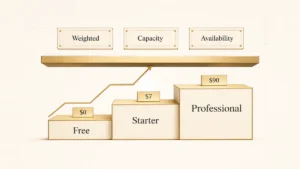
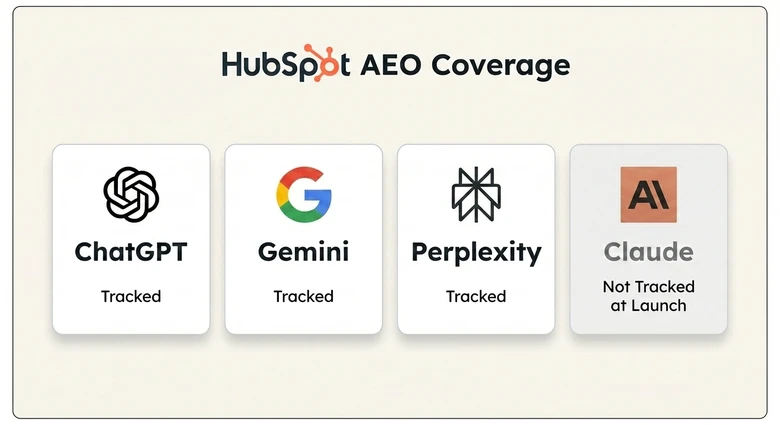
HubSpot AEO is a native Answer Engine Optimization tool that launched in public beta on April 14, 2026, tracking brand visibility across ChatGPT, Gemini, and Perplexity inside Marketing Hub. It auto-generates tracked prompts from CRM data instead of manual setup. It is included in Marketing Hub Professional (25 prompts/day) and Enterprise (50 prompts/day), with a $50/month standalone plan. Claude is not tracked at launch, making it the first CRM-native AEO tool but a v1 release.
HubSpot has put Answer Engine Optimization inside its own CRM. Announced at the Spring 2026 Spotlight on April 14, HubSpot AEO tracks how your brand appears in ChatGPT, Gemini, and Perplexity, and generates the prompts to track from your CRM data rather than a blank text box. Google’s May 6 AI Overviews update, which adds Further Exploration links and per-claim inline citations, gives AEO tracking tools a sharper signal to optimize against on the Google surface specifically.
It is the first time a mainstream CRM has bundled native AEO tracking. For B2B teams already paying for Profound, Otterly, or Peec, the question just got sharper: keep running a standalone tool, or use the AEO feature in the CRM you already own?
One limitation worth flagging upfront before anyone gets too excited: Claude is not on the tracked-platforms list. Given how fast Anthropic’s referral share has grown year-over-year, that is a gap HubSpot will need to close.
Key Takeaways
- HubSpot AEO launched in public beta on April 14, 2026, tracking brand visibility across ChatGPT, Gemini, and Perplexity. Claude is not tracked at launch.
- Included in Marketing Hub Professional (25 prompts/day) and Enterprise (50 prompts/day). A standalone plan is listed at $50/month.
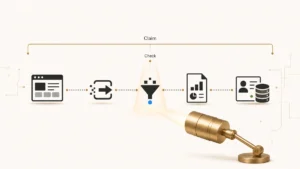
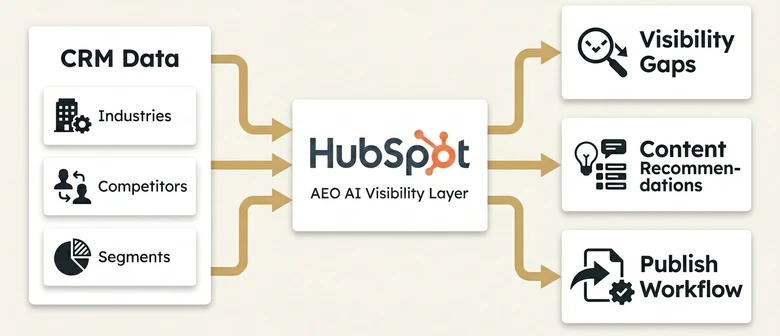
- The tool auto-generates tracked prompts from CRM data (industries, competitors, customer segments) rather than requiring manual prompt setup.
- HubSpot also expanded Customer Agent to email, moved Prospecting Agent to per-lead pricing, and added Apollo and ZoomInfo contact enrichment.
What HubSpot AEO Actually Tracks
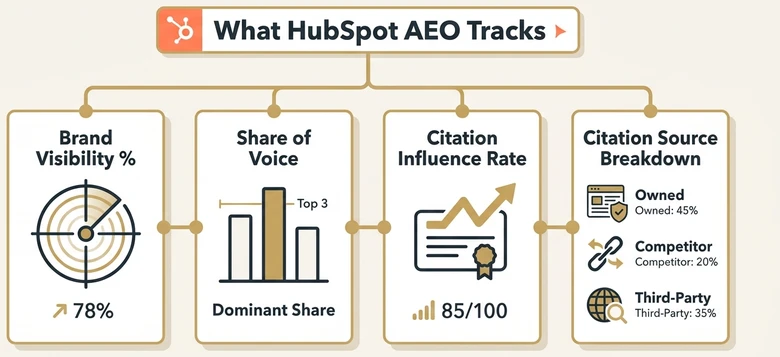
The tool lives inside Marketing Hub under Content → Search Strategy → AI Visibility. It measures four things: brand visibility percentage across the three tracked platforms, Share of Voice against tracked competitors, Citation Influence Rate (how often AI-cited sources reference your brand), and citation breakdown by content type and source, split between owned, competitor, and third-party.
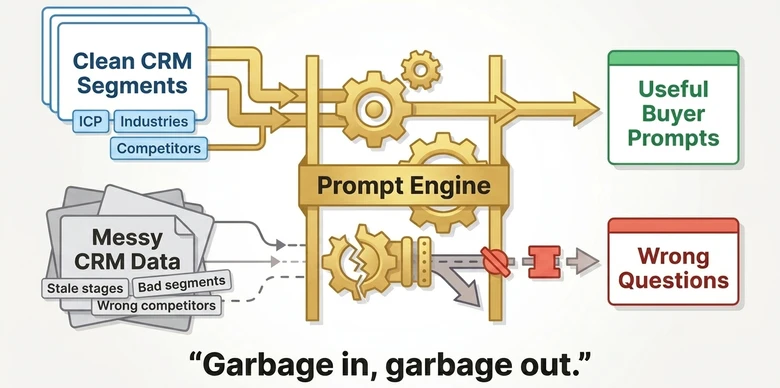
The operational problem AEO tools usually run into is prompt selection. Teams guess what buyers ask, then their prompt library drifts from real buyer language within a quarter. HubSpot’s version skips that step by pulling prompts from CRM segments. If your customer records are clean, the tracked prompts reflect what your actual ICP searches for. If they are not, the tool will cheerfully measure your visibility against questions nobody is asking.
The Claude gap is the more visible limitation, though. Our earlier reporting on Trustpilot becoming ChatGPT’s fifth most-cited site already showed how fast the citation landscape is shifting across platforms. Leaving Claude out of the tracking set when it is one of the fastest-growing B2B AI referral sources makes the tool feel like a v1 release, not a v2.
Why Now: Traffic Is Shifting Faster Than Measurement
HubSpot’s framing in the announcement ties AEO directly to a traffic problem: organic traffic for most businesses is declining while AI referral traffic has tripled. That tracks with what we covered in Gemini’s 115% referral traffic surge earlier this year. AI platforms are becoming a meaningful discovery channel, and most B2B teams still have no systematic way to measure visibility inside them. The paid track now has the attribution maturity the earned/AEO track has been building toward: OpenAI’s pixel + Conversions API release on May 5 means B2B teams can measure paid reach inside ChatGPT with the same plumbing they already use for Google Ads while AEO continues to do the work for the subscription-tier audience the ad surface cannot reach. The free-tier AEO market is filling in around HubSpot’s $50 standalone too: Clutch’s free B2B-agency-only AI Visibility Dashboard hit the market three weeks after HubSpot AEO with no per-prompt cap, which means the measurement floor for B2B agencies is now zero dollars.
The pitch for HubSpot’s version over a standalone tool is workflow consolidation. Visibility gap identified, content recommendations generated, drafted in Breeze Assistant, published inside HubSpot. Standalone AEO tools typically stop at the dashboard. Whether the closed loop actually produces better outcomes than best-of-breed tracking depth is the open question for the next two quarters. ActiveCampaign’s brand-memory update applies the same consolidation pressure to campaign creation, where remembered rules and source materials become part of the operating layer rather than a separate prompt-writing chore.
The Rest of Spring Spotlight That Matters for B2B
Beyond AEO, three other updates are worth flagging:
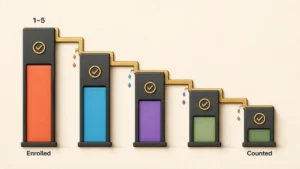
Prospecting Agent now integrates Apollo and ZoomInfo for contact enrichment. Pricing moved from per-email to per-recommended-lead, continuing the shift we covered in HubSpot’s outcome-based Breeze pricing. The per-lead model also comes with automatic unenrollment after 30 days of no engagement, which removes one of the most common “runaway cost” failure modes for AI agent deployments. Days later, Adobe joined the MCP vendor wave at Summit, shipping native Marketo MCP that makes B2B marketing operations callable from Claude, Copilot, and OpenAI agents. The under-covered half of HubSpot’s announcement is that the agent now consumes customer-purchased enrichment seats as raw input, a layer our deeper read of the rebuilt agent’s signal-to-outreach mechanics treats as the more consequential change for RevOps budgets.
Customer Agent expanded to email. Teams using it alongside Help Desk are seeing 50% more tickets resolved and 29% faster resolution, per HubSpot’s own data. Average resolution rate: 70% of conversations. Pricing: $0.50 per resolution, with a 28-day free trial. The single-channel email expansion sits alongside Twilio’s multi-channel conversation layer GA at SIGNAL on May 7, which handles the same persistent-context problem across voice, SMS, WhatsApp, and messaging in a single thread, raising the bar B2B customer-ops teams will price HubSpot’s Customer Agent against by Q3.
Breeze Assistant added role awareness. Marketers get campaign guidance, sales reps get deal guidance. The assistant was also trained on HubSpot’s Loop Marketing playbook, making it more opinionated about how to build ICPs, brand guides, and campaign briefs. For teams running broader B2B marketing frameworks, that built-in opinion either helps or gets in the way depending on how much methodology disagreement already exists in the team.
What To Do Now
If you are on Marketing Hub Pro or Enterprise, enable the AEO beta this week. Even at 25 prompts per day, that is enough to baseline your current AI visibility against three to five competitors before the SERP fills up with “how we use HubSpot AEO” content.
Clean your CRM segmentation before you switch it on. The AEO prompt generation pulls from industries, competitors, and customer segments already defined in HubSpot. Garbage in, garbage out applies here more than usual. Portals with lifecycle stage definitions that are three years stale will produce auto-generated prompts that miss the actual buyer conversation entirely. The cleanup just got a better home: the rebuilt Smart CRM Index where those segments now live opened in public beta on May 27, with inline filtering and property management that make stale lifecycle stages easier to spot before they poison the prompts.
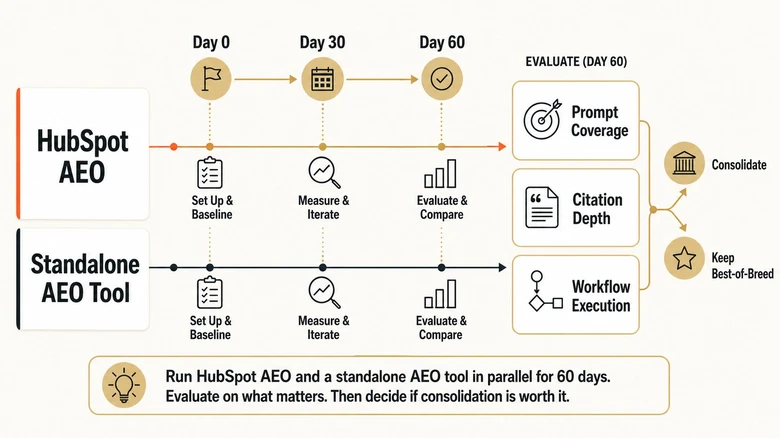
Do not immediately cancel your standalone AEO tool. Run both in parallel for 60 days. Compare prompt coverage, citation depth, and the part that actually matters: whether HubSpot’s content recommendations execute cleanly enough inside your workflow to replace the separate tool. If they do, consolidation saves a line item. If they do not, you will know inside two months.
Frequently Asked Questions
HubSpot AEO is a built-in Answer Engine Optimization tool launched April 14, 2026 that tracks brand visibility across ChatGPT, Gemini, and Perplexity inside Marketing Hub. It auto-generates tracked prompts from CRM data rather than requiring manual setup. It is available in public beta for Marketing Hub Professional and Enterprise customers, with a standalone plan at $50 per month.
No. HubSpot AEO tracks ChatGPT, Gemini, and Perplexity only at launch. Claude is not included, which is a visible gap given Anthropic’s referral share has grown nearly tenfold year-over-year. HubSpot has not publicly stated whether Claude will be added in a future release.
Standalone AEO tools generally offer deeper tracking and broader platform coverage but require you to write your own prompts and handle content execution elsewhere. HubSpot AEO auto-generates prompts from CRM data and connects visibility insights directly to content drafting and publishing inside Marketing Hub. The trade-off is depth of tracking versus speed to execution.
HubSpot AEO is included at no additional per-user cost in Marketing Hub Professional (with a 25 prompts/day tracking limit) and Marketing Hub Enterprise (50 prompts/day). HubSpot also offers a standalone plan listed at $50/month for teams that want AEO tracking without the full Marketing Hub subscription.