ActiveCampaign posted Active Intelligence 2.8 on June 26, 2026, adding memory, Brand Kit voice and tone, custom instructions, document uploads, post-generation editing, improved image generation, file attachments, and connectors for apps including Google Ads, Wix, Calendly, and Stripe.
The practical shift is that Active Intelligence now remembers brand rules and prior work across sessions. ActiveCampaign says memory, Brand Kit voice and tone, custom instructions, document uploads, post-generation editing, improved image generation, file attachments, and connectors are available to all customers.
For B2B marketers, this is less about faster drafting and more about campaign operating memory. The useful question is whether the system can preserve brand judgment without turning one weak brief into a repeatable mistake. SAS 360 Marketing AI pushes the same test into predictive scoring: marketer-controlled AI models need override rights before they become campaign memory.
Key Takeaways
- Active Intelligence 2.8 was posted on June 26, 2026, for the week of June 22.
- Memory now carries brand, tone, audience, and rule preferences across sessions.
- Brand Kit voice and tone can extract style and signature language from a connected website.
- Document uploads and asset references let teams build campaigns from past briefs, playbooks, and templates.
- Connectors bring context from Google Ads, Wix, Calendly, Stripe, and other apps into campaign work.
What Active Intelligence 2.8 Changes
Active Intelligence 2.8 moves ActiveCampaign’s AI closer to a persistent marketing workspace. The release is built around memory, custom instructions, Brand Kit voice and tone, document uploads, image editing, file attachments, and connectors. Each feature reduces the amount of re-briefing required before an AI system can produce campaign work that resembles a real team output.
The official product page frames the update around campaigns that start from a brand, best-performing content, and voice. It also says users can drop in a brief or reference a past campaign so Active Intelligence reads the material and builds from existing work rather than a generic template.
That matters because most AI campaign tools still behave like high-speed interns with no memory. They can produce copy, but they need the same constraints restated every time. ActiveCampaign is now trying to make brand rules, audience context, and past performance part of the default working layer.
This fits a wider martech pattern IVRIS has tracked in HubSpot’s AEO launch and Adobe’s Brand Visibility push for AI search: vendors are no longer selling isolated content tools. They are selling systems that remember, recommend, and act across the marketing workflow.
Why Brand Memory Is the Real Shift
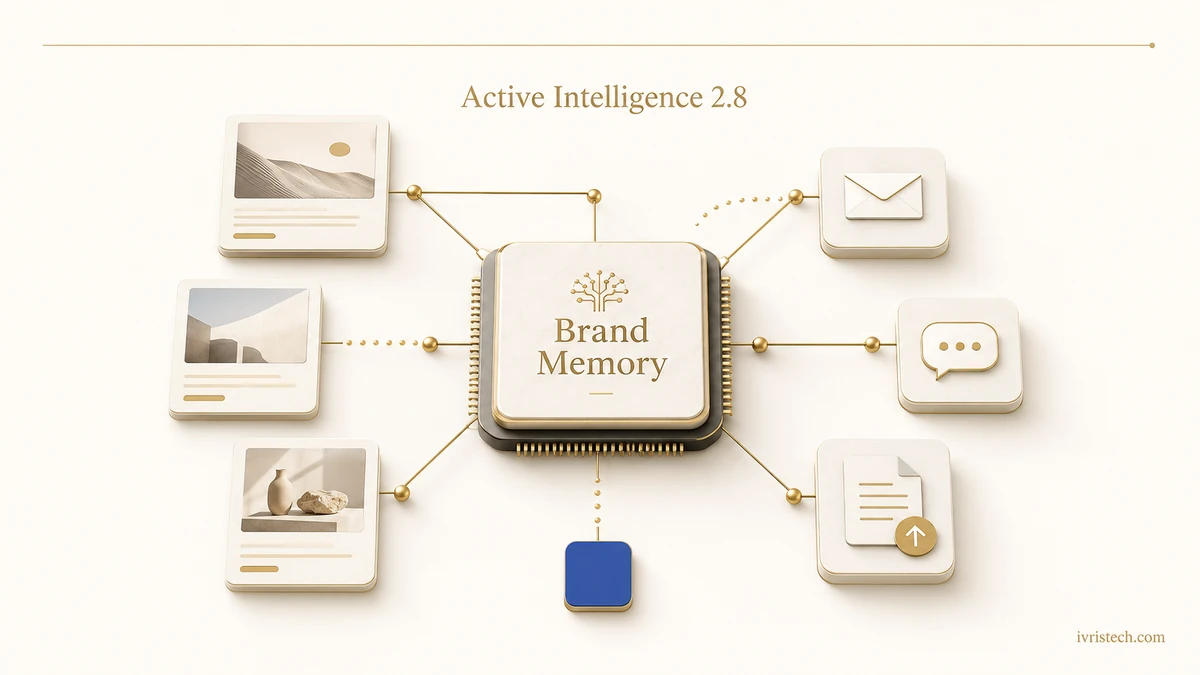
The headline feature is memory, not image generation. ActiveCampaign says users can tell Active Intelligence what to remember with words such as “always” or “never.” That sounds small, but it changes the work pattern. Brand voice, CTA preferences, follow-up rules, and audience assumptions can become reusable defaults.
Brand Kit voice and tone extends that by extracting style, signature language, and homepage images from a connected website. Custom instructions then let teams define the business, audience, and communication style once, so the system applies those standards across conversations, campaigns, and recommendations.
Our read: this is the right direction for small and mid-market teams, especially those with thin marketing operations support. Campaign velocity only matters if the output remains recognizable. A tool that remembers a company’s own rules can be more valuable than a tool that creates a larger pile of plausible drafts.
The same logic sits behind Salesforce’s agentic marketing team model, but ActiveCampaign’s update is aimed at teams that may not have a full RevOps bench. The buyer is likely a marketing lead who needs fewer blank-page sessions and more repeatable campaign hygiene.
The Catch: Bad Defaults Can Scale Too
Memory is useful only when the remembered rules are accurate. A vague “friendly tone” instruction, an outdated positioning deck, or a weak past campaign can become the system’s preferred pattern. That is the hidden risk of persistent AI in marketing automation.
Post-generation editing helps, because teams can refine a subject line, greeting, layout, or message section without rebuilding the campaign. But editing is not governance. B2B teams still need a clear owner for brand rules, audience assumptions, compliance language, and approval thresholds.
The connector layer also deserves scrutiny. Pulling context from Google Ads, Calendly, Stripe, Wix, and other apps may improve personalization, but it also widens the surface area for bad data. If the wrong event, stale product detail, or incomplete revenue signal enters a campaign, the AI may make the message look more precise than it is.
That is why the governance standard should resemble Pega’s human-review model for marketing agents: keep evidence visible, require approvals for customer-facing changes, and preserve a record of what the AI used to make a recommendation.
What This Means for B2B Marketers
B2B teams should treat Active Intelligence 2.8 as a process-design update, not only a product feature update. The first task is to decide what the AI is allowed to remember. Brand tone, CTA patterns, audience segments, campaign structures, and exclusion rules are good candidates. Pricing claims, legal language, and competitive claims should stay under tighter review.
- Write memory rules like operating instructions. Use specific “always” and “never” statements tied to audience, tone, offers, and follow-up logic.
- Audit the source material. Remove stale briefs, old product language, and underperforming templates before using them as references.
- Separate speed from approval. Let AI generate and adapt, but keep launch approval with a named marketer.
- Track what memory improves. Measure first-draft acceptance, revision cycles, error rates, and campaign performance, not only time saved.
- Review connectors quarterly. Confirm each connected app still provides useful, current, and permitted data for campaign personalization.
Active Intelligence 2.8 is a meaningful update because it makes memory a practical campaign capability. The value will not come from another AI draft. It will come from whether marketers can turn their own standards into a repeatable system without letting the system quietly rewrite those standards.
Frequently Asked Questions
Active Intelligence 2.8 is ActiveCampaign’s June 2026 update to its AI marketing workspace. It adds memory, Brand Kit voice and tone, custom instructions, document uploads, post-generation editing, file attachments, improved image generation, and connectors for apps used in campaign work.
Memory matters because most AI campaign tools reset between sessions. Persistent memory lets a team store brand rules, audience preferences, CTA patterns, and follow-up logic once, then reuse them across campaigns. That can reduce briefing time and make output more consistent.
ActiveCampaign’s community update lists memory, Brand Kit voice and tone, custom instructions, document uploads, post-generation editing, improved image generation, file attachments, and connectors as available to all customers. Teams should still check their account rollout and enabled product settings.
Marketers should review the source briefs, brand rules, connected apps, and approval steps before allowing AI memory to influence live campaigns. The main risk is not speed. It is scaling outdated or vague instructions across email, SMS, WhatsApp, and automation sequences.