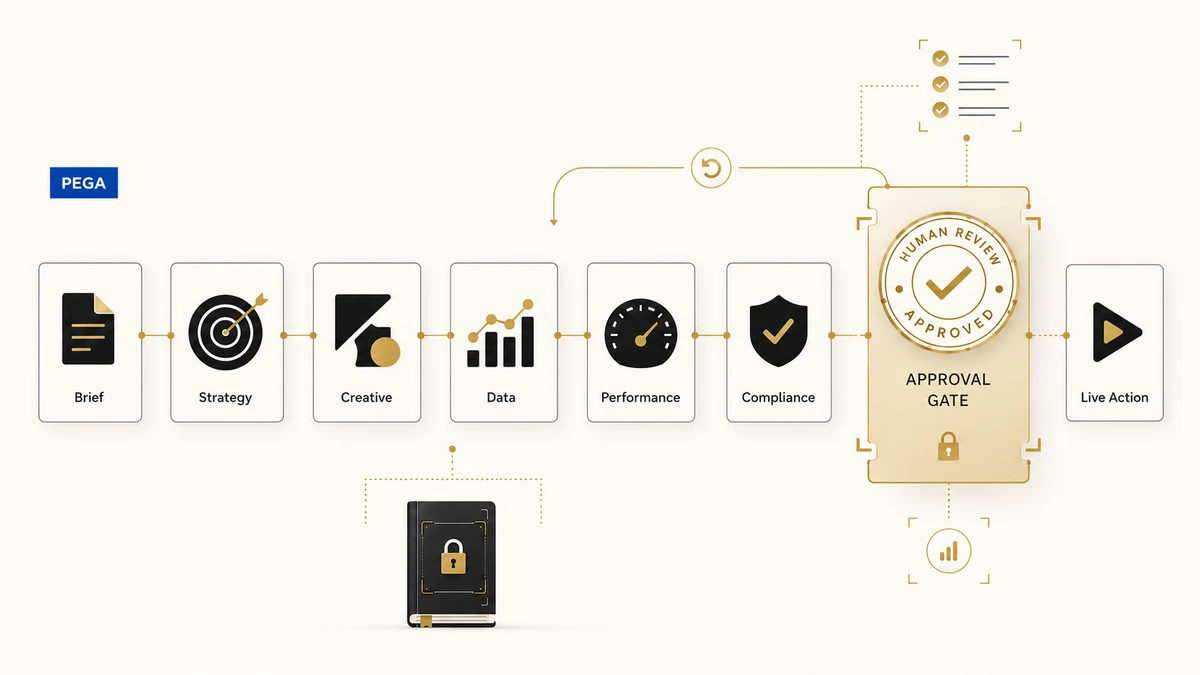
Pega launched Customer Engagement Studio on June 8, 2026, giving enterprise marketers a workspace that brings Pega and third-party AI agents together across strategy, creative work, data science, performance, and compliance.
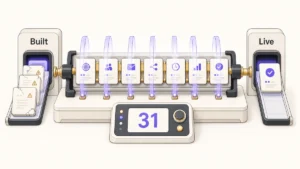
Pega says the new product can move a marketing brief into live personalized actions in minutes. It will arrive later in 2026 with Pega Infinity 26 and come standard with Customer Decision Hub on Pega Cloud.
The speed claim is getting the headlines. For B2B martech buyers, the more important product decision is governance. Customer Engagement Studio promises built-in human oversight, audited workflows, and centralized control before an AI-generated next-best action reaches a customer.
Key Takeaways
- Pega Customer Engagement Studio connects Pega and third-party agents in one marketing workspace.
- The product covers strategy, creative execution, data science, performance, and compliance workflows.
- Pega says teams can move from a brief to live personalized actions in minutes.
- Built-in human oversight validates outputs before a next-best action reaches a customer.
- The product will ship later in 2026 with Pega Infinity 26 and Customer Decision Hub on Pega Cloud.
What Pega Customer Engagement Studio Does
Customer Engagement Studio sits above Pega Customer Decision Hub, the vendor’s real-time decisioning engine. Customer Decision Hub determines which action to recommend, to whom, and when. The new Studio coordinates the agents and workflows that create, review, and improve those actions.
Pega says the workspace can generate more creative treatments and offers, identify performance gaps, recommend adjustments, and launch always-on or one-time campaigns faster than manual production. It can also connect to third-party agents and deploy on AWS and Google Cloud while keeping control centralized.
That puts the launch in the same product race as Salesforce’s Agentforce Marketing team, but Pega is leading with the control layer rather than the assistant experience.
Why Governance Is the Product
The SERP is already full of one claim: Pega can compress campaign delivery from weeks to minutes. Speed is useful, but it is not the defensible part of the launch. Every major martech vendor now promises faster briefs, content, segments, and journeys.
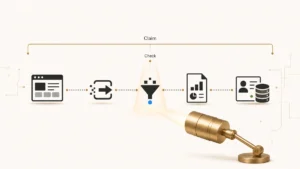
Pega’s differentiator is the promise that those agents operate inside one governed system. The release says human oversight validates every output before a next-best action reaches a customer. Its Predictable AI framework also emphasizes visibility, controls, auditability, and the ability to constrain how AI acts. Gartner’s new forecast sharpens that test: AI inference privacy risk begins when a governed workflow still permits a model to create or act on a sensitive profile the customer never supplied.
Our read: the product will earn its place only if those controls remain clear when outside agents join the workflow. A buyer should be able to answer who approved an action, which data it used, why the system selected it, what changed, and how to reverse it.
That is the same buying standard emerging in MoEngage’s marketer-defined agent guardrails and Adobe’s human oversight modes for Marketo agents. The market is moving past the question of whether an agent can act. Buyers now need proof that it can act inside policy. Cordial’s open-agent architecture makes that proof harder and more important because the requesting agent may originate outside the marketing platform. Klaviyo now adds a service-to-marketing version of the same test, because Customer Agent data can feed Composer campaigns only if teams trust the policy boundary around that loop.
The Hidden Catch: Minutes Can Multiply Mistakes
Pega cites Gartner’s prediction that more than 40% of agentic AI projects will be canceled by the end of 2027 because of cost, unclear value, or weak risk controls. Customer Engagement Studio is positioned as an answer to that failure pattern.
But a governed interface does not remove the underlying work. Marketing teams still need approved audiences, offer rules, consent logic, brand standards, data ownership, escalation paths, and a definition of success. The workspace can coordinate those rules only after the organization agrees on them. The 2X-Knownwell operating-model bet is notable because it proposes to sell the people and accountability around that work alongside the AI layer. 6sense’s contact-recommendation layer proves the same rule for advertising workflows: the AI can surface a person, but the organization still has to define when that person is acceptable to sales.
The risk of moving from brief to live action in minutes is simple: a weak rule can now reach more customers faster. A filtering mistake, outdated offer, or incomplete suppression rule does not become safer because an agent executed it efficiently. Active Intelligence 2.8’s brand-memory risk is the lighter-weight version of that same problem: persistent memory can preserve good judgment, but it can also preserve weak defaults.
What B2B Martech Teams Should Test
- Start with a read-only workflow. Ask the system to diagnose a campaign or identify a performance gap before allowing it to publish or change an action.
- Test the approval chain. Confirm which actions require human approval and whether different risk levels can trigger different review paths.
- Inspect the audit record. Verify that the log shows the prompt, data sources, recommendation, approver, final action, and later edits.
- Connect one third-party agent. Check whether outside agents inherit the same permissions, policies, and logging as Pega-native agents.
- Measure customer value, not production speed. A faster campaign is not a better campaign unless it improves response, conversion, retention, or customer value without increasing complaints.
Pega has made the right product claim for this stage of agentic marketing: control matters as much as speed. The buying decision now depends on whether Customer Engagement Studio can make that control visible and testable when real teams, data, and third-party agents enter the workspace. The New York synthetic-performer rule adds a timely example of why disclosure and approval controls must survive the full creative workflow. Netcore.ai’s shared-accountability model for seven marketing agents pushes the same test into contract terms, where governance has to connect each agent action to an agreed growth KPI.
Frequently Asked Questions
Pega Customer Engagement Studio is an agent-powered marketing workspace built for Customer Decision Hub. It coordinates Pega and third-party agents across strategy, creative work, data science, performance, compliance, and campaign execution inside one governed environment.
Pega says Customer Engagement Studio will be available later in 2026 with Pega Infinity 26. It will come standard with Customer Decision Hub on Pega Cloud. The announcement did not provide a more specific release date or separate pricing details.
Customer Decision Hub is the decisioning engine that determines the next-best action for a customer. Customer Engagement Studio is the workspace that coordinates agents and people to create, review, improve, and deploy the content and actions that feed those decisions.
Buyers should test permissions, human approval paths, audit logs, third-party agent access, data-source visibility, and rollback. They should begin with read-only analysis before allowing agents to change audiences, offers, journeys, or customer-facing actions.