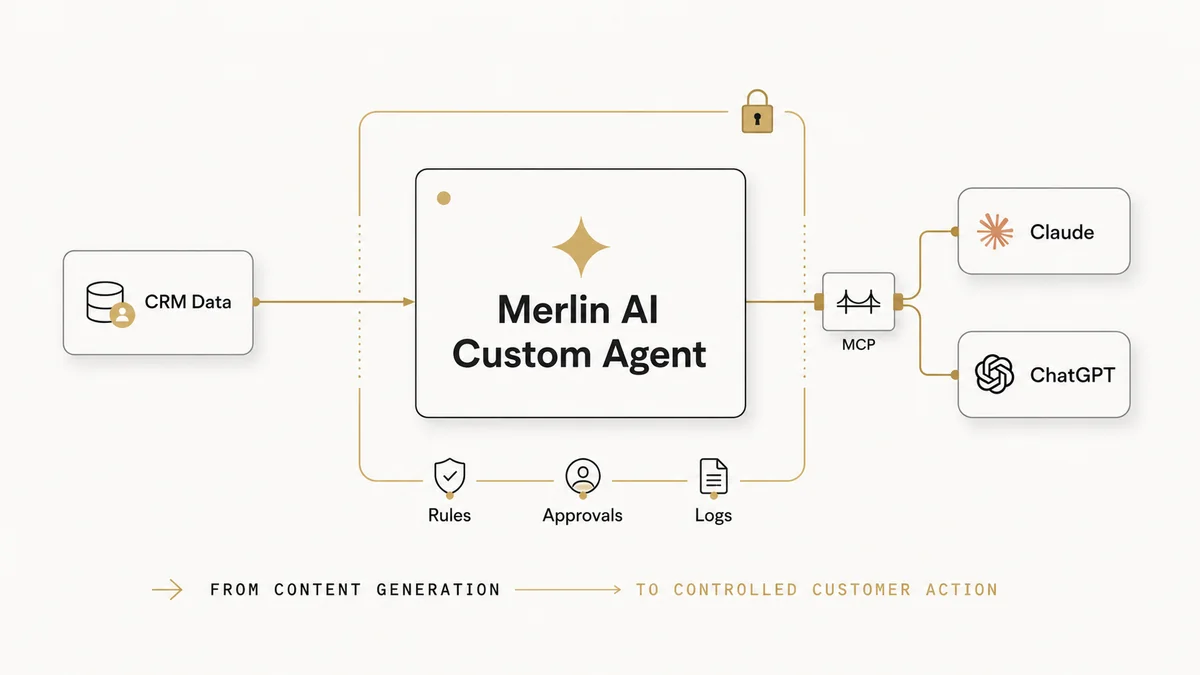
MoEngage launched Merlin AI Custom Agents on June 3, 2026, giving lifecycle and CRM teams a way to build marketing agents on top of MoEngage data, define the rules each agent runs inside, and inspect every step the agent takes.
The release also opens MoEngage to external AI tools through a hosted MCP server. MoEngage says customers can connect Claude, ChatGPT, and other AI systems to MoEngage campaign data and tools, so internal assistants or external agents can search campaigns, analyze performance, review content, and coordinate with customer-engagement workflows.
Our read: the guardrail layer is the story. Customer engagement agents touch timing, frequency, channel choice, offers, and brand voice. A generic “agent builder” pitch is not enough in that environment. The valuable part is whether a marketer can define what the agent is allowed to do, see why it acted, and stop it before a customer receives the wrong message. That is the next step after the analytics layer we covered in Mailchimp’s AI reporting push.
Key Takeaways
- MoEngage launched Merlin AI Custom Agents on June 3, 2026 for lifecycle and CRM teams.
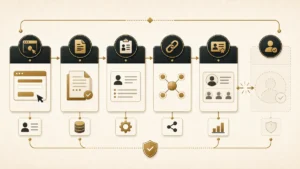
- The agents run on MoEngage data and tools, inside rules set by marketers, with step-level visibility into actions.
- MoEngage is also exposing a hosted MCP server for AI assistants such as Claude and ChatGPT.
- Its documentation says the MCP server can search campaigns, analyze performance, review content, and diagnose delivery issues through natural-language queries.
- For B2B martech buyers, the practical question is whether agent governance is built into the workflow, not bolted on after launch.
What MoEngage Actually Shipped
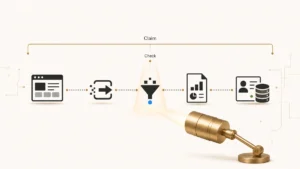
Merlin AI was already MoEngage’s AI layer for marketers, covering copy generation, flow assistance, segmentation, recommendations, and decisioning. The new Custom Agents release adds a builder for marketer-defined workflow agents. The agent runs inside MoEngage, uses MoEngage data, and follows policies the team defines rather than acting from an open-ended prompt.
That matters because customer engagement decisions are easy to automate badly. A campaign agent can choose the wrong offer, over-message a high-value customer, ignore regional limits, or send a lifecycle message at the wrong time. MoEngage is trying to make the marketer’s policy the operating boundary, not a post-hoc review step.
The MCP piece makes the release more than a dashboard feature. MoEngage’s MCP server documentation says AI assistants can connect to a workspace, inherit the user’s MoEngage role and environment, and access campaign search, analytics, content review, and delivery-diagnosis tools. That is the agent-callability layer buyers are starting to expect from martech vendors, especially after the SaaStr API readiness debate.
Why the Guardrail Layer Matters
Most martech AI launches split into two camps. One camp writes better copy. The other camp chooses what to do next. Merlin AI Custom Agents sits in the second camp, and that raises the stakes. If an agent chooses a segment, an offer, a timing window, or a channel mix, the failure is not only a bad suggestion. It can become a customer-facing error.
MoEngage’s existing Merlin AI page already positions the system around generative agents, decisioning agents, and predictive AI. Custom Agents are the logical next step: let teams define their own workflow agent rather than wait for a vendor-built template. The governance question becomes whether the agent can explain what it did and stay inside the marketer’s constraints.
This is where B2B buyers should read the release carefully. Even if MoEngage is strongest with consumer brands, the pattern is relevant for every customer-engagement platform. The buyer no longer asks, “Does the product have AI?” The buyer asks, “Can the AI act on our data without creating a compliance, frequency, or brand-risk problem?” The same question is showing up in CRM after HubSpot’s Smart CRM Index beta. OpenAI Presence’s managed demand-generation deployment applies the same test to inbound voice and chat, where qualification and CRM enrichment can become production actions.
The MCP Angle Is Useful, but Not the Whole Story
The Model Context Protocol gives AI systems a standard way to connect with external tools and data. For martech buyers, the appeal is obvious: a marketer using Claude or ChatGPT can query campaign performance without exporting data, while an internal agent can pull customer-engagement context before recommending the next move.
But MCP alone does not make a customer-engagement platform safe. The same connection that lets an assistant analyze campaigns can also expose sensitive data or trigger actions if permissions are too broad. MoEngage’s role inheritance and OAuth-based connection details are therefore more than setup notes. They are part of the buying checklist. Nielsen’s Ad Intel AI MCP access sits on the analytical side of that spectrum, but buyers still need to know which datasets an agent can query and how each request is logged. The Obsidian Security agent-control checklist adds two missing tests: whether every MCP path is inventoried and whether an unsafe action can be blocked before customer data or campaigns change.
Our practical read: do not evaluate MCP as a logo on a launch slide. Evaluate the permissions model, logging, rate limits, approval steps, and rollback path. The agent that can send customer messages needs a higher bar than the assistant that summarizes a report. Pega’s governed marketing-agent workspace shows that this checklist is becoming a product category requirement rather than a specialist security concern. HubSpot’s centralized agent-governance model takes a different architectural route, but it reinforces the same buyer test: who can edit, run, monitor, and limit each agent? Barndoor AgentProfile pushes that checklist down to the individual agent, where credentials, runtime activity, and cost can be governed together.
What B2B Martech Teams Should Do Now
- Write the policy before building the agent. Define channel frequency, suppression rules, offer limits, and escalation triggers in plain language, then map them into the agent setup.
- Start with analytics, not action. Let an MCP-connected assistant search campaigns and summarize performance before giving any agent permission to change audiences or launch flows.
- Audit role inheritance. Confirm the AI assistant can only access the campaigns, workspaces, and data centers the authenticated user can access.
- Log every customer-facing action. If an agent changes frequency, channel, content, or offer logic, the team needs an audit trail that a human can inspect later.
MoEngage is not alone in this shift, but it is a useful signal. Martech AI is moving from content generation to governed action. The vendors worth shortlisting will be the ones that make the guardrails visible before the agent touches a customer. Klaviyo is pushing the same shift from another direction: the shared Composer-Customer Agent beta makes service resolution a campaign signal, which raises the guardrail bar before the agent touches a customer. Netcore.ai’s seven-agent growth-accountability model adds a commercial test to that shortlist: whether the vendor shares measurable responsibility for what governed agents achieve.
Frequently Asked Questions
They are marketer-defined workflow agents inside MoEngage. Lifecycle and CRM teams can build agents on top of MoEngage data and tools, set the rules each agent follows, and inspect the steps the agent takes before trusting it with customer-facing work.
MoEngage’s hosted MCP server lets AI assistants such as Claude and ChatGPT connect to a MoEngage workspace. Its documentation lists campaign search, campaign analytics, content review, and delivery diagnostics as supported natural-language workflows, with access tied to the authenticated user’s MoEngage role.
Marketing agents can affect channel timing, offer choice, message frequency, segments, and customer experience. A loose agent can over-message customers, break suppression rules, or send off-brand content. Guardrails define what the agent can do, when it must ask, and what a human can inspect afterward.
Start with read-only analytics workflows. Let the assistant search campaigns and summarize performance first. Move into customer-facing actions only after role permissions, audit logs, suppression rules, and approval steps are tested with a narrow workflow.