Direct answer – What is the AI search conversion rate for B2B?
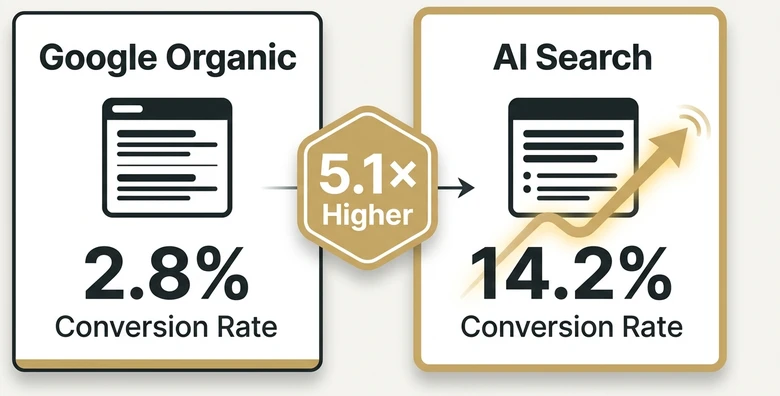
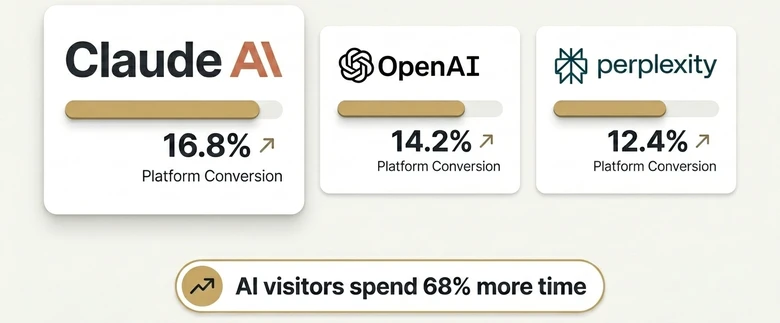
AI search traffic converts at 14.2% for B2B, versus 2.8% for Google organic — a 5.1x gap, per a Loganix multi-source analysis of 680 million AI citations and 1.96 million browsing sessions. By platform, Claude users convert at 16.8%, ChatGPT at 14.2%, and Perplexity at 12.4%. AI visitors also spend 68% more time on site. The reason: they arrive further along in the buying journey, pre-qualified by synthesized answers.
A new multi-source analysis of 680 million AI citations, 2,961 research sessions, and 1.96 million browsing sessions just put a number on what most B2B marketers have been ignoring: AI search traffic converts at 14.2%. Google organic converts at 2.8%. That’s a 5.1x gap.
And 78% of marketers have no strategy for it.
Key Takeaways
- AI search traffic converts at 14.2% vs Google organic’s 2.8% — a 5.1x advantage, according to a multi-source analysis by Loganix synthesizing six independent studies.
- Claude users convert at 16.8%, ChatGPT at 14.2%, Perplexity at 12.4%. AI visitors spend 68% more time on websites than traditional organic visitors.
- 73% of B2B buyers now use AI tools in purchase research. Only 22% of marketers track AI visibility.
- Brand mentions correlate 3x more strongly with AI citations than backlinks do — shifting how B2B companies need to think about visibility.
B2B Conversion Rate by Traffic Source
| Traffic source | B2B conversion rate | vs Google organic |
|---|---|---|
| Claude | 16.8% | 6.0x |
| ChatGPT | 14.2% | 5.1x |
| Perplexity | 12.4% | 4.4x |
| AI search (blended) | 14.2% | 5.1x |
| Google organic | 2.8% | 1.0x |
What the Data Shows
The Loganix 2026 B2B AI Buying Behavior Analysis compiled data from six independently published studies: Averi’s analysis of 680 million citations across ChatGPT, Claude, and Google AI (March 2026), SparkToro and Gumshoe.ai’s study of 2,961 research sessions (January 2026), Previsible’s tracking of 1.96 million browsing sessions, Exposure Ninja’s conversion rate study, McKinsey’s consumer survey, and Yext’s survey of 2,237 adults. 5W’s broader cross-engine analysis, published May 2026, extends the same scale to Perplexity and Gemini and adds the sharper finding that only one in five pages cited by AI engines still appears in Google’s top 10 for the same query.
The conversion numbers vary by platform. Claude users convert at the highest rate (16.8%), followed by ChatGPT (14.2%) and Perplexity (12.4%). SE Ranking found that AI visitors spend 68% more time on websites compared to traditional organic visitors. The Washington Post reported that AI platform visitors have a 4-5x higher subscription conversion rate versus traditional search.
These aren’t small sample sizes or isolated studies. The combined dataset covers hundreds of millions of interactions. The pattern is consistent across every source: people arriving from AI search tools are further along in their buying journey and convert at significantly higher rates. Our earlier coverage of the 73% buyer adoption stat breaks down the underlying research methodology.
The Visibility Gap No One Is Closing
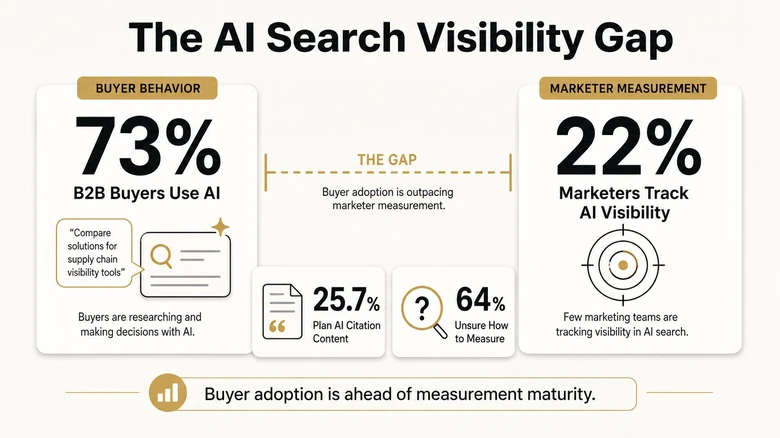
Here’s what makes this urgent for B2B: 73% of buyers now use AI tools like ChatGPT and Perplexity during purchase research. Forrester’s survey of 4,000+ B2B buyers found 61% of the buying journey completes before any vendor contact. AI tools are accelerating that by providing synthesized comparisons that previously required visiting multiple websites.
Yet only 22% of marketers currently track AI visibility and traffic. Only 25.7% plan to develop content for AI citations. And 64% aren’t sure how to measure AI search success at all. Jasper GEO Agent is one of the clearest attempts to turn that measurement gap into an execution loop, not just another report.
The analysis also found that brand web mentions correlate 3x more strongly with AI citation rates than backlinks do. That’s a fundamental shift. For B2B teams that have spent years building link building strategies, the signal is clear: backlinks still matter for Google rankings, but brand mentions across authoritative sources are what drive AI visibility. Trustpilot now ranks as the 5th most-cited website by ChatGPT — third-party review platforms are outranking most vendor content in AI citations.
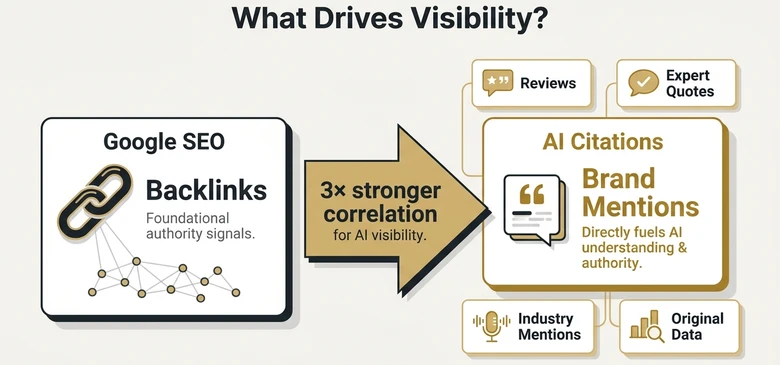
This doesn’t mean SEO is dead. It means B2B SEO strategy now needs a parallel track. Google optimization and AI optimization require different tactics, and the companies winning at both will have a compounding advantage. The parallel-track planning question that’s hardest to answer cleanly is which AI-visibility dimension to invest in first; Ignite X’s Credibility Score breaks the AI-visibility input layer into six measurable dimensions and ships a prioritized roadmap that surfaces the highest-leverage fix per brand.
What B2B Teams Should Do Now
The 78% of marketers with no AI search strategy are leaving the highest-converting traffic channel on the table. Three moves based on the data:
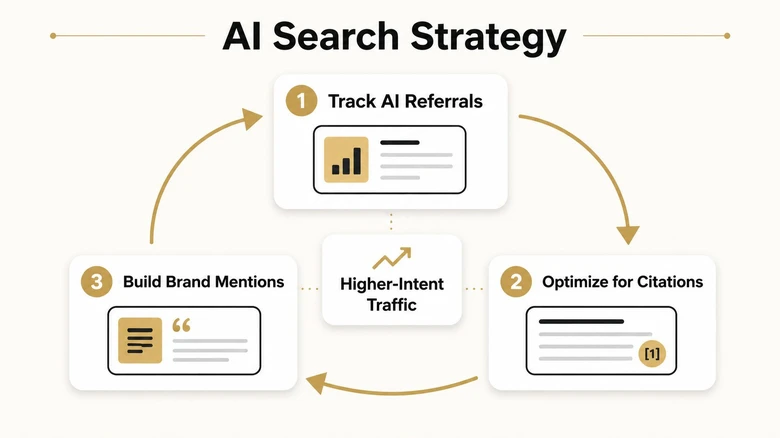
- Start tracking AI referral traffic separately in GA4. Filter for referrals from chat.openai.com, claude.ai, perplexity.ai, and gemini.google.com. You need a baseline before you can optimize. Gemini alone grew referral traffic 115% in three months — this channel is expanding fast. Here’s our guide on setting up content tracking for SEO.
- Optimize for citations, not just rankings. Structure content with clear, factual answers to specific questions. Use FAQ schema. Write definitive statements that AI models can extract and attribute. The brands getting cited most are those producing original data and taking clear stances.
- Invest in brand mentions. Guest posts, expert quotes in industry publications, podcast appearances, and community participation all generate the brand mentions that AI models weight heavily. This is where demand generation and AI visibility overlap. Mondelez went from 10% to 70% AI visibility simply by unblocking crawlers and restructuring content — the fixes aren’t always complex.
72% of marketing leaders expect AI to surpass SEO as the primary visibility channel within three years. The window for building AI visibility before your competitors do is open now. The data says it won’t stay open long.
Frequently Asked Questions
AI search users tend to be further along in their research process. They’re asking specific, comparison-oriented questions and getting synthesized answers that pre-qualify their interest before they click through to a website. The result is higher-intent visitors who are closer to a buying decision.
In GA4, create a custom segment or filter for referral traffic from AI platforms: chat.openai.com, claude.ai, perplexity.ai, and gemini.google.com. Track these separately from organic search to measure conversion rates, time on site, and pipeline contribution.
Yes. Backlinks still drive Google rankings, which feed the source pages AI models retrieve from. But brand mentions across authoritative sites correlate 3x stronger with AI citation rates than backlinks alone. A strong strategy covers both: link building for Google and brand visibility for AI.
Claude converts highest at 16.8%, ahead of ChatGPT at 14.2% and Perplexity at 12.4%. All three beat Google organic’s 2.8% rate by 4-6x. Blended AI search traffic converts at 14.2%, a 5.1x gap, because these visitors arrive further along in the buying journey.