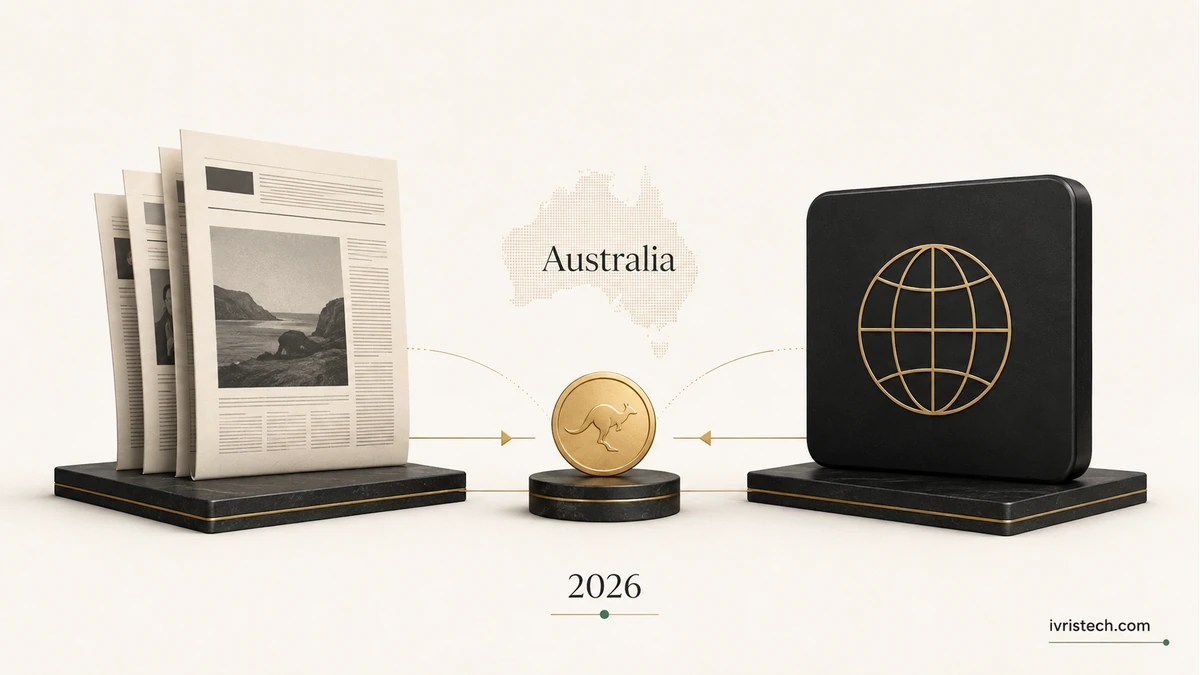
Australia’s government said on August 3 that it had finalised the design of its News Bargaining Incentive legislation. The proposed charge would apply when qualifying digital platforms do not make commercial agreements with news publishers. The bill is expected early in the spring parliamentary session, so the 2.5% charge is not yet in force and no company is shown to be paying it.
The rate would rise from 2.25% to 2.5%, but the larger change is the base. Instead of total Australian company revenue, the charge would use Australian digital-advertising revenue. Google, Meta, TikTok and potentially LinkedIn are expected to be assessed only after passage and application of the service and revenue thresholds.
For B2B marketers, this is not a current platform surcharge or a verified media-price increase. It is a policy design that could change publisher-deal economics and put more scrutiny on Australian ad-revenue reporting. The immediate job is to monitor the bill and platform responses, not add 2.5% to campaign budgets.
Direct answer – what changed in the Australia News Bargaining Incentive 2026?
Australia has finalised the design of its 2026 News Bargaining Incentive, but Parliament has not enacted it. The proposal would calculate a 2.5% charge on Australian digital-advertising revenue, not total company revenue, for qualifying platforms that do not make qualifying publisher agreements. It removes the professional-networking exclusion relevant to LinkedIn, while AI services remain on a separate copyright-policy track.
Key Takeaways
- The government finalised the NBI design on August 3, 2026, but the bill still has to be introduced and passed.
- The proposed rate rises to 2.5%, while the base narrows from total Australian revenue to Australian digital-advertising revenue.
- Publisher agreements would reduce a qualifying platform’s liability, creating the scheme’s central incentive.
- The professional-networking exclusion is being removed, but LinkedIn’s A$250 million threshold status is not established.
- AI services remain separate through a copyright process for transformed or generated uses of news.
What Australia Finalised
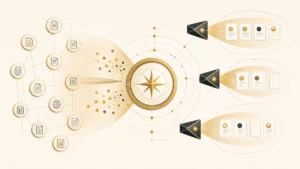
The News Bargaining Incentive is designed as a choice with unequal costs. A qualifying platform could reduce its proposed liability through commercial agreements with Australian news organisations. Without qualifying agreements, it would face the charge, with collected revenue directed to the news media sector.
Assistant Treasurer Daniel Mulino said in the government’s August 3 press conference that fair commercial deals should cost platforms less than the charge. The policy goal is therefore to produce publisher agreements, not simply maximise levy receipts.
The government has finalised what it intends to legislate, not completed the parliamentary process. The final bill, commencement rules and regulatory guidance will determine who is liable and when. Claims that Australia is charging or that platforms are paying go beyond the available evidence.
Why Digital-Ad Revenue Is the Real Change
The April 2026 exposure-draft explanatory materials proposed a 2.25% rate on consolidated revenue attributable to Australia. The finalised design raises the rate by 0.25 percentage points but applies it to a narrower pool: Australian digital-advertising revenue.
A higher percentage of a smaller base can produce a lower, similar or higher liability depending on each platform’s Australian revenue mix and attribution rules. The government says the revision should preserve the expected overall support from agreements or the charge, but it has not published company-level calculations.
Revenue attribution is now a central implementation question. Mulino said Treasury and the Australian Taxation Office would need to examine platform accounts and guard against revenue shifting. Advertisers should distinguish a proposed company-level obligation from a later pricing decision. No reviewed source shows a current 2.5% pass-through to media buyers.
LinkedIn Is Added, While AI Services Stay Separate
The finalised design removes the exclusion for professional-networking services. That makes LinkedIn the obvious new candidate for assessment, but category inclusion is not proven liability. Mulino said it was not yet clear whether LinkedIn exceeds the A$250 million Australian digital-advertising threshold.
That caution matches our earlier reading of Microsoft’s latest LinkedIn disclosure: Marketing Solutions led total LinkedIn growth, but Microsoft did not disclose a standalone advertising-revenue amount. Global momentum cannot establish the Australian threshold under a law that has not passed.
AI services are on a different track. Mulino said the government had consciously separated the NBI from AI. The incentive addresses qualifying platforms sharing news in its existing form, while a separate process through the Attorney-General’s portfolio considers copyright and compensation when AI systems use news to produce something new.
That boundary matters because publisher-AI disputes are already moving through copyright and licensing channels. Our earlier coverage of publisher licensing and value exchange also shows why access, attribution, commercial terms and referral value cannot be treated as one policy problem.
What B2B Advertisers Should Do Now
- Do not add 2.5% to current media costs. The legislation has not passed, and no reviewed source shows an NBI surcharge being collected from advertisers.
- Track the final bill. Watch the digital-advertising revenue definition, commencement, threshold administration, anti-avoidance rules and ATO guidance.
- Ask for evidence behind pricing claims. Separate a statutory obligation, publisher-agreement spending and ordinary auction or product changes.
- Treat LinkedIn as conditional. Its exclusion is being removed, but threshold status still requires regulatory assessment.
- Keep AI policy separate. NBI publisher agreements and AI copyright or licensing arrangements solve different problems on different timelines.
Our read: the switch to digital-advertising revenue matters more for marketers than the move from 2.25% to 2.5%. It aligns the proposed charge with the revenue stream advertisers fund, but it does not prove a budget impact. Monitor revenue attribution, LinkedIn’s threshold and the boundary between news distribution and AI reuse.
Frequently Asked Questions
No. The government announced on August 3, 2026 that it had finalised the legislation’s design and expected to introduce the bill early in the spring parliamentary session. Passage, commencement and regulatory administration still have to occur. The announcement does not show any company currently paying the proposed charge.
The government expects Google, Meta, TikTok and potentially LinkedIn to be the main platforms considered. Coverage would depend on enacted definitions for significant social media or search services and the Australian digital-advertising revenue threshold. A named company should not be treated as legally liable before those tests are applied.
The government is removing the professional-networking exclusion, saying those services now operate at a different scale and carry substantial news sharing. LinkedIn is the largest obvious candidate, but the government says it is not yet clear whether LinkedIn exceeds the proposed A$250 million Australian digital-advertising threshold.
Not under the announced design. The NBI focuses on qualifying platforms sharing existing news content. AI systems that use news to generate something new are being considered through a separate copyright process. The workstreams may both affect publishers, but they rely on different legal and commercial mechanisms.