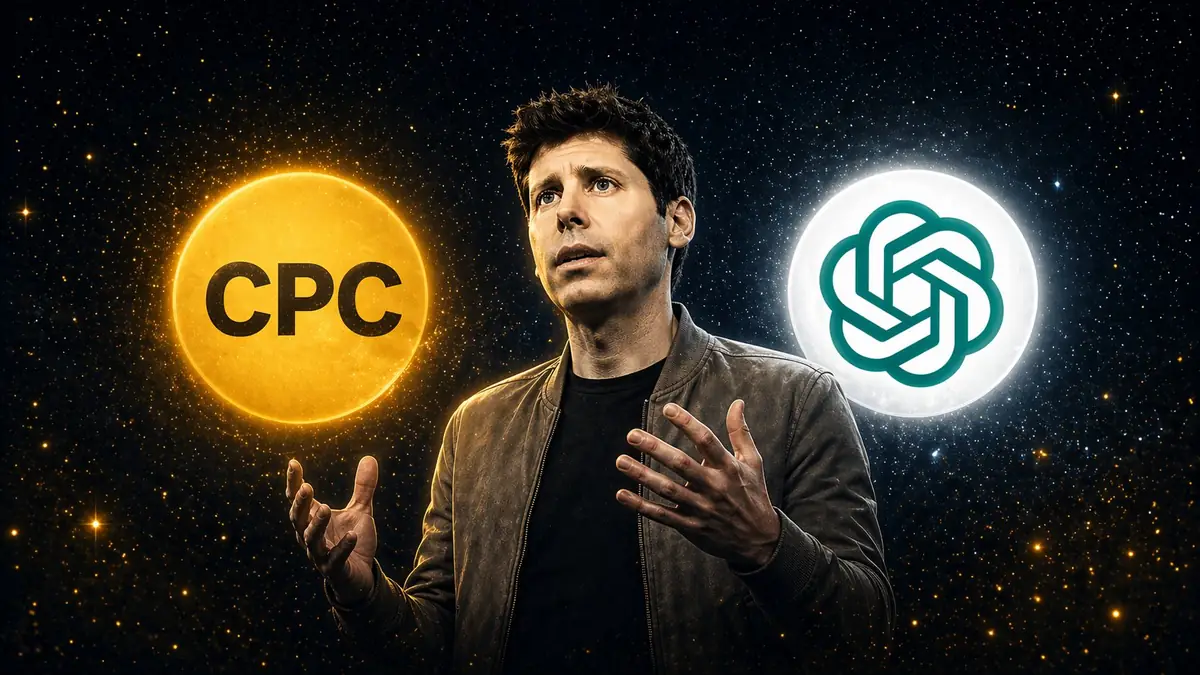
OpenAI shifted ChatGPT advertising from CPM to cost-per-click this month, with bids between $3 and $5. The minimum spend dropped from $250,000 to $50,000. A self-serve ads manager opened to global advertisers on April 15, expanding from the US-only pilot into Canada, Australia, and New Zealand within 48 hours. The Information broke the CPC shift, and Digiday verified it with screenshots of the ads manager.
The trigger was price erosion. At launch on February 9, ChatGPT ads sold at a $60 CPM. Ten weeks later, StackAdapt decks showed CPMs as low as $15 and some transactions closing around $25. A volume-dependent impressions model doesn’t work when impression prices collapse. CPC is a practical pivot that aligns ChatGPT with how Google and Meta already price performance, and a bigger strategic statement: OpenAI is claiming the intent inside a ChatGPT conversation is close enough to Google Search intent to charge for actions, not just views.
Our read: for B2B teams that watched the February launch from the sidelines because $250,000 was not a pilot budget, the April update is the one that matters. The economics now line up with mid-market paid search budgets. The open question is the one Google already answered 20 years ago — what’s a ChatGPT click actually worth?
Key Takeaways
- OpenAI shifted ChatGPT ads from CPM ($60 at launch, $25 by April) to CPC at $3–$5 per click. The Information reported the change on April 15, 2026.
- Minimum spend dropped from $250,000 to $50,000. The self-serve ads manager opened to global advertisers on April 15.
- 600+ advertisers are in the pilot. OpenAI reported $100M in annualized ad revenue within six weeks of February 9 launch and projects $2.5B for 2026.
- Paid subscribers on ChatGPT Plus, Pro, Business, Enterprise, and Education see zero ads. Only Free and $8/month Go tier users do.
- Perplexity and Anthropic are positioning as explicitly ad-free, creating a splitscreen monetization landscape for B2B visibility strategy.
What Changed and Why It Matters for B2B Specifically
The February 9 launch was structured as an enterprise pilot: Target, Ford, Adobe, Mrs. Meyer’s, Expedia, and a handful of others buying $250K-minimum CPM placements. That configuration excluded nearly every mid-market B2B team from the conversation by design.
The $50,000 minimum is now within the quarterly budget of B2B SaaS companies that run paid search. A mid-market advertiser spending $200-400K/year on Google Ads has the headroom to allocate $50K to a pilot without breaking the quarter. Budget access does not equal audience-targeting fit: ChatGPT Ads’ current custom-audience rules still require 25,000 matched users for inclusion and bid adjustments, while smaller lists are exclusion-only.
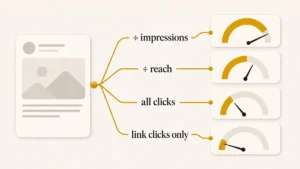
CPC pricing makes performance benchmarking possible. Paid-search teams evaluate channels on cost-per-lead or pipeline-per-dollar. CPM-only forced them to work backwards from clickthrough assumptions. CPC at $3-5 lets them compare ChatGPT ROAS directly against Google Search non-brand campaigns on day one.
When we covered the February launch, the strongest B2B advice was to wait. That advice has expired.
The Splitscreen Between Ad-Supported and Ad-Free AI
OpenAI is not the only AI company making an advertising decision right now. Google has woven ads into 25.5% of AI-generated search results. Perplexity abandoned sponsored follow-ups in late 2025 and confirmed a permanent no-ads stance through CCO Jesse Dwyer on April 15. Anthropic ran Super Bowl spots titled “Deception,” “Betrayal,” and “Violation” attacking ad-supported AI, with Claude climbing to #7 on the App Store afterward. Microsoft followed with AI Max and brand-visibility controls for Copilot days later, putting all three major ad-supported surfaces (Google, OpenAI, Microsoft) on the same monetization track.
For B2B visibility, this split is not collapsing back. Two paths now exist:
Paid placement on ad-supported platforms: ChatGPT ads (starting April), Google AI Mode ads, Meta for B2B. Budget-driven, measurable, same muscle as Google Ads.
Earned citation on subscription-only platforms: Perplexity, Claude, and future ad-free tiers. Content-driven, slow, different muscle than paid search.
The high-intent B2B audience is disproportionately on subscription tiers (Plus, Pro, Enterprise). None of them see ads. The CPC pivot expands your reach, but not to the part of the funnel where your best-fit buyers actually are.
The Measurement Problem Nobody Has Solved
OpenAI just made it possible to compare ChatGPT clicks against Google Search clicks. It has not made it possible to know whether they’re worth the same.
Google’s CPC market is built on 20+ years of intent signals, quality scores, auction pressure, and retargeting data. Meta’s CPCs run 3-5x lower than Google Search for the same click because social users are browsing while search users are hunting. Where ChatGPT lands on that spectrum is the open question, and nobody has the data yet.
On the value side, OpenAI is hiring its first advertising marketing science leader. Until that role is filled and measurement infrastructure ships, B2B advertisers buying ChatGPT ads are buying on faith. OpenAI’s May 5 launch closed the measurement gap this paragraph named: the Ads Manager opened to all US businesses with pixel-based tracking and a Conversions API, giving B2B advertisers the post-click attribution plumbing that was the missing piece of the April pivot. Post-click attribution still leaves a pre-impression question unresolved: DoubleVerify’s AI-chat brand-risk data shows that relevance and conversation suitability can determine whether the impression helps or harms brand perception.
What Mid-Market B2B Teams Should Do This Quarter
Three moves if ChatGPT ads are now within your budget:
Allocate a single-quarter test at the $50K floor, not an ongoing budget line. Treat it like any other platform pilot — fixed spend, pre-declared success criteria, kill date if CPL exceeds your benchmark by more than 50%.
Tag ChatGPT traffic separately in GA4 and your CRM. The ads manager ships with conversion pixels supporting lead creation, order creation, and subscription events. Wire them up on day one. GA4 setup work for B2B traffic pays off here specifically.
Don’t drop Perplexity and Claude from your AI visibility plan. Paid ChatGPT spend doesn’t help with the executive audience that uses Claude and Perplexity precisely because they’re ad-free. Content-driven AEO work — as HubSpot’s April AEO launch made clear — remains the only way to show up on those surfaces.
One implication to watch: if CPC stabilizes at $3-5, ChatGPT positions below Google Search but above Meta on intent pricing. For B2B, that’s roughly where LinkedIn Ads sits. The Q3-Q4 question isn’t ChatGPT vs. Google. It’s ChatGPT vs. LinkedIn as the second-best paid channel for B2B teams working outside Meta’s weaker B2B targeting.
Frequently Asked Questions
Cost-per-click (CPC) means advertisers pay only when a user clicks, rather than per 1,000 impressions served (CPM). OpenAI shifted ChatGPT advertising from CPM to CPC between April 15 and April 22, 2026, with bids priced between $3 and $5 per click. The Information broke the pivot on April 15 and Digiday verified it with screenshots of the ads manager.
Two reasons. ChatGPT CPMs had fallen from $60 at launch to as low as $25 by April, making the high-minimum enterprise model harder to justify. And the $50K floor opens the channel to mid-market performance marketers who sat out the pilot because $250K was too large a test budget.
Ads appear only for users on the free tier and the $8/month Go tier. Plus, Pro, Business, Enterprise, and Education users see zero ads. Advertisers cannot access user conversations, chat history, names, emails, or IP addresses. They receive only aggregated performance data including impressions, clicks, and conversions tracked via OpenAI’s conversion pixel.
Yes. Perplexity has confirmed a permanent no-ads stance and Anthropic has positioned Claude as ad-free. ChatGPT’s paid subscription tiers also block ads. For B2B marketers targeting senior decision-makers, who are disproportionately on subscription tiers across all three platforms, earned citation through content-driven AEO remains the only route to visibility on those surfaces.