
The European Commission said on July 31, 2026 that its AI Office and national authorities will begin enforcing the AI Act on August 2. The same date starts Article 50 transparency duties for certain interactive AI systems and AI-generated or manipulated content.
Associated Press reports that the Brussels-based AI Office is adding 38 people as the EU activates investigative powers and new reporting channels. This is an enforcement expansion inside the existing AI Office, not the creation of a separate regulator.
For B2B marketers seeking a simple rule on EU AI Act AI content labels, the answer is narrower than “label every asset.” When IVRIS covered Meta’s EU transparency-code commitment, the key distinction was provider marking versus deployer disclosure. August 2 adds enforcement and reporting channels behind that distinction. This article is editorial guidance, not legal advice.
Direct answer – what changes when EU AI enforcement and Article 50 labels start?
On August 2, 2026, the EU begins enforcing AI Act provisions while Article 50 transparency duties start. The AI Office is expanding by 38 staff, but enforcement is shared with national authorities. Providers must support AI interaction notices and machine-readable detection; deployers must visibly disclose covered deepfakes and certain public-interest text. Marketing teams need evidence for each decision.
Key Takeaways
- The AI Office and national authorities begin AI Act enforcement on August 2, 2026.
- The AI Office is adding 38 staff, according to Associated Press.
- Providers face interaction-notice and machine-readable-marking duties; deployers face visible disclosures for defined uses.
- Providers of pre-August 2 synthetic-content systems have until December 2, 2026 for Article 50(2) technical marking.
- New complaint and whistleblower channels raise the value of asset-level records.
What the EU Enforcement Rollout Actually Adds
The enforcement model is split. The Commission’s enforcement framework gives the AI Office authority over general-purpose AI models, certain systems built by the same provider or business group, and systems integrated into designated very large online platforms or search engines. National competent authorities enforce the rules for other AI systems, while the European Data Protection Supervisor covers systems used by EU institutions.
Within its remit, the AI Office can request information, evaluate models, interview relevant people, inspect provider premises, require corrective action, and impose penalties. A content workflow may therefore depend on a model provider under Commission supervision while the marketer’s deployment is reviewed by a national authority.
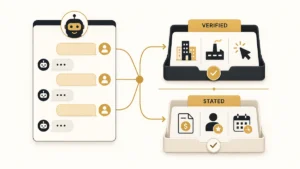
That split makes provenance a handoff problem. IAB’s video-ad provenance findings already showed why teams need a record of what AI changed, which source supported the claim, who approved the asset, and where it ran. Article 50 enforcement adds a regulatory reason to keep the same chain intact.
What EU AI Act AI Content Labels Actually Cover
The Commission’s Article 50 guidelines separate provider duties from deployer duties. Providers must design directly interactive AI systems to inform people that they are dealing with AI and must add machine-readable marks that support detection of generated or manipulated audio, image, video, and text.
Deployers must inform people when they are exposed to covered emotion-recognition or biometric-categorisation systems, deepfakes, and AI-generated public-interest text that lacks qualifying human review or editorial control. A machine-readable mark is not automatically a human-visible disclosure, and a platform label does not necessarily complete the deployer’s obligation.
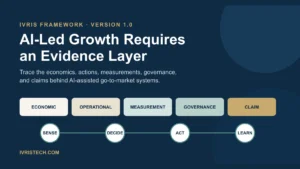
The rule is not a blanket visible-label requirement for every AI-assisted campaign asset. Standard editing can fall outside the marking duty, and the content type, role, use, and level of human review matter. Teams should record that classification inside an evidence layer for AI-assisted workflows rather than reconstructing the rationale after publication.
There is also a narrow transition. The 2026 AI Omnibus gives providers of synthetic-content systems placed on the market before August 2 until December 2, 2026 to comply with Article 50(2). It is not a general four-month delay for chatbot notices or deployer disclosures.
The Hidden Catch: A Label Decision Can Become Evidence
The new AI Act Complaint Tool lets individuals and organisations submit alleged infringements within the AI Office’s remit and attach supporting documents. The Office can also refer a matter to a national market-surveillance or fundamental-rights authority when appropriate.
The AI Act Whistleblower Tool gives eligible professionals connected to supervised providers an anonymous channel for reports and evidence. The important part is not the form itself. It is that an internal disagreement about a missing label, stripped watermark, or unsupported exemption can now arrive with documents attached.
Our read: the strongest control is a release packet, not a generic AI policy. The packet should connect the role assessment, source material, generated elements, human edits, reviewer, disclosure decision, final placement, and retained version. That evidence belongs inside the campaign planning process and the same approval design used for agentic AI marketing workflows.
What B2B Marketing Teams Should Do Now
- Map the legal role by workflow. Record whether the company is providing an AI system, deploying one under its authority, or doing both.
- Inventory EU-facing interactions and assets. Include chatbots, generated text, synthetic people, voice, video, images, and agency variants.
- Separate technical marks from visible disclosures. Preserve machine-readable signals, then decide what a person must see or hear.
- Define substantive human review. Name a reviewer who can verify claims, reject output, and accept editorial responsibility.
- Test the final placement. Confirm that required notices survive export, cropping, translation, rendering, and vendor handoff.
August 2 is not just a label-design deadline. It gives the EU’s provider-and-deployer distinctions enforcement routes. Teams that can explain what AI changed, who reviewed it, why a notice was or was not required, and what the audience received will be better prepared than teams relying on a platform badge.
Frequently Asked Questions
Article 50 transparency obligations start applying on August 2, 2026. A limited transition gives providers of synthetic-content systems placed on the market before that date until December 2, 2026 for the technical marking duty in Article 50(2). It does not broadly postpone chatbot notices or deployer disclosure duties.
No. Article 50 distinguishes machine-readable provider marking from visible deployer disclosure. Visible notices focus on covered deepfakes and certain public-interest text, while standard editing and qualifying human review can affect scope. Teams should classify each use and obtain legal advice for specific campaigns rather than applying one universal label.
Enforcement is shared. The European Commission’s AI Office supervises general-purpose AI models and defined systems within its remit. National competent authorities handle other AI systems, and the European Data Protection Supervisor covers EU institutions. The responsible authority therefore depends on the provider, system, deployment, and regulatory context.
Keep the role assessment, tool or model, source material, generated elements, material human edits, named reviewer, disclosure rationale, machine-readable signals, final asset, markets, placements, and approval date. The record should show both what the provider supplied and what the deployer decided the audience needed to see or hear.