On March 31, 2026, tens of thousands of Oracle employees woke up to a five-line email from “Oracle Leadership” telling them their roles had been eliminated. No meeting with a manager. No heads-up from HR. Just an email at 6 a.m. and immediate loss of system access.
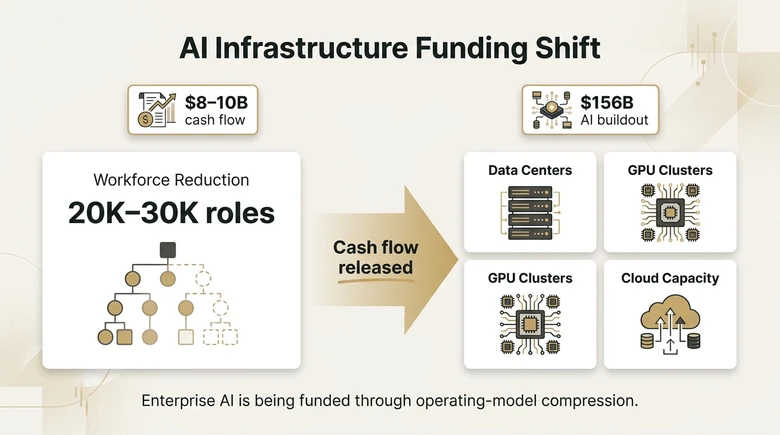
Analysts estimate the cuts affected 20,000 to 30,000 workers globally, roughly 18% of Oracle’s 162,000-person workforce. It’s likely the largest layoff in the company’s 48-year history. And it happened despite Oracle reporting record quarterly revenue, with earnings up 22% year-over-year.
For B2B teams that rely on Oracle’s ecosystem — from NetSuite CRM to Oracle Cloud Infrastructure — this isn’t just a layoff headline. It’s a signal about where enterprise software is heading.
Key Takeaways
- Oracle cut an estimated 20,000-30,000 employees on March 31, 2026, including 12,000 in India and thousands across the US, Canada, and Mexico.
- TD Cowen estimates the layoffs free up $8-10 billion in cash flow, which Oracle will redirect toward AI data center infrastructure.
- Oracle has raised $50 billion in debt and equity in 2026 alone to fund a $156 billion AI infrastructure buildout.
- The company holds a $523 billion backlog in remaining performance obligations, driven by contracts with OpenAI, Meta, and other AI companies.
What Happened and Why
Oracle’s termination emails cited “broader organizational change” as the reason. But the real driver is money. Specifically, Oracle needs cash to fund one of the largest AI infrastructure buildouts in enterprise tech history.
The numbers are staggering. Oracle disclosed a $156 billion capital expenditure plan tied to Oracle Cloud Infrastructure, which serves GPU and CPU workloads for companies like OpenAI, Meta, and Nvidia. To fund that expansion, Oracle raised $50 billion in debt and equity financing in just two months. Its free cash flow turned deeply negative last quarter, hitting minus $10 billion.
Cutting 30,000 employees doesn’t just reduce headcount. According to TD Cowen’s analysis, it frees up $8-10 billion in incremental cash flow that goes directly into data centers, GPU clusters, and cloud infrastructure.
The B2B Impact: What This Means for Oracle Customers
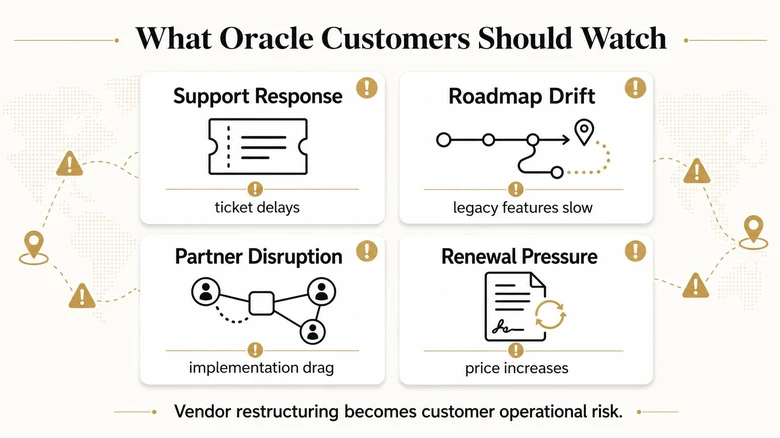
If your company runs on NetSuite, Oracle Cloud, or Oracle ERP, this matters beyond the headline. Layoffs at this scale affect product teams, support staff, and implementation partners.
Here’s what B2B operators should watch:
- Support response times. With 18% of the workforce gone, expect slower ticket resolution and longer wait times for Oracle support channels. If you depend on Oracle for critical infrastructure, review your SLA terms now.
- Product roadmap shifts. Oracle is concentrating resources on AI infrastructure and cloud services. Features or updates for legacy products may slow down or get deprioritized.
- Partner ecosystem disruption. Many Oracle partners rely on Oracle-employed technical resources for co-delivery. Reduced headcount can slow partner-led implementations.
- Pricing pressure. Oracle has massive debt obligations. Customers may see more aggressive contract negotiations or price increases at renewal to cover the company’s cash needs.
For teams evaluating CRM and enterprise platforms, the layoffs reinforce a question that’s already top of mind: is your vendor investing in AI as a product feature, or is it betting the entire company on AI infrastructure? Those are two very different risk profiles. If you’re weighing options, our comparison of HubSpot vs Salesforce covers how mid-market teams can evaluate platform stability alongside feature sets.
A Broader Pattern: AI-Driven Workforce Restructuring
Oracle isn’t alone. Amazon cut roughly 16,000 corporate roles earlier this year. Meta resumed layoffs after years of reductions. Atlassian has trimmed teams while doubling down on AI-powered collaboration tools. In the tech sector alone, more than 40,000 jobs were cut in March 2026. Intuit’s parallel right-sizing of Mailchimp on May 20 extended the same pattern into B2B martech, with CEO Sasan Goodarzi telling analysts on the Q3 FY26 earnings call that Intuit explored selling Mailchimp and couldn’t find a buyer at an acceptable price.
The common thread: companies are replacing execution roles with AI agents and automation, then reallocating the savings into AI infrastructure. It’s not a traditional recession-driven layoff cycle. It’s a structural shift in how companies allocate human capital. Salesforce’s 2026 report shows 87% of sales teams now use AI — enterprises are betting that agents can do the work that headcount once did. The quieter department-level version is already visible in Wynter’s finding that 47% of B2B companies quietly reduced marketing roles for AI, mostly through attrition and stopped backfills rather than public layoffs.
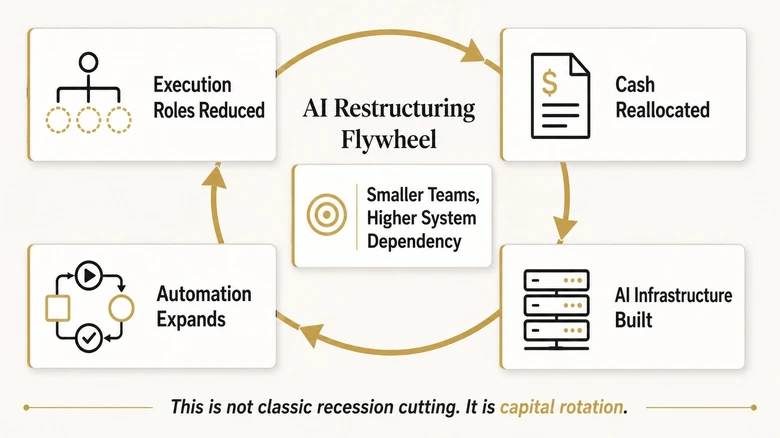
For B2B revenue teams, this creates both risk and opportunity. The risk is obvious: vendor instability, talent displacement, and disrupted support. The opportunity is that companies who adopt business process automation thoughtfully, rather than as a cost-cutting exercise, will move faster with smaller, more focused teams. But Gartner warns that 40% of agentic AI projects will be canceled — rushing into AI without data readiness is how companies end up in Oracle’s position: spending billions with unclear returns. Deel’s May 5 move into SaaS procurement via the Sastrify acquisition is the operator-side response: when enterprise consolidation reshapes the vendor map every quarter, the platforms that own the workforce relationship are racing to also own the spend audit that surfaces who to cut and who to renegotiate.
What to Do Right Now
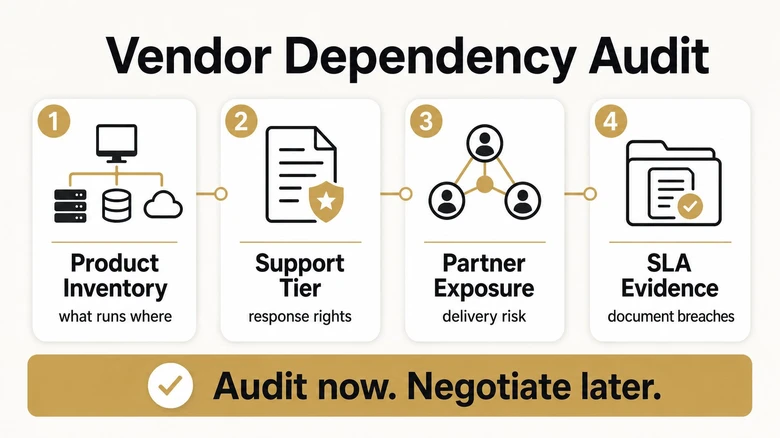
If you’re an Oracle customer, audit your dependencies. Know which products you use, what your support tiers cover, and whether your implementation partner has been affected. If you’re mid-contract, document any SLA breaches for future negotiation leverage.
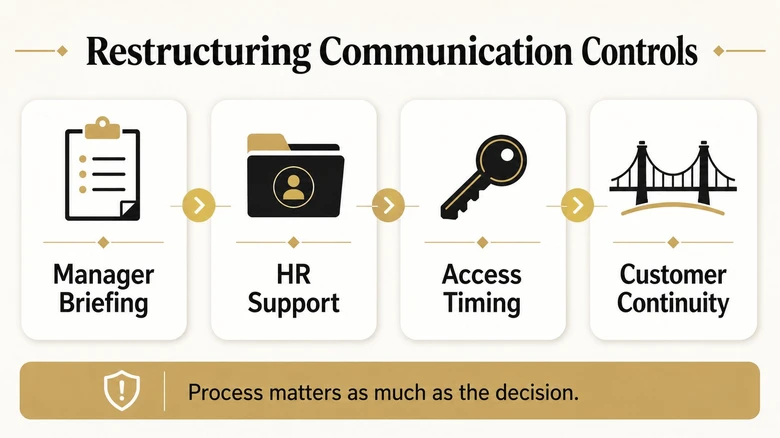
If you’re in B2B operations or RevOps, treat this as a case study in how not to communicate a restructuring. The 6 a.m. email with no manager conversation is already damaging Oracle’s employer brand. When your own team eventually needs to make changes, the process matters as much as the decision.
The enterprise software market is reshuffling. Stay close to your vendors, diversify platform risk where you can, and build internal automation capabilities with tools like n8n, Make, or Zapier so you’re less dependent on any single vendor’s roadmap.
Frequently Asked Questions
Oracle laid off an estimated 20,000 to 30,000 employees globally on March 31, 2026, representing roughly 18% of its workforce. The cuts affected workers in the US, India, Canada, Mexico, and other countries. Oracle has not publicly confirmed the exact number.
Oracle is redirecting resources toward a $156 billion AI data center buildout. Despite strong quarterly earnings, the company’s free cash flow turned negative due to massive capital expenditures. Analyst estimates suggest the layoffs will free up $8-10 billion to fund AI infrastructure contracts with OpenAI, Meta, and others.
B2B customers on Oracle products like NetSuite and Oracle Cloud may experience slower support, delayed product updates, and disrupted partner-led implementations. Companies should review their SLA terms, audit vendor dependencies, and document any service degradation for future contract negotiations.