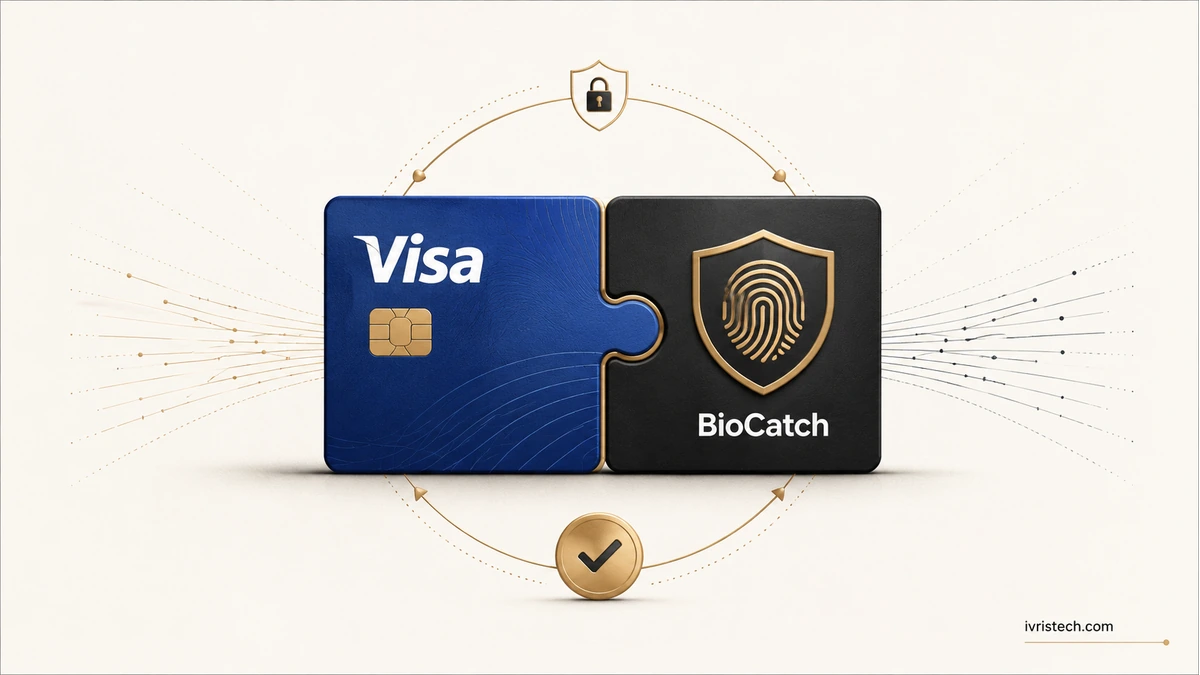
Visa has signed a definitive agreement to acquire BioCatch for $2.4 billion in cash from funds advised by Permira and other shareholders. The Visa BioCatch acquisition remains subject to customary closing conditions and regulatory approvals. It has not closed.
BioCatch provides behavioral-first, multi-signal fraud intelligence for financial institutions. Visa says the company analyzes application, behavioral, device, and network signals during digital banking activity. Visa reports coverage of 1.8 billion devices, 760 million users, and more than 350 banking clients in 21 countries. Those figures are not independently audited in the announcement.
The strategic move is upstream: Visa wants risk signals from account opening, login, device posture, and the live banking session, rather than relying only on controls at payment. Our read: BioCatch could give Visa an earlier fraud-detection layer, but only after closing and integration. Separately, the FBI recorded more than 22,000 complaints containing AI-related information and over $893 million in adjusted losses for 2025. That supports the risk direction without validating company performance claims.
Direct answer — What is the Visa BioCatch acquisition?
Visa has agreed to acquire BioCatch for $2.4 billion in cash, but the transaction is still pending regulatory approvals and other closing conditions. BioCatch analyzes behavioral, device, application, and network signals during digital banking sessions. The rationale is to identify takeover, coercion, automation, or device risk before a payment is initiated, while transaction-level controls continue when money moves.
Key Takeaways
- Visa signed a definitive agreement to acquire BioCatch for $2.4 billion in cash; the transaction has not closed.
- Visa expects closing by the end of fiscal Q2 2027, subject to regulatory approvals and other conditions.
- BioCatch uses behavioral and device signals such as keystrokes, touch gestures, navigation patterns, and device handling.
- Visa’s reported BioCatch footprint includes 1.8 billion devices, 760 million users, and more than 350 banking clients.
- The upstream strategy is to identify risk during account opening and digital sessions before the payment event.
What Visa Has Agreed to Acquire
Visa is not acquiring a payment rail. It has agreed to buy a fraud-intelligence company used by banks during account opening and digital sessions. BioCatch targets account opening fraud, account takeover, social-engineering scams, money mules, and application fraud. Visa expects the transaction to close by the end of fiscal Q2 2027. Until closing, BioCatch remains separate and no combined capability should be described as available.
Reuters reported that Permira took a majority stake in BioCatch in 2024 at a $1.3 billion valuation and that revenue and gross profit roughly tripled under its ownership. That explains some price context, not detection accuracy or future performance inside Visa.
How Behavioral and Device Intelligence Works
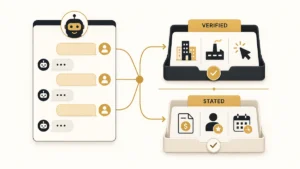
Behavioral intelligence focuses on how a user interacts, not only on whether a password, one-time code, or identity document appears valid. BioCatch says it examines typing cadence, copy-and-paste behavior, mouse movement, touchscreen pressure, scrolling, navigation, and pauses. Patterns may indicate a criminal operator, automation, or a genuine customer acting under coaching or coercion.
Device intelligence examines the environment around that behavior, including device handling, sensor availability, unauthorized code, network characteristics, and compromise indicators. The acquisition announcement says BioCatch’s models analyze thousands of application, behavioral, device, and network signals in real time.
This differs from treating identity as a one-time gate. Agent-level identity and permission controls show which actor was authorized and what it could do. Behavioral and device intelligence ask whether the session still looks legitimate after access was granted, which matters when stolen credentials or an authorized victim can make the final transaction appear normal.
These descriptions come from the companies. Buyers still need independent evidence on false positives, explainability, model drift, and fraud-type coverage.
Why Visa Is Moving Fraud Prevention Before Payment
Payment-event controls score a transaction when an authorization request or transfer reaches the payment layer. Upstream controls can act earlier, during account opening, login, device connection, recipient setup, or session navigation. That matters in social-engineering scams because a victim may use a known device, pass authentication, and authorize the payment personally while their behavior shows pressure or manipulation.
There is independent evidence for this operating model, though not for Visa’s future implementation. In 2025, Reuters reported on a Nasdaq Verafin and BioCatch partnership combining behavioral alerts with transactional intelligence so institutions could stop suspicious payments before money left an account. That supports joining session and transaction data, but does not prove how Visa will integrate or price BioCatch.
The distinction also applies as software agents gain payment authority. Our earlier reporting on payment limits and audit trails for AI agents shows how teams can govern what an authorized agent may spend. They do not determine whether the session or instruction has been compromised. Visa’s proposed acquisition points to a second control layer before the rail is invoked.
What Banks and Fintechs Should Watch Before Closing
- Closing status: Treat the deal as pending until Visa confirms completion. Fiscal Q2 2027 is a target, not a guaranteed date.
- Integration scope: Watch which Visa products use BioCatch signals, whether BioCatch stays separately sold, and when combined capabilities become available.
- Performance evidence: Ask for deployment results, detection and false-positive rates, fraud-type coverage, and comparisons with existing transaction monitoring.
- Data governance: Confirm what session and device data is collected, retained, explained, and available for human review or correction.
Behavioral risk scores are generated inferences, not direct observations of criminal intent. That makes the controls in Gartner’s AI inference privacy forecast relevant to fraud teams: provenance, explanation, review, and correction matter when a model can delay or block financial activity.
Reuters also noted Mastercard’s $2.65 billion Recorded Future acquisition and Visa’s Featurespace purchase in 2024. Payment networks are competing for security intelligence beyond the transaction, but BioCatch’s benefits inside Visa remain prospective until closing and integration.
Frequently Asked Questions
No. Visa has signed a definitive agreement to acquire BioCatch for $2.4 billion in cash. The transaction remains subject to customary closing conditions, including regulatory approvals. Visa expects it to close by the end of fiscal Q2 2027, but that timing is not guaranteed.
BioCatch provides fraud intelligence for financial institutions. Its technology analyzes behavioral, device, application, and network signals during digital sessions, including typing, touch, navigation, and device conditions. BioCatch says these patterns help distinguish legitimate users from fraudsters, bots, compromised devices, and customers acting under coercion.
It means assessing risk before a payment instruction reaches the transaction layer. Signals can be evaluated during account opening, login, device connection, recipient setup, and session navigation. A bank may then challenge, review, delay, or stop suspicious activity before money moves, while retaining transaction-level controls.
AI can make impersonation, phishing, voice cloning, and automated attacks cheaper and more convincing. The FBI recorded more than 22,000 complaints containing AI-related information and over $893 million in adjusted losses for 2025. Those figures show reported risk, but they do not validate Visa’s broader loss estimate.